Minnesota Earmarks Exposed: The 2007 Labor-HHS Bill
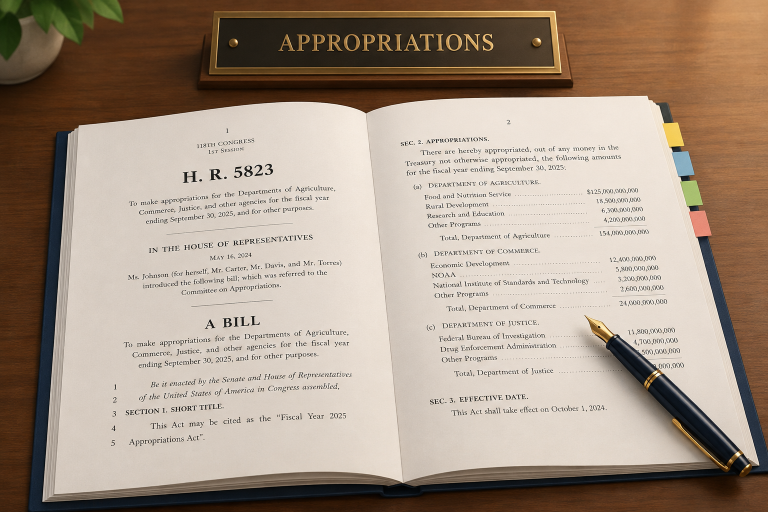
Most of the $7,155,000 in Minnesota earmarks listed below were never paid out as earmarks. In February 2007, Congress funded fiscal 2007 through a full-year continuing resolution (H.J.Res. 20, Public Law 110-5), which gave the earmarks written into committee reports no legal effect. Congress then stopped earmarking in 2011. The practice came back in 2021 as Community Project Funding in the House and Congressionally Directed Spending in the Senate. Under the new rules, members post every request online, certify they have no financial interest in it and stay under a cap tied to discretionary spending. As of November 2026, fiscal 2027 is running on a stopgap (Public Law 119-103) through December 11, 2026, and the House committee’s Labor-HHS bill, H.R. 9260, includes health-related projects but no education earmarks.
The Sunlight Foundation’s 2006 earmark hunt
In August 2006, the conservative blogger Ed Morrissey wrote on his blog, Captains Quarters, about an effort by the Sunlight Foundation to fight earmarks by shining at least some light on the roughly 1,800 earmarks attached to the fiscal 2007 appropriations bill for the Departments of Labor, Health and Human Services, and Education. Sunlight called it its largest experiment yet in citizen journalism. It addressed its appeal to bloggers, curious citizens, citizen journalists, muckrakers and working journalists.
Sunlight’s argument was that each of these items was an appropriation that had never been publicly debated and probably never would be, and that the public didn’t even know who had requested it. The group put the earmarks on a Google Maps mash-up so readers could see where the money was headed.
The foundation defined an earmark as a line item inserted into a bill to send money to a specific project or recipient without any public hearing or review. That description fit the 2006 process. Today’s rules require public disclosure of each request and its sponsor.
Sunlight published a database of all the earmarks in the HHS bill and asked volunteers to work out which member of Congress had requested each one. Sunlight’s own spreadsheet counted 1,811 earmarks. The Washington Examiner, a partner in the effort, cited 1,867 earmarks worth more than $500 million. The coalition also included Citizens Against Government Waste, Human Events Online and PorkBusters, a campaign against congressional earmarks launched in 2005 by bloggers Glenn Reynolds and NZ Bear after the Hurricane Katrina spending debates. PorkBusters asked its readers to help with the research.
The FY2007 Labor-HHS bill was H.R. 5647. The House Appropriations Committee reported it on June 20, 2006 (H. Rept. 109-515), and Senate appropriators reported their version in July 2006 (S. Rept. 109-287). Neither chamber’s version became law.
Minnesota’s share: $7,155,000
The PorkBusters contributor who wrote this post went through the list to see how much was headed to Minnesota. The total came to $7,155,000 out of about $503 million in earmarks in the bill. The post called Minnesota a small player but argued that its projects were a fair cross-section of the rest of the country.
These were the Minnesota earmarks in the fiscal 2007 Labor-HHS-Education bill as proposed in 2006:
- $600,000, Duluth: College of St. Scholastica, for a rural health information technology project
- $525,000, Minneapolis: Cedar Riverside People’s Center, for facilities, equipment and conversion to an electronic medical records system
- $500,000, Austin: Gerard Treatment Programs, for a program serving abused and neglected children with severe emotional or behavioral problems
- $400,000, Eagan: International Species Information System, for the ZIMS project
- $400,000, Minnetonka: Jewish Family & Children’s Services of Minneapolis, for a naturally occurring retirement communities demonstration project
- $400,000, St. Cloud: St. Cloud State University, for curriculum development under the Science Initiative of Central Minnesota
- $375,000, St. Paul: City of St. Paul, for after-school and out-of-school youth academic and enrichment programs
- $350,000, Bemidji: Bemidji State University, for an engineering technology center
- $350,000, Bemidji: Bemidji State University, for developing a baccalaureate nursing program
- $300,000, West St. Paul: Dakota County Public Health Department, for the Dakota County Healthy Families program
- $250,000, Duluth: Lutheran Social Services, for services to runaway, homeless and other at-risk youth and their families
- $250,000, Edina: Southdale Hospital, for equipment
- $250,000, Minneapolis: Augsburg College, for the StepUp program supporting students in recovery from chemical dependency
- $250,000, Virginia: Arrowhead Economic Opportunity Agency, for the Family to Family community-based mentoring program for low-income families
- $230,000, Minneapolis: Minnesota Indian Women’s Resource Center, for a dual-diagnosis outpatient treatment program
- $225,000, St. Paul: University of St. Thomas, for the Interprofessional Center for Counseling and Legal Services in Minneapolis
- $200,000, Burnsville: Ridges Hospital, for an ambulatory electronic medical records system
- $175,000, Minneapolis: Sustainable Resources Center, for a lead poisoning screening and education program
- $150,000, Brainerd: Brainerd Public Schools (Independent School District 181), for its Teacher Support System
- $150,000, Hastings: Dakota County Community Corrections Department, for the All Children Excel demonstration project
- $150,000, Inver Grove Heights: Sheriffs Youth Program, for chemical dependency treatment services
- $150,000, Perham: History Museum of East Otter Tail County, for its “In Their Own Words” exhibit
- $150,000, St. Paul: Open Cities Health Center, for facilities and equipment
- $150,000, St. Paul: Advocating Change Together, for a disability rights training initiative
- $100,000, Coon Rapids: Anoka-Ramsey Community College, for a biomedical device manufacturing curriculum
- $75,000, West St. Paul: West Side Community Health Services, for health information technology
- $50,000, Minneapolis: Person to Person, for its Hungry Lil’ Readers Club family literacy program
The 27 items add up to exactly $7,155,000. Two universities show up more than once (Bemidji State twice), and most of the money went to health providers, colleges and social service groups.
The argument the post made
The author granted that most of these could be called worthy projects, then asked why any of them should be the federal government’s job. The post put the average earmark at about $268,000. Dividing $503,085,100 across the 1,867 items the Examiner counted gives about $269,000 each, while Sunlight’s 1,811-item count gives about $278,000. The author’s point was that small items add up quickly at that volume.
From there the post called the earmarks political favors that no one in Congress answered for. It said the $503 million could have gone to work the author considered a core federal responsibility, and noted that this was only one of the year’s spending bills. It ended by urging readers to remember the figure the next time Washington asked for higher taxes.
Supporters of earmarks made a different case then and still do. They argue that members know their districts better than agency staff do, and that earmarks direct money already appropriated rather than adding to the total. The Bipartisan Policy Center has also argued that the later ban did not end directed spending. Instead, it says, the ban pushed the practice into less visible “lettermarking,” where members write to agencies to ask for funding.
What happened to these earmarks
The Minnesota list was a proposal, and it was never funded in that form. After the 2006 elections, incoming Appropriations Chairs David Obey (D-Wis.) and Robert Byrd (D-W.Va.) chose to finish fiscal 2007 with a year-long continuing resolution that carried no congressional earmarks. The House passed H.J.Res. 20 by 286-140, and the Senate passed it 81-15 on February 14, 2007. President George W. Bush signed it the next day as Public Law 110-5.
Section 112 of that law said earmark language in committee reports had no legal effect. Obey put the number of earmarks removed at about 9,300, while Citizens Against Government Waste said “more than 7,000.” The resolution gave Labor-HHS-Education programs about $144.4 billion in discretionary funds, according to the Congressional Research Service. Agencies could still choose to fund any of the Minnesota groups through their normal grant processes, but no longer because of a congressional earmark.
The 2006 campaign did leave a lasting result. Sens. Tom Coburn (R-Okla.) and Barack Obama (D-Ill.) sponsored the Federal Funding Accountability and Transparency Act, which President Bush signed on September 26, 2006 (Public Law 109-282). It led to USAspending.gov, which launched in December 2007 and still tracks federal awards.
How earmarks work in November 2026
Earmarks still exist under new names and stricter disclosure rules. House Republicans adopted an earmark moratorium in March 2010 and carried it forward after the 2010 elections, and the Senate Republican Conference adopted its own moratorium in November 2010. In February 2011, Senate Appropriations Chairman Daniel Inouye (D-Hawaii) announced that his committee would also stop earmarking. Congress brought the practice back in 2021 for the fiscal 2022 bills.
- A member submits requests to the House or Senate Appropriations Committee. In the House, the committee limited each member to 10 requests when it reinstated the practice.
- The member posts each request online and certifies that neither the member nor their immediate family has a financial interest in it.
- Recipients must be public entities or nonprofits. For-profit companies are not eligible.
- Total earmarks are capped as a share of discretionary spending. The cap was 1 percent when the practice returned.
- The committees publish tables with each funded project, its amount and its sponsor alongside the bill.
Each chamber decides which accounts can receive earmarks. On June 9, 2026, the House Appropriations Committee approved the FY2027 Labor-HHS-Education bill by a 34-28 vote, and it was introduced as H.R. 9260 on June 11. The bill totals $189.3 billion, about 3 percent below the FY2026 enacted level, and it carries health-related Community Project Funding but no education earmarks. As of the Congressional Research Service’s September 2026 status report, the Senate Appropriations Committee had not marked up its version.
For now, all 12 spending bills run on Public Law 119-103 (H.R. 6500), signed on September 2, 2026, which funds agencies through December 11, 2026. Congress must pass full-year bills or another stopgap by then to avoid a funding gap starting December 12.
The Sunlight Foundation closed in September 2020, and organizations including ProPublica and the Center for Responsive Politics took over several of its projects.
…read complete post at EckerNet.Com
FAQ
Did Minnesota receive the $7.155 million in earmarks?
Not as earmarks. The full-year continuing resolution enacted on February 15, 2007, said earmarks in committee reports had no legal effect, so agencies were not bound to fund the listed projects. Any of the groups could still have won federal grants through regular competitive programs.
What is the difference between an earmark and Community Project Funding?
They do the same thing: a member of Congress directs money to a specific project or recipient. The difference is in the rules. Community Project Funding (House) and Congressionally Directed Spending (Senate) require online disclosure of each request, a no-financial-interest certification and a cap on the total, and in the House, for-profit recipients are barred.
When were earmarks banned, and why did they come back?
House Republicans adopted a moratorium in March 2010, and the Senate Republican Conference followed in November 2010. In February 2011, the Senate Appropriations Committee announced its own moratorium. Congress brought earmarks back in 2021 for the fiscal 2022 bills. Supporters said members, not agency staff, should decide local priorities, and that the ban had shifted influence to the executive branch.
How can you look up earmarks for your state today?
The House and Senate Appropriations Committees publish tables listing each funded project, its amount and its sponsor alongside each bill. Members must also post their requests on their own websites. To see where federal awards ended up after enactment, you can search USAspending.gov.
Has the FY2027 Labor-HHS-Education bill become law?
No. As of November 2026, the House Appropriations Committee has approved H.R. 9260, but the Senate committee had not marked up its version as of CRS’s September report. Labor-HHS programs run on the stopgap in Public Law 119-103 through December 11, 2026.
What happened to PorkBusters and the Sunlight Foundation?
PorkBusters was launched in 2005 as a blogger-led campaign against earmarks. The Sunlight Foundation shut down in September 2020, and other nonprofits took over some of its projects. Their 2006 push contributed to the Coburn-Obama transparency law that created USAspending.gov.
Sources
- Congress.gov: H.R. 9260, Departments of Labor, Health and Human Services, and Education Appropriations Act, 2027
- Congress.gov: H.R. 6500, Continuing Appropriations and Extensions Act, 2027
- Congressional Research Service: Overview of Continuing Appropriations for FY2027 (R49353)
- Congressional Research Service: Status of FY2027 Labor, Health and Human Services, and Education Appropriations (R49344)
- Congressional Research Service: Labor, Health and Human Services, and Education: FY2007 Appropriations (RL33576)
- House Report 109-515 and Senate Report 109-287 (FY2007 Labor-HHS-Education)
- Office of Management and Budget: Memorandum M-07-10 on FY2007 earmarks
- Sunlight Foundation: “Our Earmarks Experiment” (August 2006)
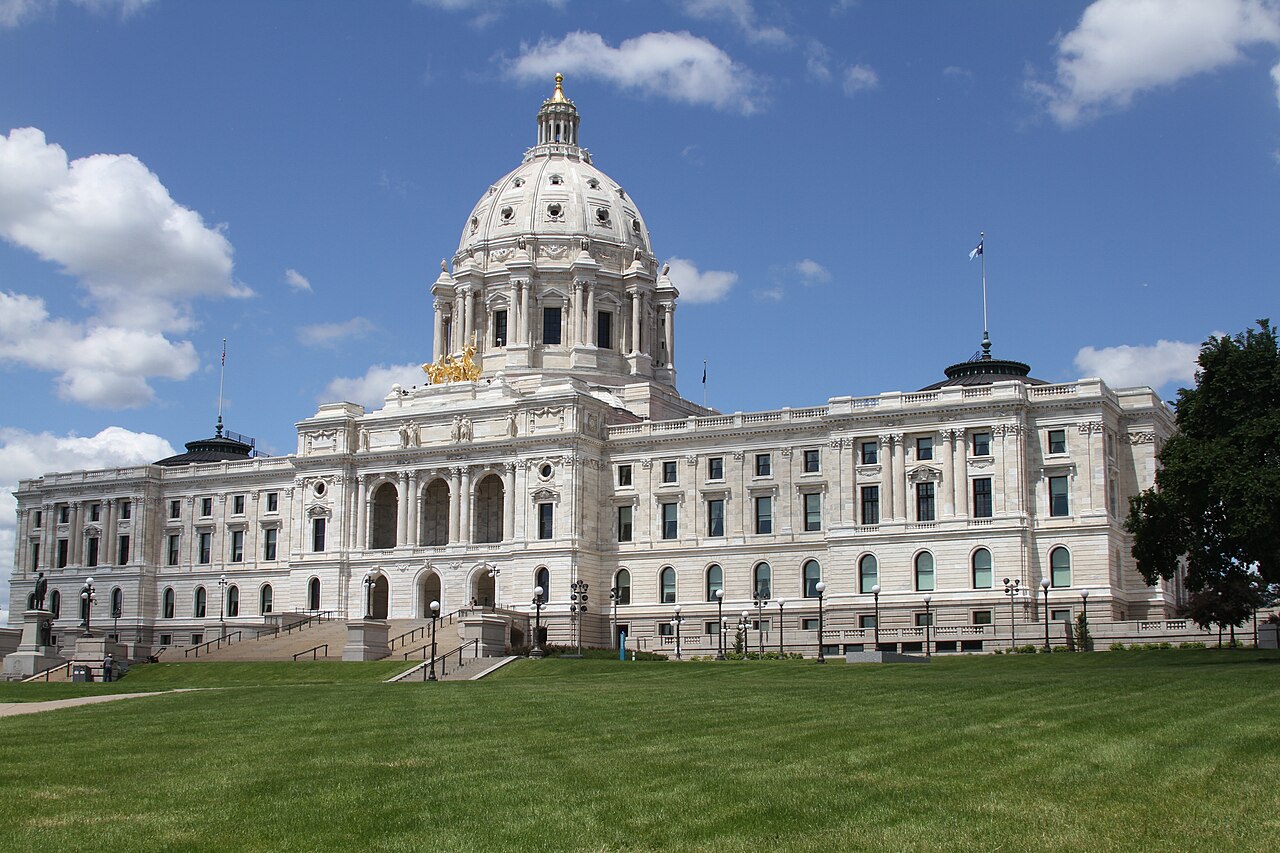
Featured image: Myotus / Wikimedia Commons, CC BY 4.0 (file page)
About this article
- Fact-checked before publication.
- Published · Updated