Secret Hold: Who Blocked the Coburn-Obama Spending Database Bill
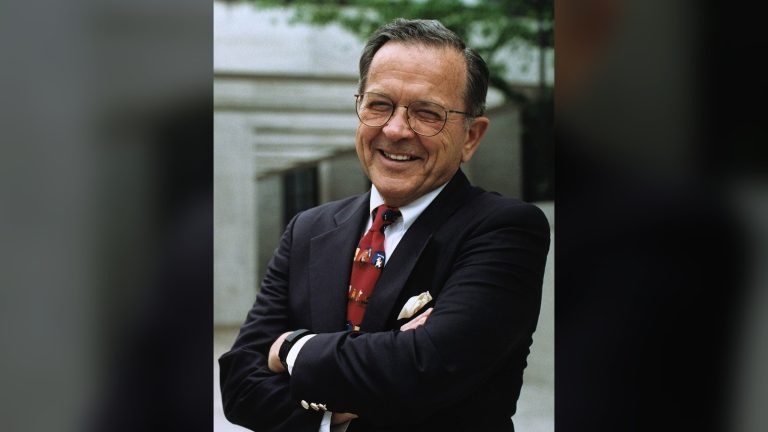
The anonymous senator behind the hold turned out to be two senators. Ted Stevens (R-AK) and Robert Byrd (D-WV) both acknowledged holds. Once their names were public, both holds were lifted, the Senate passed the bill on September 7, 2006, and President George W. Bush signed it into law on September 26, 2006. The database it created, USAspending.gov, has been public since December 2007. Earmarks went through a ban of their own: Congress stopped them in 2011 and brought them back in 2021 as Community Project Funding in the House and Congressionally Directed Spending in the Senate. As of November 2026, members still have to post their requests online, and none of the fiscal 2027 requests will be funded unless Congress passes full-year spending bills.
What the 2006 hold was about
In late August 2006, an unnamed senator placed a hold on the Federal Funding Accountability and Transparency Act, S. 2590. The bill would have put the details of federal contracts and grants into a free, searchable public database. CNN’s Jack Cafferty said it covered $2.5 trillion in government contracts. Because the hold was anonymous, nobody outside the Senate knew who was keeping the bill off the floor.
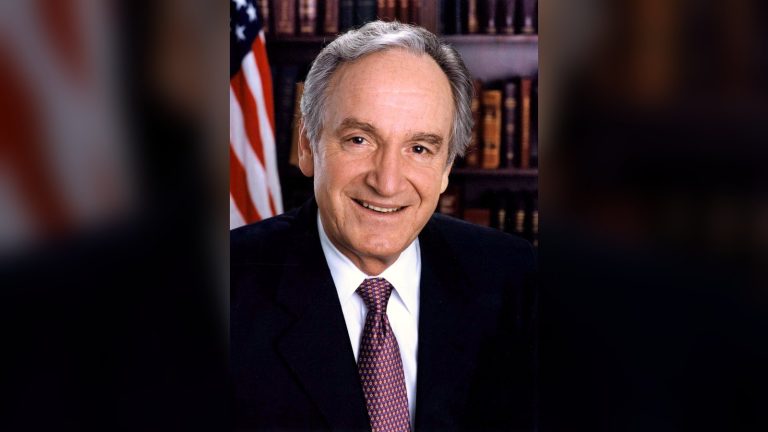
Sen. Tom Coburn (R-OK) introduced S. 2590 on April 6, 2006, with Sens. Barack Obama (D-IL), Tom Carper (D-DE) and John McCain (R-AZ). The bill required the Office of Management and Budget to publish who received federal awards, how much they got and what for. The Senate Homeland Security and Governmental Affairs Committee approved it in the summer of 2006. Then the hold stopped it.
A hold is an informal notice that a senator plans to object to a bill coming up for a vote. The Senate passes most minor bills by unanimous consent, so one objection can stall a bill for good. In 2006, senators could place these holds without anyone finding out who they were.
How the PorkBusters campaign tried to find the senator
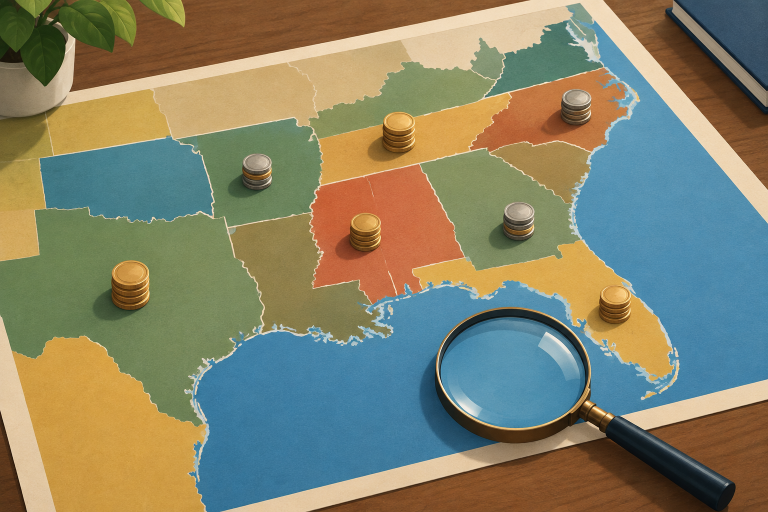
PorkBusters was a campaign by bloggers against congressional earmarks. Along with other blogs, it set out to identify the senator by asking every Senate office to deny the hold on the record. At one point the campaign said the only senators who had not answered were from Alaska, Delaware, Florida, Idaho, New Hampshire, Utah and West Virginia. Its organizers asked readers in those states to call their senators and ask them to deny placing a secret hold to stop legislation sponsored by Senators Obama and Coburn from ever coming to a vote. Readers were then asked to report what they were told to the campaign’s suspect tracker.
The effort crossed party lines. Reporting at the time named PorkBusters and GOP Progress on the right and TPMmuckraker and Wonkette on the left. Bloggers called Senate offices during the August recess and posted the names of senators who denied it.
The CNN segment that raised the profile
The post that PorkBusters shared began with a CNN segment. Its author first heard about the hold while watching Jack Cafferty on The Situation Room, with John King hosting. The relevant part of the transcript reads:
KING: Take care Max. Thank you. Now Jack Cafferty joins us from New York. Hi, Jack.
JACK CAFFERTY, CNN ANCHOR: John, how would you like to pull the curtain back on that secret little world of government contracting? Actually it’s not so little. Legislation introduced by Democrat Senator Barack Obama and Republican Senator Tom Coburn was supposed to do just that, give us a look inside. It would have brought transparency to $2.5 trillion worth of government contracts. You could just go online, see how much, who got the contract, et cetera. The bill did get through the Senate Homeland Security and Governmental Affairs Committee earlier this summer, but a funny thing happened to it on the way to the Senate floor, an unknown senator has put a secret hold on this legislation, which means unless that same unknown senator lifts the hold, this measure will never be voted on. Nobody knows who did this yet, but there’s a Herculean effort underway to try to find out. Someone in the United States Senate doesn’t think the public should know how $2.5 trillion of our money is awarded to government contractors. Now there are only 100 weasels in the U.S. Senate, so you’d think they could find out who did this and I hope they do. Here’s the question. Does a single senator have a right to keep $2.5 trillion in government contracts secret from the tax-paying public? Just incredible.
KING: Maybe the secret senator is watching and will send you a note.
CAFFERTY: Yes, I doubt that will happen. I really hope they find out who this is.
KING: We’ll keep on it and we’ll see what the answers are. Thank you, Jack.
The $2.5 trillion figure was Cafferty’s description of what the bill covered. The final law applied to federal awards in general, meaning both contracts and grants.
The August 30 update
On the morning of Wednesday, August 30, 2006, the post was updated. By then the only senators left as suspects on this website were from Alaska, Idaho, New Hampshire and Nevada.
The author made a distinction. Holds were an old tactic that senators had used for many reasons, and the author called them “not the best way to do things.” The bigger objection was that this one was anonymous. In the author’s view, voters could not hold a senator responsible for blocking spending information when they didn’t know who it was. The post urged readers to keep pressing until the bill got a vote. The full original post appeared on the blog Chapterhouse.
How the hold ended
The hold lasted only a few days after the August 30 update. That same day, a spokesman for Stevens confirmed that the senator had a hold on the bill. Byrd also acknowledged a hold, and reports said he had already lifted it. Both holds were gone by early September, and the bill moved through both chambers quickly.
| Date | Event |
|---|---|
| April 6, 2006 | Coburn introduces S. 2590 with Obama, Carper and McCain |
| Summer 2006 | Senate Homeland Security and Governmental Affairs Committee approves the bill |
| Late August 2006 | Anonymous hold reported. CNN and bloggers take up the search |
| August 30, 2006 | Stevens’s office confirms his hold |
| September 7, 2006 | Holds lifted. Senate passes S. 2590 by unanimous consent |
| September 13, 2006 | House passes the bill by voice vote |
| September 26, 2006 | President Bush signs it as Public Law 109-282 |
| December 13, 2007 | OMB launches USAspending.gov |
Stevens’s spokesman, Aaron Saunders, said the senator wanted to make sure the bill would not “create another layer of bureaucracy.” He also disputed the word “secret,” telling reporters, “We’re baffled as to why it’s been called a secret hold.” Coburn’s spokesman, John Hart, replied that “This hold was a secret.” He said Stevens’s office had ignored calls from the media and bloggers for weeks. Coburn later said his staff gave Stevens’s office a detailed cost-benefit analysis of the bill, and that Stevens lifted his hold after that.
Secret holds after 2006
The episode helped push the Senate toward disclosure rules, but secret holds still exist in practice. Congress tried to address them twice.
- 2007: The Honest Leadership and Open Government Act (Public Law 110-81) added a disclosure requirement for holds. Critics in the Senate said it was easy to get around, because it applied only after an objection was formally raised on the floor.
- 2011: On January 27, 2011, the Senate adopted S.Res. 28 by a vote of 92 to 4, with Sens. Ron Wyden (D-OR) and Chuck Grassley (R-IA) leading the push. Under this standing order, a senator who gives party leaders notice of an intent to object must publish that notice in the Congressional Record within two session days.
The 2011 rule hasn’t ended anonymous holds. Senators can have colleagues relay their objections, and leaders often treat informal objections as holds anyway. A 2022 study in the Journal of Civic Information by Shawn Musgrave found only about 150 holds in the public record over 14 years. It called the rule largely ineffective.
Where federal spending transparency stands in 2026
The database from the 2006 law still exists, and it covers far more than it did at first. OMB launched USAspending.gov on December 13, 2007. The Digital Accountability and Transparency Act of 2014, known as the DATA Act, made the site cover a much wider range of spending and required standard data formats across agencies. The Treasury Department now runs the site.
Data quality is still a concern. In a series of reports ending in late 2021, the Government Accountability Office found that USAspending.gov had improved but still had gaps. Agencies interpreted data standards differently, and Department of Defense procurement data was posted with a 90-day delay. GAO also asked Congress to keep requiring inspectors general to review their agencies’ spending data on a regular basis.
Earmarks: banned in 2011, back in 2021
Earmarks, the spending PorkBusters campaigned against, were banned and then returned under new names and rules. House Republicans adopted a one-year moratorium in March 2010, Senate Republicans followed with their own in November 2010, and Senate Appropriations Chairman Daniel Inouye (D-HI) announced a committee moratorium on February 1, 2011. These were party and committee policies, not laws, and critics said some earmark-like spending continued. Congress brought earmarks back in 2021 for fiscal 2022, as Community Project Funding in the House and Congressionally Directed Spending in the Senate.
How the current system works
Under the rules in place for fiscal 2027:
- Requests are public. Members post their requests online and certify that they and their immediate families have no financial interest in the projects.
- Request limits. The House Appropriations Committee let each member submit up to 20 Community Project Funding requests for fiscal 2027, up from 15 the year before.
- Some bills are closed. The House took no requests in the Defense, Financial Services and General Government, Legislative Branch, and National Security and State subcommittees.
- Recipients. In the House, only state, local and tribal governments and certain eligible nonprofits can receive the money. For-profit companies are excluded.
- Spending cap. Earmarks are limited to a small share of discretionary spending. The widely cited ceiling is 1 percent, and some House guidance described a lower House limit.
- Senate guidance. Senate Appropriations Chair Susan Collins (R-ME) and Vice Chair Patty Murray (D-WA) released fiscal 2027 guidance for Congressionally Directed Spending on March 18, 2026.
What earmarks cost now
Totals differ depending on who counts and what they include. Roll Call reported nearly $16 billion in earmarked funding for fiscal 2026, after fiscal 2025 ended with a full-year stopgap that carried no earmarks. Citizens Against Government Waste, a group that opposes earmarks, put the fiscal 2026 total at $23.7 billion in its 2026 Congressional Pig Book. That count includes 110 items worth $8.3 billion that the group said had no named sponsor.
What happens next
The fiscal 2027 earmarks are still on hold. The government is running on a continuing resolution, the Continuing Appropriations Act, 2027 (Division A of Public Law 119-103), which funds agencies through December 11, 2026. A continuing resolution extends existing funding levels and does not fund new member projects. The fiscal 2027 requests will only be paid for if Congress passes full-year appropriations bills that include them.
FAQ
Who placed the secret hold on the Coburn-Obama bill?
Sen. Ted Stevens (R-AK) confirmed through a spokesman on August 30, 2006, that he had a hold on S. 2590. Sen. Robert Byrd (D-WV) also acknowledged a hold, which reports said he had already lifted. Both holds were gone before the Senate passed the bill on September 7, 2006.
Did the Federal Funding Accountability and Transparency Act become law?
Yes. The House passed it by voice vote on September 13, 2006, and President Bush signed it on September 26, 2006, as Public Law 109-282. It led to USAspending.gov, which OMB launched in December 2007.
Can senators still place secret holds?
Formally, no. Since S.Res. 28 in 2011, a senator who gives notice of an intent to object is supposed to publish it in the Congressional Record within two session days. In practice, researchers have found that relatively few holds are ever disclosed, so anonymous objections still happen.
Are earmarks banned today?
No. Congress banned earmarks from 2011 and brought them back in 2021. They are now called Community Project Funding in the House and Congressionally Directed Spending in the Senate, and they come with public disclosure, eligibility limits and a spending cap.
How can you see where a federal contract or grant went?
USAspending.gov, run by the Treasury Department, lets you search federal awards by recipient, agency, location and amount. Members of Congress also post their earmark requests on their official websites, and the House and Senate appropriations committees publish lists of the projects in each bill.
What was PorkBusters?
From 2006 to 2010, PorkBusters was a campaign run by bloggers against congressional earmarks. In 2006 it helped identify the senators behind the hold on the Coburn-Obama bill by asking Senate offices to deny responsibility on the record.
Sources
- Congressional Research Service, “The Federal Funding Accountability and Transparency Act: Background, Overview, and Implementation Issues” (RL33680)
- Congressional Research Service, “‘Holds’ in the Senate” (R43563)
- Congressional Record, January 27, 2011, text of S.Res. 28
- Congress.gov, CRS report “Overview of Continuing Appropriations for FY2027 (Division A of P.L. 119-103)” (R49353)
- Government Accountability Office, DATA Act reports GAO-20-75 and GAO-22-104702
- Senate Appropriations Committee, FY 2026 Congressionally Directed Spending
- Public Papers of the Presidents, George W. Bush, 2006 signing statement
- Mother Jones, Talking Points Memo and Daily Kos, 2006 reporting on the hold
- Roll Call, “Earmarks flood spending bills after a year’s hiatus” (2026)
- Citizens Against Government Waste, 2026 Congressional Pig Book
About this article
- Fact-checked before publication.
- Published · Updated