Earmarks in the 2006 Labor-HHS Appropriations Bill
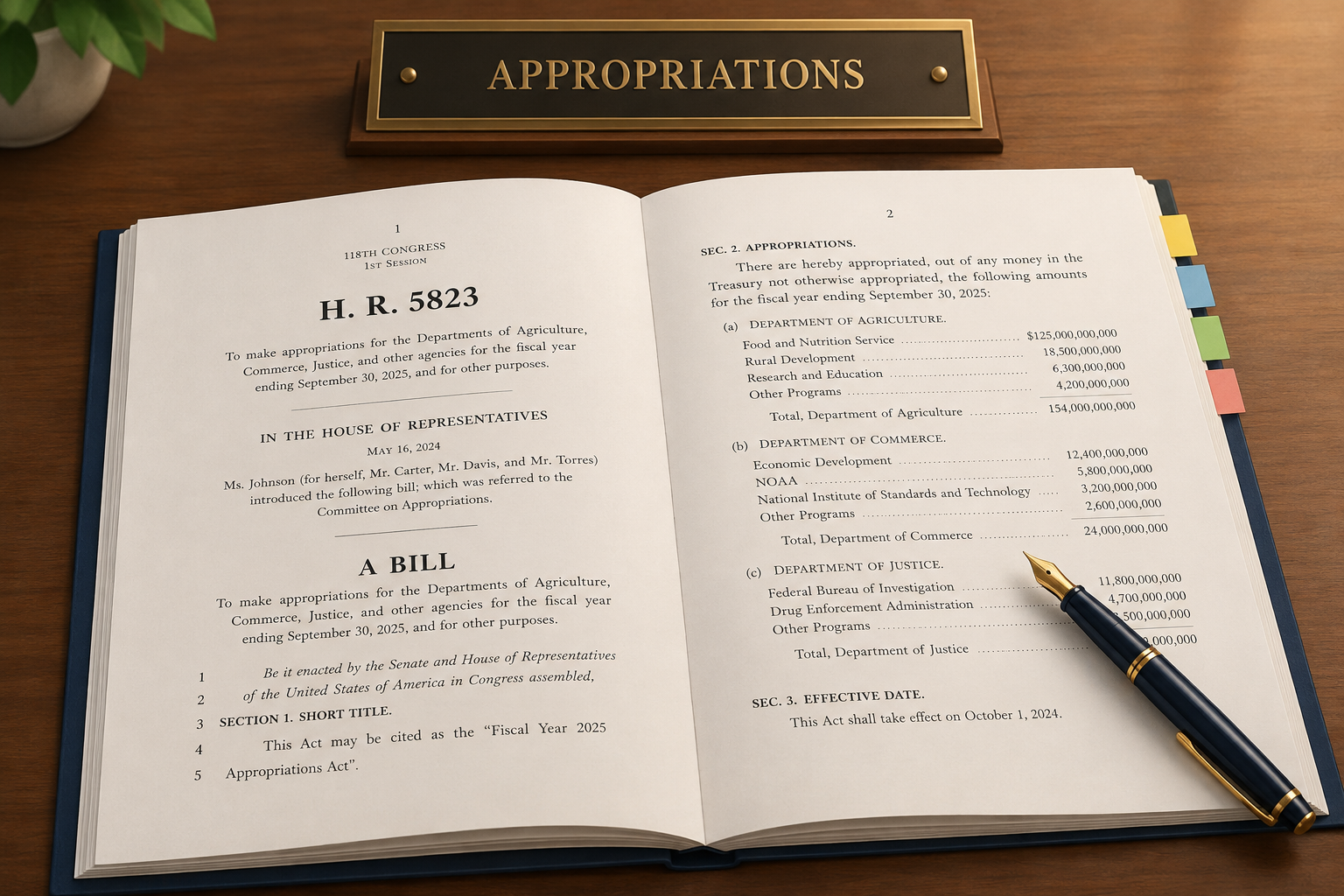
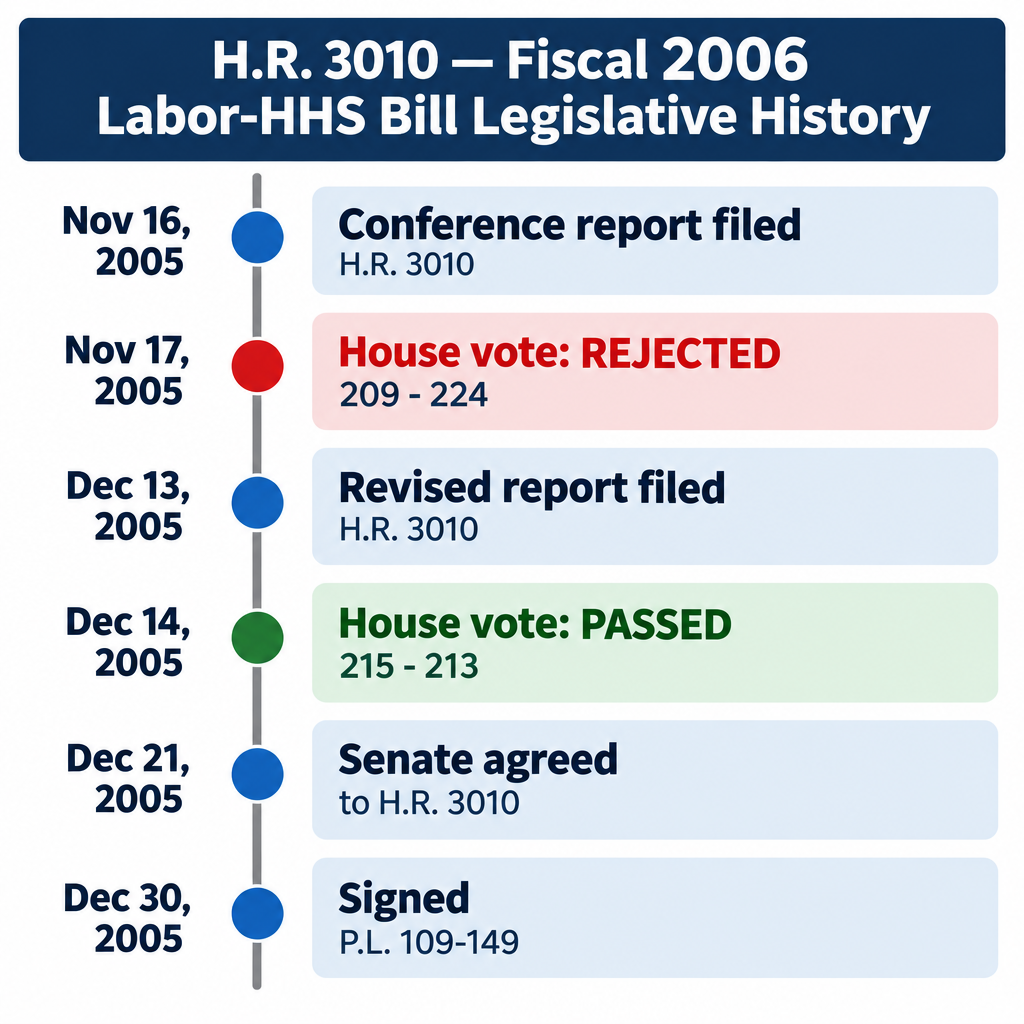
The fiscal 2006 Labor-HHS-Education bill (H.R. 3010) carried earmarks in the House and Senate versions. On November 17, 2005, the House rejected the first conference report 209-224. A revised report passed 215-213 on December 14, and the bill became law on December 30, 2005, as Public Law 109-149. Congress banned earmarks in 2011 and brought them back in 2021 under new names: Community Project Funding in the House and Congressionally Directed Spending in the Senate. As of November 2026, these requests must be posted online, members must certify they have no financial interest, for-profit recipients are not allowed, and the fiscal 2027 Labor-HHS bill is still unfinished under a stopgap that runs through December 11, 2026.
HHS Earmarks
The tables below show several views of the earmarks in the fiscal 2006 Labor-Health and Human Services-Education appropriations bill. They were compiled in 2005, while Congress was still working on the bill. The final law differed from the versions shown here. The timeline further down explains how. See also:
•
•
Club for Growth
•
Sunlight Foundation
•
•
Instapundit
•
Tim Chapman
click here to browse the database
What happened to the fiscal 2006 Labor-HHS bill
Short answer: It took two conference reports to pass. The House voted down the first one in November 2005 and passed a revised one in December. The bill became law at the very end of the calendar year, three months after fiscal 2006 began.
Labor-HHS-Education is usually the largest of the non-defense appropriations bills. It funds the National Institutes of Health, the Centers for Disease Control and Prevention, and Department of Education programs. In 2005, the House subcommittee in charge was chaired by Rep. Ralph Regula (R-Ohio), and Rep. David Obey (D-Wis.) was the top Democrat on the full Appropriations Committee.
| Date | Action | Result |
|---|---|---|
| November 16, 2005 | First conference report filed (H. Rept. 109-300) | Sent to House floor |
| November 17, 2005 | House vote on first conference report | Rejected, 209-224 |
| December 13, 2005 | Further conference report filed (H. Rept. 109-337) | Sent to House floor |
| December 14, 2005 | House vote on further conference report | Passed, 215-213 |
| December 21, 2005 | Senate action | Agreed by unanimous consent |
| December 30, 2005 | Signed by President George W. Bush | Public Law 109-149 |
A legislative bulletin from the House Republican Study Committee said the November 17 vote was the first time since 1995 that the House had defeated a conference report on the floor.
Where the earmarks went
The House and Senate versions of the bill carried member-requested projects, which the tables above document. During the November 17 floor debate, a supporter described the conference agreement as having “no earmarks,” along with no budget gimmicks and no emergency spending designations. Opponents focused on overall funding levels, not projects. Then-Minority Whip Steny Hoyer (D-Md.) said the December version was “virtually identical” to the one the House had rejected, because in his view it still underfunded key domestic programs.
To read the old tables correctly, keep this in mind: they show what the bill proposed in 2005, not what was enacted.
How Labor-HHS earmarks work in November 2026
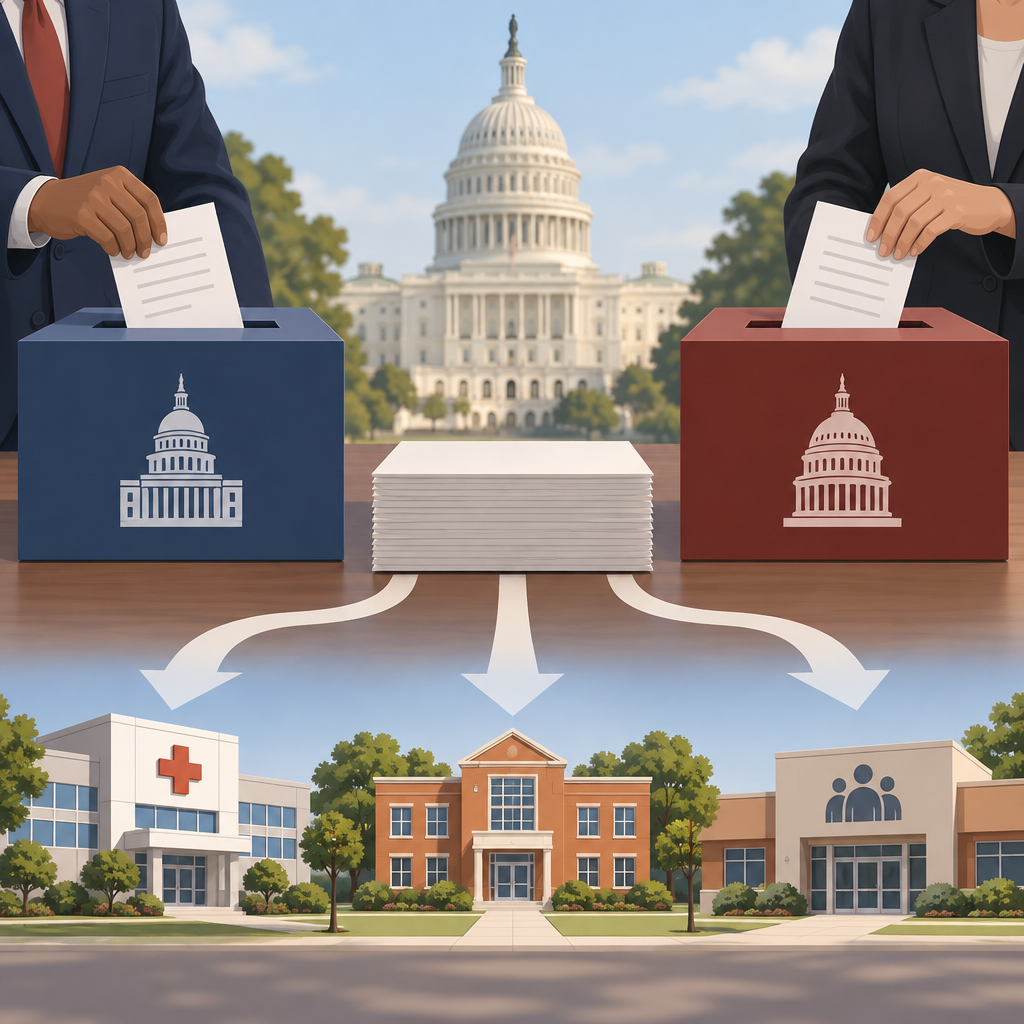
Short answer: Earmarks are back, but under chamber rules adopted in 2021, and they carry more disclosure requirements than in the 2005 era. The House calls them Community Project Funding (CPF). The Senate calls them Congressionally Directed Spending (CDS).
From the ban to the comeback
After the 2010 elections, House Republicans adopted an earmark moratorium for the 112th Congress, starting in 2011, and the Senate followed. The ban lasted ten years. In 2021, the House and Senate Appropriations Committees brought back member-directed funding for the fiscal 2022 bills. Under the new system, the Congressional Research Service notes, these requests remain subject to the House rules on earmarks that have applied since 2007. These are rules of each chamber, not federal law.
The current request process
- A member gets project proposals from local governments, public bodies or nonprofits. For-profit companies cannot receive CDS, according to Senate guidance for fiscal 2026, and the House excludes them from CPF.
- The member sends requests to the Appropriations Committee. House offices have been limited to 15 requests per fiscal year.
- The member posts each request online and certifies that neither the member nor their immediate family has a financial interest in it.
- The committee checks eligibility and decides which projects to fund, within an overall cap on earmark spending tied to total discretionary spending.
- Funded projects appear in disclosure tables published with the bill or its explanatory statement, showing the recipient, amount and requesting member.
Labor-HHS earmarks in recent bills
The House Appropriations Committee approved its fiscal 2027 Labor-HHS-Education bill on June 9, 2026, by a vote of 34-28. The bill provides $189.3 billion in discretionary funding, which the committee describes as 3 percent below the fiscal 2026 level. The committee published a table of the Community Project Funding requests in the bill. A summary from House Appropriations Committee Democrats separates totals “excluding Community Project Funding/Congressionally Directed Spending,” so the bill’s totals include earmark dollars. Senate appropriators had not marked up their version by the time the stopgap passed.
Full-year fiscal 2026 Labor-HHS funding was enacted on February 3, 2026, as part of the Further Consolidated Appropriations Act, 2026 (H.R. 7148, Public Law 119-75). The Senate passed it 71-29. This came after the October to November 2025 shutdown and a second, shorter lapse in funding once the follow-up continuing resolution expired. CRS puts the bill’s discretionary total at about $226.1 billion.
| Point of comparison | Fiscal 2006 bill (H.R. 3010) | Fiscal 2027 House bill |
|---|---|---|
| What earmarks were called | Earmarks, or member projects | Community Project Funding |
| Disclosure | No chamber-wide rule until 2007 | Requests posted online, with financial-interest certification |
| Per-member limit | None | 15 requests (House) |
| Status | Law, December 30, 2005 | Approved by committee June 9, 2026; not enacted |
What happens next for fiscal 2027
Short answer: Labor-HHS agencies are running on a continuing resolution, H.R. 6500 (Public Law 119-103), which President Donald Trump signed on September 2, 2026. It funds programs at fiscal 2026 rates and under fiscal 2026 conditions through December 11, 2026. The House passed it 370-48 and the Senate 90-6.
A continuing resolution carries no new earmarks. New CPF and CDS projects get funded only if Congress passes full-year bills or an omnibus package. If Congress instead extends the stopgap into 2027 or for the full year, the fiscal 2027 project lists would not be funded. Any agency without a new law faces a funding lapse starting December 12. Lobbyists who track the committee have said that what the lame-duck Congress does in December will largely decide whether this year’s local projects survive.
FAQ
Did the final fiscal 2006 Labor-HHS law include earmarks?
The earmarks in the House and Senate versions were the ones documented in the tables above. During the November 17, 2005, debate, a supporter told the House that the conference agreement contained “no earmarks.” The bill was enacted as Public Law 109-149 on December 30, 2005, after a revised conference report narrowly passed the House 215-213.
Why did the House reject the first conference report?
The vote on November 17, 2005, was 209-224. Opponents, including House Democratic leaders, said the bill underfunded education, health and labor programs. Some Republicans also voted no. A House Republican Study Committee bulletin said it was the first conference report defeated on the House floor since 1995.
When were earmarks banned, and why did they come back?
House Republicans adopted a moratorium after the 2010 elections, and it took effect in 2011. The Senate followed. In 2021, both Appropriations Committees brought earmarks back for the fiscal 2022 bills as Community Project Funding and Congressionally Directed Spending. Supporters said Congress should decide where funds go rather than leave it to agencies, and the new system added disclosure rules and caps.
How can you see which Labor-HHS projects your member requested?
Each House and Senate office that requests projects must post its requests online. The House and Senate Appropriations Committees publish tables of funded projects with each bill. For the fiscal 2027 House Labor-HHS bill, the committee released a CPF table with the bill in June 2026.
Who can receive Community Project Funding or Congressionally Directed Spending?
State and local governments, public institutions such as hospitals and universities, and nonprofit organizations can. For-profit entities cannot. Each project has to fit an existing federal program account, such as health services or education innovation grants within the Labor-HHS bill.
Will fiscal 2027 earmarks be funded?
That depends on what Congress does before the December 11, 2026, deadline. Full-year bills or an omnibus could carry the projects. Another continuing resolution would not. As of November 10, 2026, no fiscal 2027 Labor-HHS bill has been enacted, and the Senate committee has not marked up its version.
Sources
- Congress.gov: H.R. 3010 (109th Congress), bill status and actions
- Congressional Record, House, November 17 and December 14, 2005
- Congressional Research Service: Labor, Health and Human Services, and Education: FY2006 Appropriations (RL32952)
- House Republican Study Committee: Legislative Bulletin on the H.R. 3010 further conference report, December 14, 2005
- Congressional Research Service: Community Project Funding: House Rules and Committee Protocols (R46722)
- Congressional Research Service: Status of FY2026 Labor, Health and Human Services, and Education Appropriations (R48616)
- Congressional Research Service: Status of FY2027 Labor, Health and Human Services, and Education Appropriations (R49344)
- Congressional Research Service: Overview of Continuing Appropriations for FY2027 (R49353)
- House Appropriations Committee: Committee Approves FY27 Labor, Health and Human Services, and Education Appropriations Act, and the FY27 CPF table
- Senate Appropriations Committee: Congress Approves FY 2026 Labor-HHS-Education Appropriations Bill
- The White House: Congressional Bill H.R. 6500 Signed into Law, September 2026
About this article
- Fact-checked before publication.
- Published · Updated