Pork vs. the Navy: Who Won the 2006 Fight Over Northrop Grumman’s Katrina Money?
The Navy won on the main point. When the 2006 war and hurricane supplemental (H.R. 4939) became law in June 2006, conferees dropped the Senate language that would have made the Navy pay Northrop Grumman up to $500 million for Katrina “business disruption” costs. In its place they set aside at least $140 million for repairs to Gulf Coast shipyards that already held Navy contracts. Congress banned earmarks in 2011 and brought them back in 2021 as Community Project Funding in the House and Congressionally Directed Spending in the Senate. As of November 2026 those rules cap earmarks at 1% of discretionary spending, bar for-profit companies from receiving them, require public disclosure and allow GAO audits. Under those rules, a payment aimed at a single defense contractor like this one could not be submitted as an earmark.

What the Senate provision would have done
In spring 2006, UPI reported that Sen. Thad Cochran (R-Miss.), then chairman of the Senate Appropriations Committee, was pushing to make the U.S. Navy pay shipbuilder Northrop Grumman up to $500 million for “business disruption” costs due to hurricane Katrina.
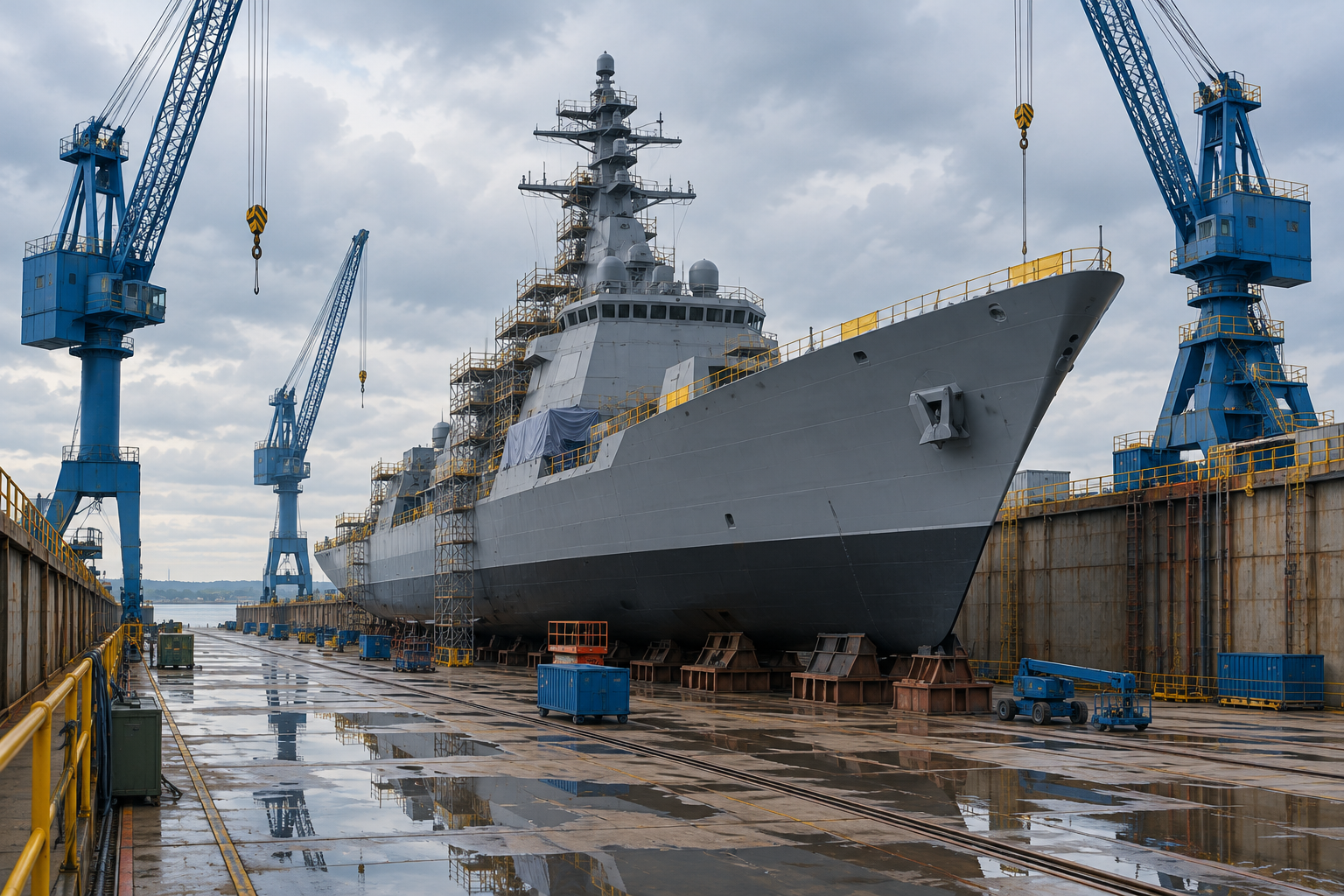
The language sat in the Senate’s version of the emergency supplemental, which totaled about $106.5 billion and covered Iraq, Afghanistan and hurricane recovery. The Pentagon and House Republicans opposed it. It would have required the Navy to pay the company before any insurance settlement was reached. Insurance usually covers this kind of loss. Northrop and its insurer, Factory Mutual (FM Global), were in court over damage to Northrop’s shipyards in Pascagoula and Gulfport, Mississippi, which is Cochran’s home state.
Northrop would have had to pay the Navy back later. The Pentagon worried that the money might never come back. “We don’t think it’s in our best interests to do this,” said Capt. Tom Van Leunen, chief spokesman for the Navy’s acquisition office.
UPI reported that payments to Northrop could have run from $150 million to the full $500 million, drawn from up to $2.7 billion appropriated for Katrina-related damage, depending on how negotiations went. The Navy said that could push back its own needed spending by a year or more.
“We budgeted [the request] for government facilities. That does not include fixing a Northrop Grumman crane,” Van Leunen said.
What each side argued
Northrop said the money would not go toward facilities damage. It would cover overhead costs from delivery delays, which the company said was what Congress intended. The company was not “seeking a bailout, but rather payment to the shipyards to help in the restoration and recovery of these shipyards to pre-Katrina performance levels,” said Northrop spokesman Randy Belote.
Opponents made three main arguments:
- Insurance first. A Defense Contract Management Agency memo said it would be inappropriate to let Northrop bill the government for costs that insurance might cover.
- Precedent. Navy officials warned that paying in advance could invite other contractors to ask for the same treatment, and could make it easier for insurers to deny future claims.
- Incentives. The Congressional Research Service noted that if the Navy paid first, Northrop would have little apparent reason to keep up long, complicated negotiations with its insurer.
The House Appropriations Committee rejected the payment and said federal money should not “substitute for private insurance benefits.” In the Senate, Sen. Tom Coburn (R-Okla.) led the opposition and called the payment “corporate welfare.” According to The Washington Post, a floor effort to strike the provision failed 51-48.
How the fight ended
The Senate passed H.R. 4939 by a vote of 77-21 on May 4, 2006. The House had passed its version 348-71 on March 16. President George W. Bush had threatened to veto any supplemental over $94.5 billion, which put the larger Senate bill’s add-ons at risk in conference.
The Congressional Research Service reported that conferees removed the Senate’s new Section 2303, the language that would have made the Navy liable for business disruption costs. Instead, the final law (Public Law 109-234, signed in June 2006) said that at least $140 million of $775 million in Navy hurricane funding would go to infrastructure improvements at damaged Gulf Coast shipyards with existing Navy contracts. That money paid for physical repairs. It did not pay Northrop’s overhead from delays.
The insurance case that started it
The court fight that the provision would have gotten ahead of ran for years:
| Date | Event |
|---|---|
| November 2005 | Northrop sues Factory Mutual over Katrina coverage |
| August 2007 | District court finds the excess policy covers the loss |
| August 2008 | Ninth Circuit reverses, citing the policy’s flood exclusion, and sends the case back |
| March 2011 | Northrop spins off its shipbuilding business as Huntington Ingalls Industries |
| July 2013 | A ruling leaves about $387 million in claims alive |
| 2013 | Huntington Ingalls settles with Factory Mutual for $180 million, Law360 reported |
The settlement came about seven years after the Senate tried to have the Navy pay first and collect later.
The campaign contribution angle
PorkBusters, the blogger-run anti-earmark campaign that operated at this address from 2006 to 2010, linked the provision to campaign finance. The original post introduced its numbers with the line “On a completely unrelated note, let’s check who Senator Cochran’s top campaign contributors are”, and quoted this career profile, which covered contributions since 1989:
| Rank | Contributor | Amount (career, since 1989) |
|---|---|---|
| 1 | BellSouth Corp. | $33,250 |
| 2 | Northrop Grumman | $33,175 |
The gap was $75. The post joked that Northrop needed to give $76 more to take first place. Its point was to raise the question of whether the shipbuilder’s giving and the senator’s provision were connected. It offered no evidence that one caused the other, and Cochran’s office did not accept that framing. Cochran consistently described his Gulf Coast work as part of the region’s recovery from the storm.
The post then argued that a state’s second senator might act as a check. It ended with “Oh. Never mind.” The line appeared to refer to Mississippi’s other senator, Trent Lott (R), whose hometown of Pascagoula is home to the Ingalls shipyard and who had long supported it.
Where the people and companies are now
- Thad Cochran chaired Senate Appropriations again from 2015 to 2018. He resigned on April 1, 2018, and died on May 30, 2019.
- Trent Lott resigned from the Senate in December 2007.
- Northrop Grumman no longer builds ships. The Pascagoula and Gulfport yards went to Huntington Ingalls Industries in the 2011 spinoff.
- PorkBusters stopped campaigning in 2010. The current site at this address has new, unrelated owners and explains federal spending without taking sides.
How earmarks work in November 2026
Earmarks still exist, under rules written partly in response to fights like this one. House Republicans banned them from 2011. Both chambers brought them back for fiscal 2022 with new limits.
| Rule | House (Community Project Funding) | Senate (Congressionally Directed Spending) |
|---|---|---|
| Overall cap | Total limited to 1% of discretionary spending | Total limited to 1% of discretionary spending |
| Who can receive | Public and nonprofit entities, no for-profits | No for-profits; senators must certify this |
| Disclosure | Members post requests online | Senators post requests online |
| Request limit, FY2027 | 20 per member, up from 15 in FY2026 | No per-senator cap set in the same way |
| Defense bill | No Community Project Funding accepted in FY2027 | Accepted under committee rules |
| Oversight | Subject to GAO audit | Subject to GAO audit |
For fiscal 2027, House members posted their requests between March 27 and April 17, 2026. Senators submitted 11,472 requests worth about $46.47 billion, according to the National Taxpayers Union Foundation. None of the 12 regular FY2027 bills was law by October 1. A stopgap signed in September 2026 funds the government through December 11, 2026. Lawmakers have until then to pass the bills, extend the stopgap, or allow a lapse in funding.
FAQ
Did Northrop Grumman get the $500 million?
No. Conferees removed the Senate language that would have made the Navy cover business disruption costs. The final law set aside at least $140 million of $775 million in Navy hurricane funding for physical repairs at Gulf Coast shipyards with Navy contracts. That did not cover the delay-related overhead Northrop had asked for.
Was the Cochran provision an earmark?
Critics, including PorkBusters and Sen. Tom Coburn, called it one because it steered money toward one named company in one state. Supporters described it as hurricane recovery aid. Under current rules it could not be an earmark at all, because both chambers bar for-profit companies from receiving Community Project Funding or Congressionally Directed Spending.
Did Northrop ever recover its Katrina losses from insurance?
Partly. After years in court, including a 2008 Ninth Circuit ruling on the policy’s flood exclusion, Huntington Ingalls Industries settled with Factory Mutual for $180 million in 2013, Law360 reported. That was well below the hundreds of millions in claims still open earlier that year.
When were earmarks banned, and when did they come back?
In November 2010, House Republicans agreed to extend their earmark moratorium through the 112th Congress, which began in January 2011. In February 2011, Senate Appropriations Chairman Daniel Inouye (D-Hawaii) announced a Senate moratorium. Both chambers brought earmarks back for fiscal 2022 under the names Community Project Funding (House) and Congressionally Directed Spending (Senate). They have appeared in every appropriations cycle since.
Who builds Navy ships in Pascagoula today?
Huntington Ingalls Industries. Northrop Grumman completed the spin-off of Huntington Ingalls Industries on March 31, 2011. The new company took both the Ingalls yard in Pascagoula and Newport News Shipbuilding in Virginia, which Northrop had acquired in 2001.
Can you look up current earmarks for your state?
Yes. House members and senators must post their requests online. The appropriations committees publish tables of the earmarks included in each bill, listing the recipient, amount and sponsoring member.
Sources
- Congressional Research Service, FY2006 Supplemental Appropriations: Iraq and Other International Activities; Additional Hurricane Katrina Relief (RL33298)
- Congressional Research Service, Reallocation of Hurricane Katrina Emergency Appropriations: Defense and Other Issues (RL33197)
- U.S. Senate, Roll Call Vote 112, 109th Congress, 2nd Session (H.R. 4939 passage)
- Senate Appropriations Committee, Reforms and Regulations for Congressionally Directed Spending in Fiscal Year 2027
- Congressional Research Service, Agriculture and Related Agencies: FY2027 Appropriations (R49343)
- The White House, H.R. 6500 signing statement (Continuing Appropriations and Extensions Act, 2027)
- National Taxpayers Union Foundation, FY2027 House and Senate earmark request trackers
- Law360, Northrop Spinoff Settles Katrina Coverage Row For $180M
- The Washington Post, Northrop Grumman’s Money Grab (May 15, 2006)
- CorpWatch, Katrina: Northrop Makes Pitch for Storm Aid
About this article
- Fact-checked before publication.
- Published · Updated