Porkers of the Month: the 171 House members who voted against earmark disclosure
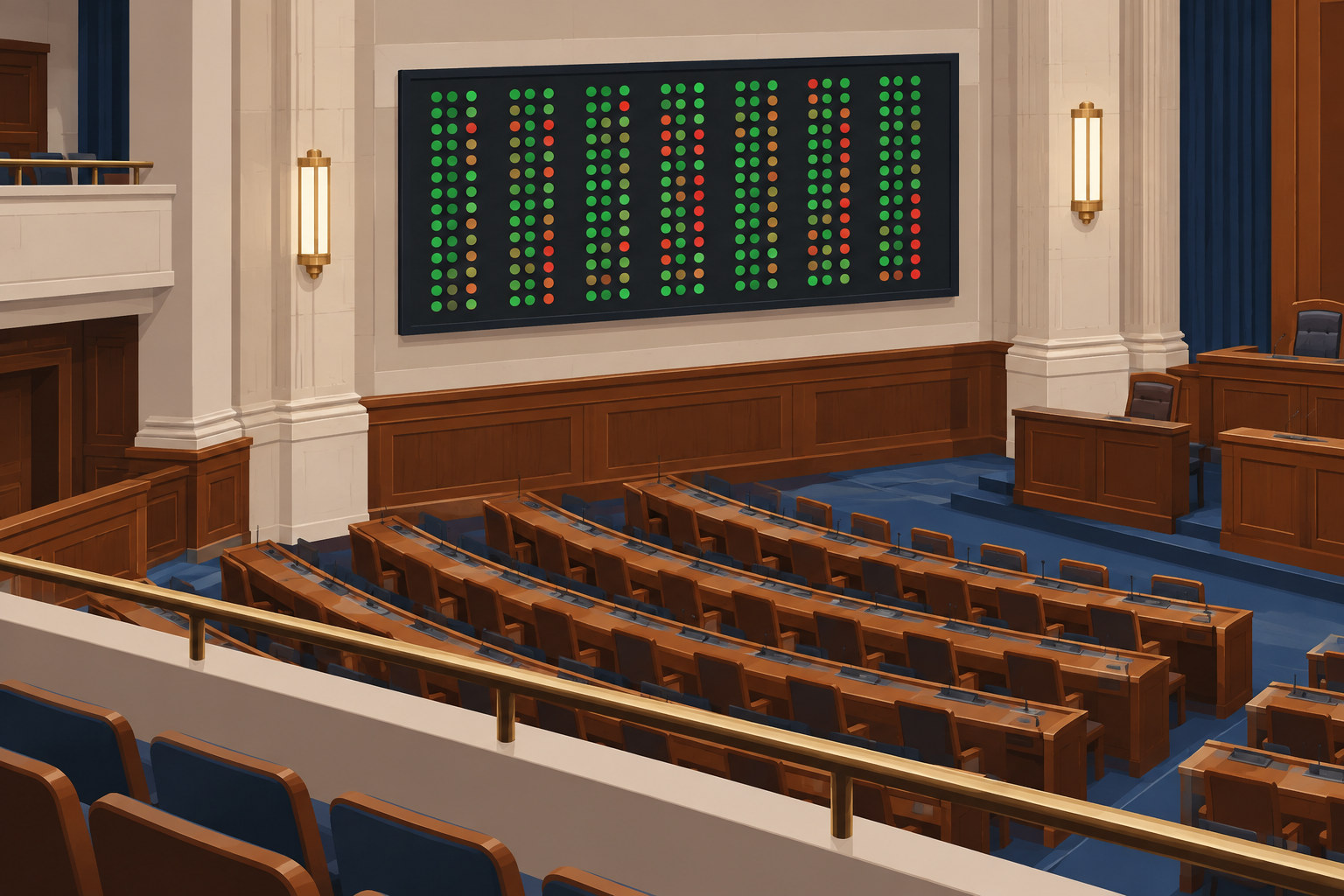
The earmark disclosure rule passed. On September 14, 2006 the House adopted it 245-171, and in January 2007 the new House made it part of its standing rules. Congress then banned earmarks from 2011 and brought them back in 2021 as Community Project Funding (House) and Congressionally Directed Spending (Senate). As of November 2026, each House member’s requests are posted online with the sponsor’s name. For fiscal 2027, House earmarks are capped at 0.5% of discretionary spending. The fiscal 2027 spending bills that would carry them are still unfinished under a stopgap that runs to December 11, 2026.
Why CAGW named 171 representatives Porkers of the Month
In September 2006, Citizens Against Government Waste (CAGW) named the 171 House members who voted against earmark disclosure its “Porkers of the Month.” On September 14, 2006, the House voted 245-171 for an internal rule change, H. Res. 1000. It required every earmark and its sponsor to be identified in spending, tax and authorization bills.
The House never voted on H. Res. 1000 directly. The recorded vote (Roll Call 449) was on H. Res. 1003, a procedural rule that adopted H. Res. 1000 automatically when it passed. H. Res. 1000 also defined a tax earmark: a revenue-losing provision that gives a deduction, credit, exclusion or other preference to a single beneficiary, as identified by the Joint Committee on Taxation.
“This is a serious step toward opening up the earmarking process,” CAGW President Tom Schatz said at the time. “Much remains to be done to end the abuse of earmarks, but that is no reason for voting against what is clearly an improvement over the status quo.”
Who voted no
CAGW reported that 147 of the 171 votes against the resolution came from Democrats and 24 from Republicans. According to CAGW, 22 of those 24 Republicans sat on the House Appropriations Committee, although not every committee member opposed the measure. CAGW described that committee as the source of most earmarks.
Committee Chairman Jerry Lewis (R-Calif.) had complained that the new requirement singled out appropriations bills. He said he would not whip the vote against it. CAGW argued that most earmarks of the time were added to spending bills by individual appropriators without debate or a public sponsor.
In its 2006 Congressional Pig Book, CAGW counted 9,963 earmarked projects in the 11 fiscal 2006 appropriations bills, at a record cost of $29 billion. The project count was down about 29% from 13,997 in fiscal 2005. The dollar total was up 6.2% from $27.3 billion. The $29 billion is CAGW’s own estimate, based on its seven criteria for “pork.” Other counts were lower, including one House Appropriations Committee figure of about $17 billion. Fiscal 2006 still holds CAGW’s dollar record two decades later.
What the rule could and could not do
Changes to House rules last only until the end of the Congress that adopts them. In 2006, House leaders said they would renew the rule at the start of the next term. The House rule also had no effect on Senate earmark procedure, though it added pressure on the Senate to act.
Both expectations were met. The 110th Congress readopted earmark disclosure in its opening rules package, H. Res. 6, in January 2007. The Senate wrote its own disclosure requirements into the Honest Leadership and Open Government Act of 2007.
What each side said
Opponents of the rule questioned how much it would accomplish. According to CAGW’s release, House Appropriations Committee Ranking Member David Obey (D-Wis.) called the change a “trivial pursuit.” House Rules Committee Ranking Member Louise M. Slaughter (D-N.Y.) called it “shameful” and “a sham.” Many Democrats argued that a temporary internal rule passed by the majority was weaker than the lobbying and earmark reform they had proposed.
Supporters, including House Rules Committee Chairman David Dreier (R-Calif.), called it the first disclosure requirement covering earmarks in appropriations, tax and authorizing legislation. CAGW argued that voting against disclosure made no sense when many of the “no” voters listed their own federally funded projects on their websites. It said “partisan politics and self-interest” explained the vote. On that basis, CAGW named all 171 “no” voters on H. Res. 1000 Porkers of the Month for September 2006.
About CAGW and the Porker of the Month award
Citizens Against Government Waste describes itself as the nation’s largest nonpartisan, nonprofit organization working to eliminate waste, fraud, abuse and mismanagement in government. Its Porker of the Month is a critical label it gives to lawmakers, officials and candidates it says have disregarded taxpayers’ interests. CAGW still gives the award. In May 2026 it named Sen. Patty Murray (D-Wash.) and Rep. Chuck Fleischmann (R-Tenn.).
The original version of this item was excerpted from the blog Liberally Conservative. At the time, this address hosted PorkBusters, a campaign run by bloggers from 2006 to 2010 to oppose congressional earmarks. PorkBusters asked readers to contact their members of Congress about specific earmarks and to share what they found about pork-barrel projects. Its coverage of the 2006 disclosure vote was part of that effort.
The record since 2006
Disclosure did not end earmarking, but it changed how earmarking works. The table below shows the main steps.
| Year | What changed | Who did it |
|---|---|---|
| 2006 | Temporary House rule requires naming earmarks and sponsors (H. Res. 1000) | House, 245-171 |
| 2007 | Disclosure made a standing House rule; Senate adds its own rules | 110th Congress (H. Res. 6; Honest Leadership and Open Government Act) |
| 2011 | Earmark moratorium begins | House and Senate Republican conferences, by party rule and committee practice, renewed in each later Congress |
| 2021 | Earmarks return as Community Project Funding and Congressionally Directed Spending | House Appropriations Chair Rosa DeLauro (D-Conn.) announced the House version in February 2021 |
| FY2026 | 8,392 earmarks worth $23.7 billion, by CAGW’s count | CAGW’s 2026 Congressional Pig Book, May 2026 |
| FY2027 | House cap of 20 requests per member; total capped at 0.5% of discretionary spending | House Appropriations Committee guidance |
CAGW ranks the fiscal 2026 total as the fourth highest since its first Pig Book in 1991. Only fiscal 2006 ($29 billion), fiscal 2005 ($27.3 billion) and fiscal 2023 ($26.1 billion) were higher. Later CAGW material revised the fiscal 2026 count to 8,595 earmarks and about $24 billion.
For fiscal 2027, the House opened its request portal on February 25, 2026, and posted members’ requests publicly that spring. Four House subcommittees took no Community Project Funding requests that cycle: Defense, Financial Services and General Government, Legislative Branch, and National Security/State. The National Taxpayers Union Foundation found that 42 House members requested no earmarks at all. The House-passed fiscal 2027 Agriculture bill funds earmarks through five USDA accounts. A September 2026 Congressional Research Service report found that its largest earmarks ranged from $5 million to $8.5 million.
None of the 12 regular fiscal 2027 bills had been enacted when the fiscal year began. Congress passed H.R. 6500, the Continuing Appropriations and Extensions Act, 2027, by 90-6 in the Senate and 370-48 in the House, and it was signed into law in September 2026. It keeps the government funded through December 11, 2026. Stopgap laws generally carry no new earmarks. Fiscal 2027 projects will be funded only if Congress passes full-year appropriations bills that include them.
FAQ
What was H. Res. 1000?
H. Res. 1000 was a 2006 change to House rules. It barred floor consideration of a spending, tax or authorization bill unless the committee listed each earmark and the member who requested it. It was adopted on September 14, 2006 through the procedural rule H. Res. 1003, by a 245-171 vote. Because it was temporary, the next Congress had to readopt it in January 2007.
Are earmarks still banned?
No. Republicans in both chambers adopted a self-imposed moratorium starting in 2011. In 2021 House Democrats brought earmarks back as Community Project Funding, and the Senate uses the name Congressionally Directed Spending. Both chambers have used them in every appropriations cycle since fiscal 2022. Some members and some subcommittees still choose not to request or accept them.
How do earmarks work as of November 2026?
House members submit requests to the Appropriations Committee and must post them publicly. For fiscal 2027, each member could make up to 20 requests, and total House earmarks are capped at 0.5% of discretionary spending. Approved projects appear in committee reports with the sponsor’s name. Money flows only after Congress enacts the full-year bill.
How much does Congress spend on earmarks?
It depends on who is counting. CAGW, which applies its own broad criteria, counted $23.7 billion in fiscal 2026 bills (later revised to about $24 billion). That compares with its record $29 billion in fiscal 2006. Appropriations committee totals for Community Project Funding and Congressionally Directed Spending are usually lower because they use a narrower definition.
Does CAGW still name Porkers of the Month?
Yes. CAGW still names Porkers of the Month and still publishes its annual Congressional Pig Book. Its May 2026 Porkers were Sen. Patty Murray (D-Wash.) and Rep. Chuck Fleischmann (R-Tenn.). CAGW is an advocacy group, so its awards reflect its own view of earmarks, and lawmakers who receive them often dispute that view.
What happens to fiscal 2027 earmarks if Congress passes another stopgap?
They stay on hold. Continuing resolutions usually extend prior-year funding levels without adding new earmarks. If Congress passes a full-year stopgap in place of the 12 bills, the fiscal 2027 projects requested in spring 2026 would generally not be funded.
Sources
- Congress.gov: H. Res. 1000 (109th Congress), as reported, and House Report 109-655
- Clerk of the House, via ProPublica Represent: Roll Call 449, September 14, 2006 (H. Res. 1003)
- Congressional Research Service: Earmark Disclosure Rules in the House: Member and Committee Requirements (RS22866)
- Congressional Research Service: Agriculture and Related Agencies: FY2027 Appropriations (R49343), September 10, 2026
- Citizens Against Government Waste: release naming 171 representatives Porkers of the Month (September 2006), 2006 Congressional Pig Book, 2026 Congressional Pig Book, May 2026 Porkers of the Month
- Office of Rep. David Dreier: release on passage of earmark reform, September 14, 2006
- Holland & Knight: Community Project Funding: 117th Congress Revives the Earmark Process, March 2021
- National Taxpayers Union Foundation: Tracking FY 2027 House Earmark Requests
- The White House: H.R. 6500 signed into law, September 2026
- Committee for a Responsible Federal Budget: Appropriations Watch: FY 2027
About this article
- Fact-checked before publication.
- Published · Updated