
Irey Asks US Attorney to Investigate Murtha
No charges were ever filed against Rep. John Murtha (D-Pa.). He beat Republican challenger Diana Irey 61% to 39% in November 2006 and died in office on February 8, 2010. Weeks later, on February 26, 2010, the House ethics committee cleared him and six other appropriators in its inquiry into the PMA Group. The firm’s founder, former Murtha aide Paul Magliocchetti, went to prison for illegal campaign contributions, not for bribery. Congress banned earmarks from 2011, then brought them back in 2021 as Community Project Funding in the House and Congressionally Directed Spending in the Senate. As of November 2026, they appear in the enacted FY2026 bills and in the FY2027 bills the House has passed. The government is currently running on a stopgap that lasts through December 11, 2026.
The 2006 request
In 2006, during her campaign for Pennsylvania’s 12th District seat, Diana Irey has asked the US Attorney for Western Pennsylvania to start an investigation to “determine whether or not Congressman Jack Murtha violated the Ethics Reform Act of 1989 by accepting campaign contributions in exchange for placing earmarked appropriations into legislation he is largely responsible for drafting and pushing to passage.”
Irey was a Washington County commissioner. Murtha had held the seat since 1974 and was the top Democrat on the House Appropriations defense subcommittee.
The blogger who wrote the original post pointed out that Murtha was hardly the first member of Congress to receive campaign money from a group after backing that group’s earmark. In the blogger’s reading, though, Irey’s request was about something more specific.
The CREW allegations and the PMA Group
Irey’s request drew on findings from Citizens for Responsibility and Ethics in Washington (CREW), a Washington watchdog group. As the post summarized it, CREW alleged a pattern in Murtha’s fundraising: federal contracts, loans and grants traded for campaign contributions, which would violate federal law. CREW named two former Murtha staffers as central figures. Both had worked for him on the Appropriations Committee for years and then built lobbying businesses representing clients who wanted federal money.
The post’s author wrote that if the information was accurate, it was as serious as anything done by former Rep. Randy “Duke” Cunningham (R-Calif.). Cunningham had pleaded guilty to bribery in 2005 and was sentenced to more than eight years in prison in 2006.
The author also took aim at Murtha’s public comments in May 2006 about the killings of Iraqi civilians in Haditha, which Murtha made before the military investigation was finished. The author said he would wait for the investigation of Murtha to conclude before judging. As history: charges against most of the Marines in the Haditha case were later dropped, one officer was acquitted, and Staff Sgt. Frank Wuterich pleaded guilty in 2012 to a single count of negligent dereliction of duty.
The post separated two things. Voting for earmarks was one. Trading those earmarks for contributions was another. In the author’s view, if the second was legal, then incumbents had what amounted to a legal slush fund.
The figures Irey cited
Irey also quoted a report focused on the PMA Group:
“Paul Magliocchetti worked with Rep. Murtha as a senior staffer on the Defense Appropriations Subcommittee for ten years. After leaving the committee, Mr. Magliocchetti founded the PMA Group, which has become one of the prominent Washington, DC defense lobbying firms. In the current campaign cycle, the PMA Group and 11 of the firm’s clients rank in the top 20 contributors to Rep. Murtha, having made contributions totaling $274,649. In the 2002 and 2004 cycles, PMA and nine of the firm’s clients ranked in the top 20 contributors, having made $236,799 in contributions and $279,074, respectively. In turn, many of PMA’s clients have benefited significantly from Rep. Murtha’s earmarks. In the 2006 Defense Appropriations bill, PMA clients received at least 60 earmarks at a total of $95.01 million.”
The post added up the three cycles at about $800,000 (the exact sum is $790,522). It set that against the $95 million in FY2006 earmarks and called the result a better than 100-to-1 “return on investment.”
That ratio was the blogger’s own framing. Earmarks go to projects and contractors, not back to the donors as personal returns. The figures do not show that any single contribution bought any single earmark, and that is the question a criminal case would have had to answer.
The author closed by arguing that Murtha’s record showed how Washington corrupts, and that this was one more reason to defeat him in 2006. That was the message of the campaign blog where the post first ran.
What the investigations found
Murtha was never charged, and the congressional ethics inquiry ended without action against any member. The criminal case that did come out of PMA was about how the money was given, not about earmarks being sold.
- November 2006: Murtha won reelection over Irey, 61% to 39%.
- November 2008: The FBI raided the PMA Group’s offices. The firm shut down in early 2009.
- December 2009: The Office of Congressional Ethics recommended dismissing its reviews of Murtha and four other members. It asked for further review of Reps. Pete Visclosky (D-Ind.) and Todd Tiahrt (R-Kan.).
- February 8, 2010: Murtha died at 77 from complications after gallbladder surgery. Democrat Mark Critz won the special election for his seat in May 2010.
- February 26, 2010: The House Committee on Standards of Official Conduct cleared all seven appropriators it reviewed: Murtha, Visclosky, Tiahrt, Norm Dicks, Jim Moran, Marcy Kaptur and Bill Young. Its report still called some of PMA’s conduct troubling. Some watchdog groups and members questioned how thorough the review had been.
- September 2010: Magliocchetti pleaded guilty to making about $386,000 in illegal contributions through straw donors, along with related false-statement charges. Prosecutors said the lawmakers who received the money did not know it was illegal.
- January 7, 2011: Judge T.S. Ellis III sentenced Magliocchetti to 27 months in prison, a $75,000 fine and two years of supervised release. Prosecutors had asked for 57 months. He was released in 2013.
How earmarks work now
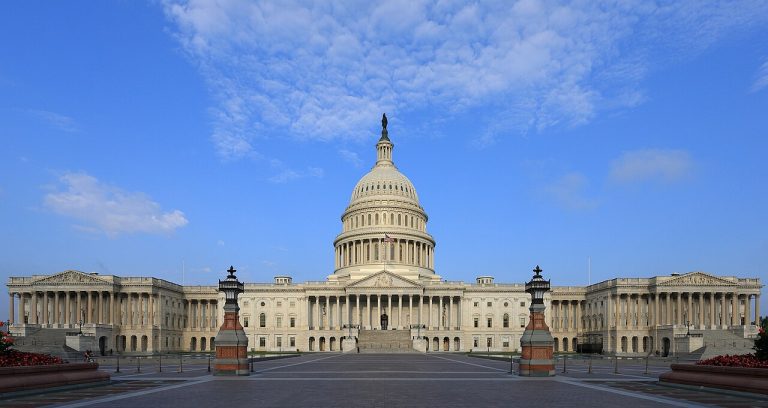
Earmarks still exist, but under new names and tighter rules. House and Senate Republicans adopted a moratorium starting with the 112th Congress in 2011. In February 2021, House Appropriations Committee Chair Rosa DeLauro (D-Conn.) reopened member requests for FY2022 under the name Community Project Funding. The Senate followed with Congressionally Directed Spending.
The current rules were written partly in response to cases like PMA:
- Total earmarks are capped at about 1% of discretionary spending.
- Members must post each request online.
- Members must certify that they and their immediate families have no financial interest in the project.
- In the House, the money can go only to state and local governments and nonprofits, not to for-profit companies.
House Republicans have since closed some accounts to earmarks entirely.
The flow of money still depends on which spending bills become law:
| Fiscal year | Vehicle | Earmarks included? |
|---|---|---|
| FY2025 | Full-year continuing resolution | No |
| FY2026 | Consolidated Appropriations Act, 2026 (H.R. 7148, P.L. 119-75) | Yes |
| FY2027 | Continuing Appropriations Act, 2027 (Division A of P.L. 119-103), signed September 2, 2026, runs through December 11, 2026 | No new earmarks; carries forward FY2026 levels |
Final FY2027 earmarks depend on whether Congress passes full-year bills after the November 2026 elections. For comparison, the Agriculture bill the House passed for FY2027 includes 592 projects worth $604 million, according to the Congressional Research Service.
The original post was cross-posted at LetFreedomRingBlog and first appeared on the campaign blog Murtha Must Go!!, which backed Irey’s 2006 challenge.
FAQ
Was John Murtha ever charged with a crime over earmarks?
No. Murtha was never charged in the PMA Group matter, and the House ethics committee cleared him after his death in February 2010. Decades earlier, in the 1980 Abscam sting, he was named an unindicted co-conspirator but was not charged.
What happened to the PMA Group and Paul Magliocchetti?
The FBI raided the firm in November 2008, and it closed in early 2009. Magliocchetti pleaded guilty in September 2010 to funneling about $386,000 in illegal contributions through straw donors. He was sentenced to 27 months in prison in January 2011.
Who won the 2006 race between Murtha and Irey?
Murtha won, 61% to 39%. He was reelected again in 2008 and held the seat until he died in February 2010.
Are earmarks still banned?
No. The ban ran from 2011 until 2021, when the House brought earmarks back as Community Project Funding and the Senate as Congressionally Directed Spending. They are capped at about 1% of discretionary spending and must be disclosed by the member who requested them.
Can you look up which earmarks your member of Congress requested?
Yes. House members post their Community Project Funding requests on their official websites. The House and Senate appropriations committees publish tables listing each project, its amount and its sponsor. USAspending.gov tracks the grants once agencies pay them out.
Is it legal for lobbyists’ clients to donate to a member who funds their projects?
Legal donations from people with business before Congress are allowed, as long as they are not tied to an official act. A quid pro quo exchange would violate federal bribery law. Magliocchetti’s case was about something else: illegal straw-donor contributions.
Sources
- U.S. Department of Justice: Lobbyist Sentenced to 27 Months in Prison for Role in Illegal Campaign Contribution Scheme
- U.S. Department of Justice: Lobbyist Pleads Guilty for Role in Illegal Campaign Contribution Scheme
- House Committee on Ethics: Final Report in the Matter of Allegations Relating to the Lobbying Activities of Paul Magliocchetti and Associates Group, Inc. (PMA)
- Congressional Research Service: Community Project Funding: House Rules and Committee Protocols (R46722)
- Congressional Research Service: Overview of Continuing Appropriations for FY2027 (R49353)
- Congressional Research Service: Agriculture and Related Agencies: FY2027 Appropriations (R49343)
- Congress.gov: H.R. 7148, Consolidated Appropriations Act, 2026
- Federal Transit Administration: Community Project Funding/Congressionally Directed Spending
About this article
- Fact-checked before publication.
- Published · Updated