Three Big Steps To Better Money Handling
The three habits in this older post still work in November 2026: keep a written budget, build an emergency fund, and set money aside each month for bills that come quarterly or once a year. Rising prices make them more useful, not less. The Bureau of Labor Statistics reported that consumer prices rose 3.7% in the 12 months through September 2026, and gasoline rose 34.2%. The Federal Reserve’s latest household survey found that only 63% of adults would pay a surprise $400 expense with cash or its equivalent. The post uses “earmark” to mean setting money aside. Congress uses the same word for money that members direct to specific projects back home. Congress banned that practice from 2011 and brought it back in 2021 under new names, Community Project Funding in the House and Congressionally Directed Spending in the Senate. The last section explains how those earmarks work.
With prices rising, saving money can get harder every year. The steps below help you cover what you need now and still put a little aside for the future.
Step 1: Make a budget and stick to it
A budget is a plan for every dollar that comes in. It should include a set amount for savings, even a small one. That savings line can go toward retirement, education, a vacation, or any other goal.
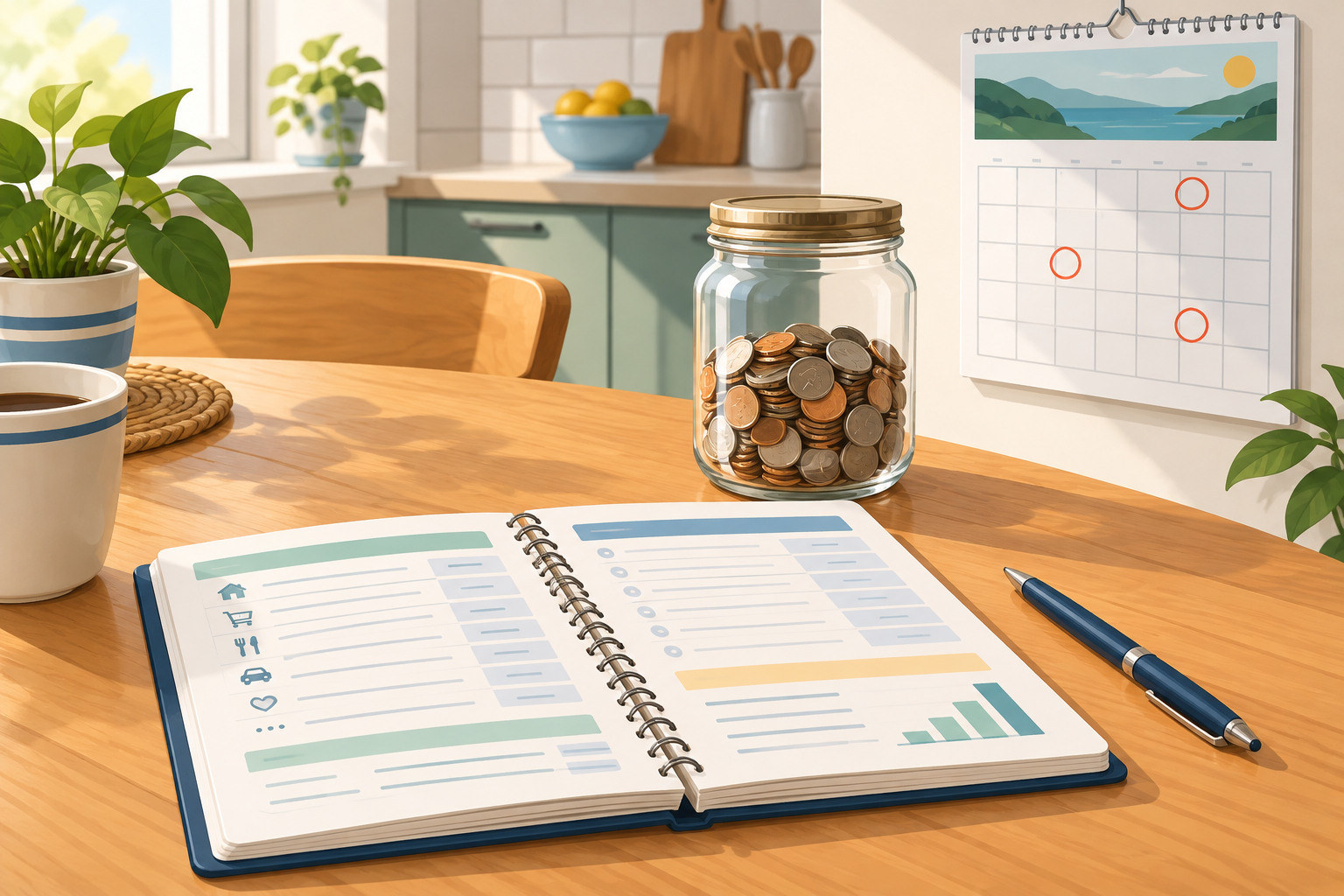
The original post suggested buying planning workbooks or budget sheets at an office supply store, or searching online for “budget planning.” Paper workbooks still work. Today you can also use the free budget worksheets offered by many banks, credit unions and the Consumer Financial Protection Bureau, a spreadsheet, or the budgeting tools built into most banking apps. The format matters less than doing it every month.
Inflation is a good reason to check your budget again if you set it up a year or more ago. Core inflation, which leaves out food and energy, was 2.6% for the 12 months through September 2026. The headline rate was 3.7%, and the gap came mostly from energy, which was up 20.4%. So a budget written in 2025 probably underestimates fuel and utility costs more than it underestimates other expenses.
Step 2: Plan ahead for emergencies
Plan for things that break without warning, like an appliance or a garage door. Even if you can only save $50 a month, keep it in a separate account and earmark it as a “Miscellaneous” fund. Something will go wrong eventually, and when it does you will have money ready.
Here is what $50 a month adds up to:
| Monthly deposit | After 6 months | After 1 year | After 2 years |
|---|---|---|---|
| $50 | $300 | $600 | $1,200 |
| $100 | $600 | $1,200 | $2,400 |
| $150 | $900 | $1,800 | $3,600 |
These totals leave out interest. At $50 a month, it takes eight months to reach $400, the amount the Federal Reserve uses to test household finances. In the Fed’s report on 2025, released May 13, 2026, 63% of adults said they could cover that much with cash or its equivalent. That share has stayed about the same since 2022 and is below the peak of 68% in 2021.
Where you keep the fund matters. Deposits at an FDIC-insured bank are covered up to $250,000 per depositor, per bank, for each ownership category. That limit has been permanent since 2010. An emergency fund needs to be safe and easy to reach, so an insured savings account is a better fit than an investment account that can lose value just when you need the money.
Step 3: Turn non-monthly bills into monthly payments
Some bills arrive once a year, twice a year or every quarter. Work out what each one costs per month and add that amount to your regular budget. Examples include:
- Annual homeowners or renters insurance
- Quarterly water bills
- Car insurance billed every six months
- Annual trash collection
Divide each bill by the number of months it covers, put the item in your budget, and move that amount into savings every month. When the bill arrives, the money is already there and you don’t have to scramble to pay it.
Here is a worked example with sample amounts:
| Bill | How often | Amount | Monthly set-aside |
|---|---|---|---|
| Renters insurance | Yearly | $180 | $15 |
| Water | Quarterly | $90 | $30 |
| Car insurance | Every 6 months | $720 | $120 |
| Trash collection | Yearly | $240 | $20 |
| Total | $185 |
The index card method
You don’t need a separate savings account for each bill. The original post suggested one savings account plus a set of index cards:
- Make one index card for each bill.
- Each time you put money aside, write the amount on that bill’s card and deposit it in the savings account.
- Keep the cards with your savings records so you know what the balance is for.
- Check that the total on all your cards equals the account balance.
- Make one card for your regular savings from Step 1 and one for your Miscellaneous fund from Step 2.
The post told readers to keep the cards with their savings passbook. Most banks have since replaced paper passbooks with online statements, but the method has not changed. A spreadsheet with one row per bill works the same way. So do the savings “buckets” or sub-accounts that many banks now offer, as long as the totals still match the account balance.
The next time you get paid, take all three steps: update your cards, follow your budget, and save for your future. That is how you get control of your money.
Controlling Debt
The original post appeared on this site under the heading above. It was an excerpt, and the full text was published on the family and parenting blog Rocks In My Dryer. Its advice is about avoiding debt in the first place. If you set money aside for big bills before they arrive, you are less likely to put an insurance payment or a broken furnace on a credit card.
The other kind of earmark: how Congress uses the word
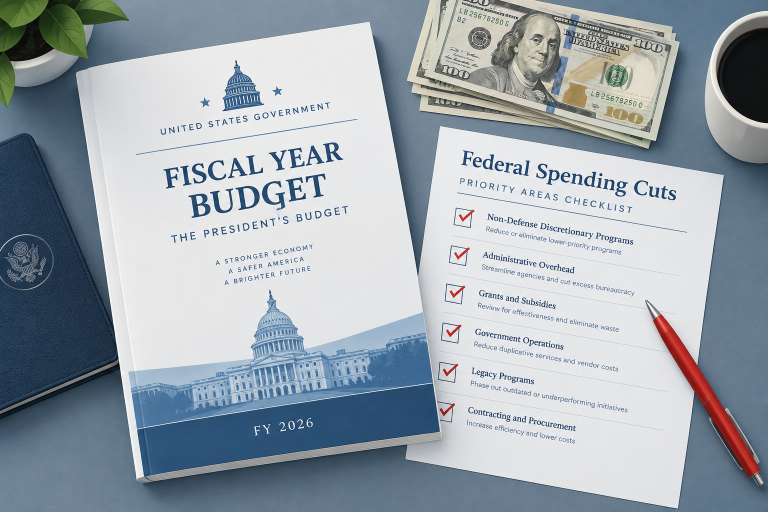
In household budgeting, to earmark money means to set it aside for a purpose. In Congress, an earmark is money that a member of Congress directs to a specific project or recipient in their state or district. Examples include a water system upgrade, a road or a community health center. From 2006 to 2010, this web address was home to PorkBusters, a campaign run by bloggers against earmarks.
Here is how the practice has changed:
- 2011 to 2020: the ban. After the 2010 elections, House Republicans adopted a moratorium on earmarks, and the Senate followed. For about ten years, appropriations bills carried no member-directed projects.
- 2021: the return. Earmarks came back for the fiscal 2022 bills with new rules. They are called Community Project Funding in the House and Congressionally Directed Spending in the Senate. Members must post their requests publicly, certify that they and their families have no financial interest in the projects, and keep within caps tied to total discretionary spending. The House cap is half of 1% and the Senate cap is 1%.
- November 2026: fiscal 2027. The House moved most of its fiscal 2027 bills. Punchbowl News reported that they set aside $8.2 billion for Community Project Funding. The National Taxpayers Union counted 6,693 House requests totaling $8.68 billion. The government is running on a stopgap, H.R. 6500, the Continuing Appropriations and Extensions Act, 2027 (P.L. 119-103), signed on September 2, 2026. It funds agencies through December 11, 2026. A stopgap generally keeps the previous year’s funding levels and does not fund new earmarks. Fiscal 2027 projects only get money once Congress passes the full-year bills.
Supporters of the system say members of Congress know their districts better than federal agencies do and that the disclosure rules make the spending transparent. Critics, including taxpayer groups such as the National Taxpayers Union, say earmarks add to spending and can be used to win votes. Both sides agree on one point: the request lists are now public. You can look up what your own representative and senators asked for on their official websites and the appropriations committee pages.
FAQ
How much should go into an emergency fund?
A common starting goal is $400, the amount the Federal Reserve uses to test household finances. From there, many people aim for several months of essential expenses. At $50 a month, you reach $400 in eight months and $1,200 in two years.
Is the index card method still worth using?
Yes, if you want one savings account to cover several goals. The idea is to label every dollar in the account and make sure the labels add up to the balance. You can do that on paper cards, in a spreadsheet, or with your bank’s savings buckets.
How do I budget for bills that only come once or twice a year?
Divide each bill by the number of months it covers and set aside that amount every month. A $720 car insurance bill due every six months works out to $120 a month. Put the money in savings so it is there when the bill arrives.
What was the inflation rate most recently?
The Bureau of Labor Statistics reported consumer prices up 3.7% over the 12 months through September 2026, and 2.6% excluding food and energy. The October report was scheduled for November 10, 2026. It will not include a 12-month rate, because October 2025 data was never collected during the government shutdown.
Are congressional earmarks still banned?
No. The ban ran from 2011 until 2021, when earmarks returned as Community Project Funding in the House and Congressionally Directed Spending in the Senate. Members must post their requests publicly, and total earmark spending is capped at a small share of discretionary spending.
What was PorkBusters?
PorkBusters was a campaign run by bloggers from 2006 to 2010 against congressional earmarks. It asked readers to report earmarks and to contact their members of Congress. The site at this address now has different, unrelated owners and explains federal spending and the budget without taking sides.
Sources
- Bureau of Labor Statistics: Consumer Price Index Summary, September 2026
- Bureau of Labor Statistics: 12-month percentage change, CPI selected categories
- Federal Reserve: Report on the Economic Well-Being of U.S. Households, unexpected expenses
- FDIC: Deposit Insurance at a Glance
- Congressional Research Service: Overview of Continuing Appropriations for FY2027 (P.L. 119-103)
- Congressional Research Service: Agriculture and Related Agencies, FY2027 Appropriations
- National Taxpayers Union Foundation: Tracking FY2027 House Earmark Requests
About this article
- Fact-checked before publication.
- Published · Updated