Rangel Tries ‘Good Cop’ on Taxes: The Tax Gap, the AMT and Earmarks
In November 2006, the incoming chairman of the House Ways and Means Committee made headlines for a military draft proposal and for a tax plan in the same weekend. This page covers what Rep. Charles Rangel (D-N.Y.) said about taxes and earmarks at the time, how one conservative blogger reacted, and what became of each item on his list.
Rangel’s draft remarks and his tax message (November 2006)
On Sunday, November 19, 2006, Rangel said on CBS’s “Face the Nation” that the United States should bring back the military draft. He tied the idea to the Iraq war and said he would reintroduce legislation. He had already sponsored the Universal National Service Act of 2006 (H.R. 4752) that February, and it was never enacted. The next day, Speaker-elect Nancy Pelosi (D-Calif.) and incoming Majority Leader Steny Hoyer (D-Md.) said the House would not take up a draft.
The blogger who wrote the original post said the draft remarks caused “buyer’s remorse” among voters who had just given Democrats control of Congress in the 2006 midterms. The same post argued that Rangel sounded more convincing when he talked about taxes, the area his committee covers.
The news report: Rangel eyes the tax gap and spending cuts to fund an AMT fix

The post quoted a news report by Martin Vaughan. In it, Rangel said Democrats would first look to the tax gap and to spending cuts to pay for scaling back the AMT, which he called a priority for the 110th Congress.
The tax gap
The tax gap is the difference between the taxes people and businesses owe and the taxes they pay on time. At the time, the IRS put the gross tax gap at about $345 billion for tax year 2001 (the report rounded this to “around $350 billion a year”). Rangel said on C-SPAN’s “Newsmakers” program: “All of us agree that there’s hundreds of billions of dollars in savings that we could have, right in that tax code itself.”
Earmarks
Rangel also said Congress would need to tighten up on earmarks, and he admitted this would be hard. “I understand that some of my Senate friends have got bridges, and they don’t even have rivers, you know,” he joked. “The money is there. Is the will there? I don’t know. If the first they come up [with] is a project in my district, I have to take a look at it and say, ‘Did you take a look at the one that’s in your district?'”
The bridge joke was a reference to the 2005 fight over Alaska’s “Bridge to Nowhere.” That earmark was the main target of the PorkBusters blogger campaign, which ran from 2006 to 2010.
The cost of AMT repeal
The report cited a Treasury Department estimate that repealing the AMT would cost $1.16 trillion over the next decade if the individual tax cuts from President George W. Bush’s first term were extended. That number explains why Rangel was looking for big revenue sources.
Leadership and bipartisan plans
The report also covered Republican leadership on the committee:
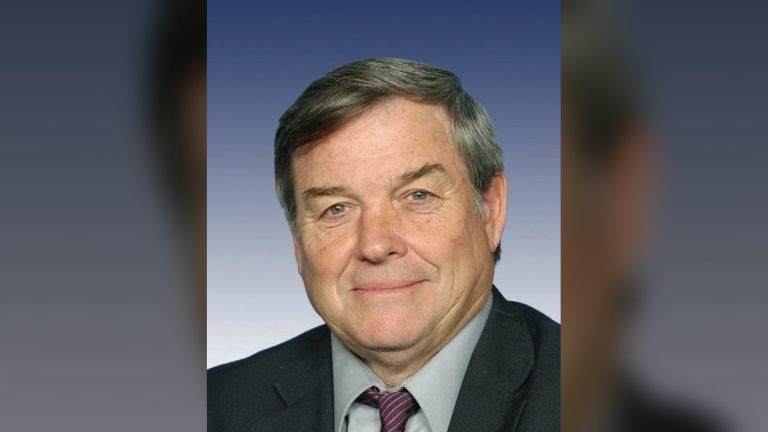
- Rep. Jim McCrery (R-La.) faced no challenge for ranking member of Ways and Means.
- A spokesman for Rep. Wally Herger (R-Calif.), who had more seniority on the panel, said Herger would support McCrery.
- Rangel said he hoped to work with Republicans on the AMT. “I don’t think that the White House is in a position to tell McCrery, ‘Stick with the Republican position and mandate and fight them on each and every thing.’ Because by doing this, it would mean that they don’t want to get anything done,” he said.
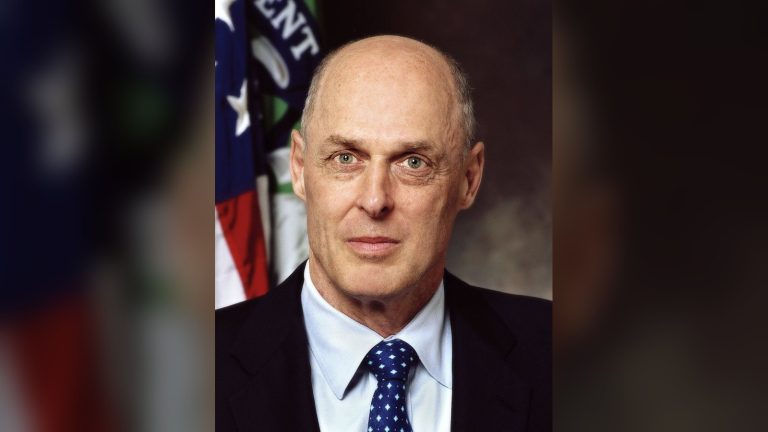
- Rangel said Treasury Secretary Henry Paulson had agreed to be the first guest at a series of bipartisan retreats for Ways and Means members.
Other priorities he named
Rangel repeated two goals for the coming session:
- Letting the federal government negotiate Medicare drug prices directly with drugmakers.
- Reviewing tax provisions that he said encouraged companies to move jobs overseas.
He was also cautious about Democratic proposals for new college tuition tax breaks. On “Face the Nation” he said: “The problem is that if you’re talking about credits and you’re talking about tax reform, it’s inconsistent. You can’t put more stuff into the code while you’re trying to squeeze it and make the code more effective.”
How the blogger read it
The blogger praised Rangel for starting with enforcement and spending cuts. He also predicted that Democrats would soon turn to tax increases. In his view, both parties wanted better tax compliance, but no “magic bullet” for getting it existed. He wrote that Democrats would “deserve a lot of credit” if they were serious about ending earmarks.
He also welcomed McCrery’s move to ranking member. He called McCrery bright, personable and conservative, and hoped McCrery would become chairman in 2009. These were the blogger’s own opinions. The commentary first appeared at The Influence Peddler, a political blog of the time.
What happened next
Most of Rangel’s 2006 agenda was eventually acted on, though in most cases by later Congresses and through different laws. The table sums up what happened to each item.
| 2006 item | What happened | Status in November 2026 |
|---|---|---|
| AMT fix | Annual “patches” from 2007 to 2012; the American Taxpayer Relief Act of 2012 indexed the AMT to inflation | Higher exemption made permanent by the One Big Beautiful Bill Act (2025) |
| Tax gap | The IRS kept publishing estimates; the gap grew along with the economy | Latest projection: about $696 billion gross, tax year 2022 |
| Earmark restraint | Disclosure rules in 2007; full ban from 2011 | Back since fiscal 2022 under new names and rules |
| Medicare drug negotiation | The House passed H.R. 4 in January 2007; it stalled in the Senate | First negotiated prices took effect January 1, 2026, under the Inflation Reduction Act |
| McCrery as chairman | McCrery did not run in 2008 and left Congress in January 2009 | Never became chairman |
The AMT: patched, then made permanent
Congress did not repeal the AMT. Instead it passed short-term patches that raised the exemption for one year at a time. The American Taxpayer Relief Act of 2012, signed in January 2013, ended that cycle by tying the exemption to inflation permanently. The Tax Cuts and Jobs Act of 2017 then raised the exemption and phase-out thresholds a lot, which took most middle- and upper-middle-income households out of the AMT.
The One Big Beautiful Bill Act of 2025 made the higher exemption permanent. Starting in 2026, it also lowered the phase-out thresholds to $500,000 for single filers and $1 million for joint filers, indexed to inflation, and doubled the phase-out rate from 25% to 50%. Tax advisers expect this to bring some high earners back under the AMT.
The tax gap: still large
The IRS’s most recent projection puts the gross tax gap at $696 billion for tax year 2022, down from a revised $708 billion for 2021. About $539 billion of that, or 77%, comes from underreported income. The IRS has said its estimates cannot capture every type of noncompliance. The blogger’s 2006 doubt about a “magic bullet” still applies. Enforcement brings in money, but no Congress has come close to closing the gap.
Earmarks: disclosure, ban and return
After taking control in January 2007, Democrats required members to put their names on earmark requests. The Honest Leadership and Open Government Act of 2007 extended disclosure rules to the Senate. Earmarks continued, though.
The ban came after Republicans won the House in the 2010 midterms. House Republicans adopted a moratorium, and Senate Appropriations Chairman Daniel Inouye (D-Hawaii) announced in February 2011 that the Senate would not include earmarks either. The ban lasted about a decade.
In 2021, House Appropriations Chair Rosa DeLauro (D-Conn.) and Senate Appropriations Chair Patrick Leahy (D-Vt.) brought earmarks back for fiscal 2022 under new names and new rules:
- Each member posts their requests online, with the recipient and the amount.
- Each member certifies that they and their family have no financial interest in the project.
- For-profit companies cannot receive the money.
- The House sets a limit on how many requests each member can submit.
- Projects that make the cut are listed in the committee reports, with each sponsor named.
Republicans kept the system after they retook the House in 2023. In the fiscal 2027 cycle, House appropriators let each member submit up to 20 Community Project Funding requests, up from 15 for fiscal 2026. The money does not flow until the full-year bills become law. A continuing resolution, H.R. 6500 (Public Law 119-103), passed the House 370-48 and funds agencies at roughly fiscal 2026 levels through December 11, 2026. It contains no new earmarks.
The amounts are real but small compared with the whole budget. The fiscal 2026 Agriculture appropriations act, enacted November 12, 2025, as part of Public Law 119-37, included 746 Congressionally Directed Spending projects worth $931 million across nine USDA accounts, according to the Congressional Research Service.
Medicare drug negotiation: delayed by 15 years
The new Democratic House passed the Medicare Prescription Drug Price Negotiation Act of 2007 (H.R. 4) in January 2007, 255-170. It did not become law. The Inflation Reduction Act of 2022 finally gave Medicare the power to negotiate. The first ten negotiated prices, for drugs including Eliquis, Jardiance and Xarelto, took effect January 1, 2026, at 38% to 79% below list price for a 30-day supply. The Centers for Medicare & Medicaid Services estimated that enrollees would save $1.5 billion in out-of-pocket costs.
Rangel and McCrery
Rangel chaired Ways and Means from January 2007 until March 2010. He stepped down from the chairmanship during a House ethics investigation. The House Ethics Committee found him in violation on 11 of 13 counts. These included failing to report income and assets on his disclosure forms and tax problems, and the committee noted that the tax issues came up even though he chaired the panel that writes tax law. On December 2, 2010, the House voted 333-79 to censure him. Speaker Pelosi read the censure on the House floor. Rangel stayed in the House until 2017.
McCrery never became chairman. He decided not to run in 2008 and left Congress in January 2009. Democrats kept the House that year. When Republicans won it back in 2011, Rep. Dave Camp (R-Mich.) took over Ways and Means.
FAQ
What is the “tax gap”?
It is the difference between the taxes owed under the law and the taxes paid on time. The IRS’s most recent projection is a gross gap of about $696 billion for tax year 2022, mostly from underreported income. In 2006, the IRS estimate was about $345 billion for tax year 2001.
Did Congress ever pay for the AMT fix the way Rangel proposed?
No. Congress patched the AMT year by year from 2007 to 2012, usually without fully paying for it, and then indexed it to inflation permanently in the American Taxpayer Relief Act of 2012. Closing the tax gap and cutting earmarks did not end up funding the fix.
Are earmarks still banned?
No. Earmarks were banned from 2011 until the fiscal 2022 budget cycle. Today they are called Community Project Funding in the House and Congressionally Directed Spending in the Senate. Members must post requests publicly, certify they have no financial interest, and cannot send money to for-profit companies.
How much money goes to earmarks now?
It changes each year and depends on the bill. For example, the fiscal 2026 Agriculture act included 746 projects worth $931 million. Fiscal 2027 earmarks will not be set until Congress passes full-year bills to replace the stopgap that expires December 11, 2026.
What happened to Charles Rangel?
He stepped down as Ways and Means chairman in March 2010 during an ethics investigation. The House censured him 333-79 on December 2, 2010. He stayed in Congress until his term ended on January 3, 2017.
Did Rangel’s draft bill pass?
No. Party leaders said in November 2006 that the House would not take up a draft. Rangel’s national service bills never became law.
Sources

- Congressional Research Service, Appropriations Status Table: FY2027 (Congress.gov)
- Congressional Research Service, Agriculture and Related Agencies: FY2026 Appropriations (R48564)
- Congressional Research Service, Agriculture and Related Agencies: FY2027 Appropriations (R49343)
- Congressional Research Service, Energy and Water Development: FY2027 Appropriations (R48944)
- Internal Revenue Service, tax gap estimates and projections
- Committee for a Responsible Federal Budget, Appropriations Watch: FY 2026
- National Taxpayers Union Foundation, Tracking FY 2027 House Earmark Requests
- AARP Public Policy Institute, out-of-pocket costs for Medicare negotiated drugs
- Associated Press reporting on the Rangel censure, December 2, 2010
- UPI, “Rangel renews call for military draft,” November 19, 2006
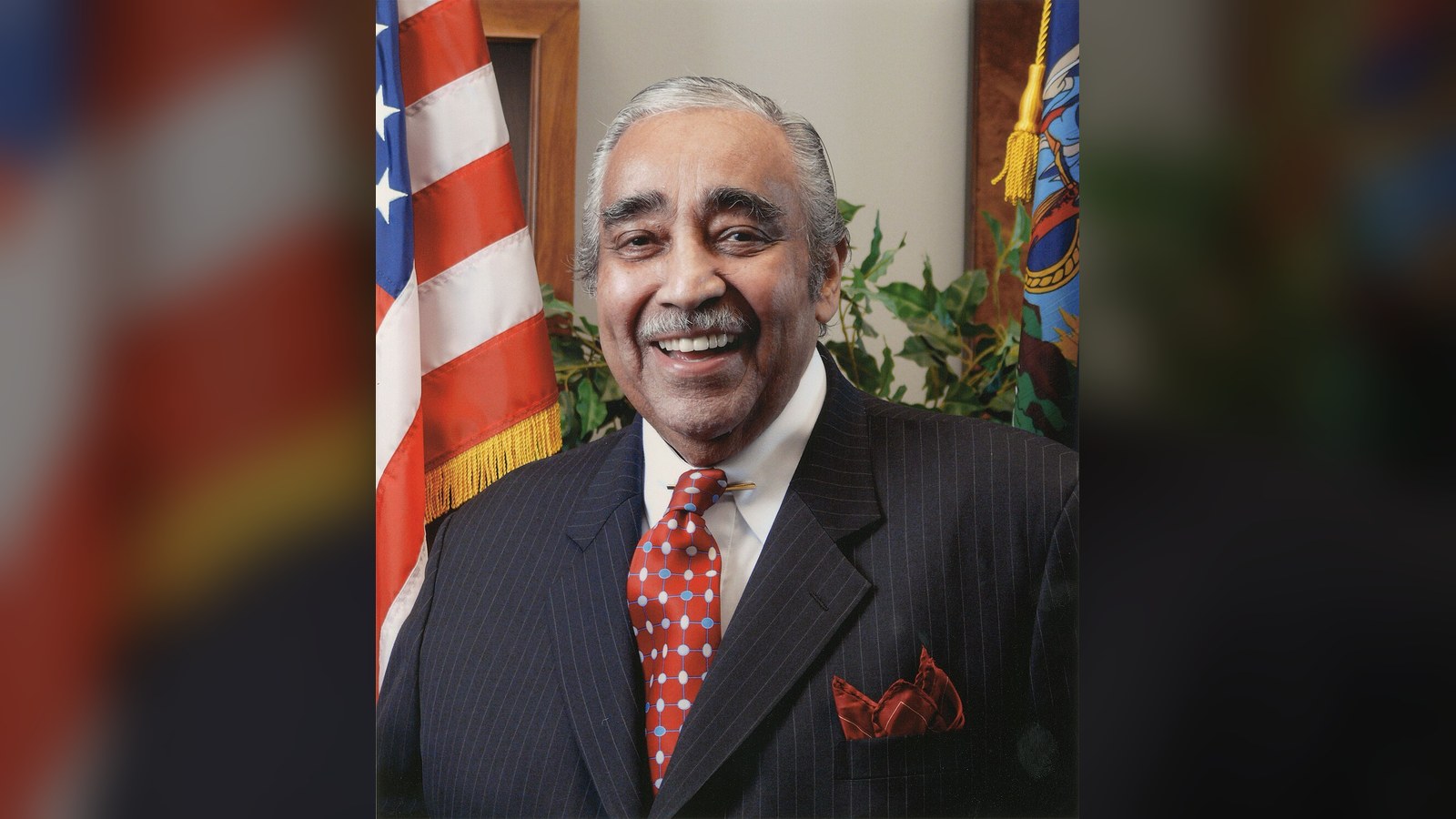
Featured image: Charles Rangel. Photo: US Congress / Wikimedia Commons, Public domain (file page)
About this article
- Fact-checked before publication.
- Published · Updated