
In Congress, appropriators rule the roost
The 2006 standoff described below ended in May 2006. The House adopted its fiscal 2007 budget resolution, H.Con.Res. 376, by 218 to 210, and the $4.3 billion “rainy day” reserve for nondefense emergencies stayed in it, though with a softer trigger. Earmarks, the spending items at the center of the fight over emergency bills, were banned in Congress from 2011. They came back in 2021 as Community Project Funding in the House and Congressionally Directed Spending in the Senate. As of November 2026 they are capped at 1 percent of discretionary spending and publicly disclosed. They are still waiting on final fiscal 2027 bills, because a stopgap law, P.L. 119-103, keeps the government running at fiscal 2026 rates only through December 11, 2026.
This post was originally cross-posted at Townhall’s Capitol Report.
The 2006 budget fight: appropriators against the budget writers
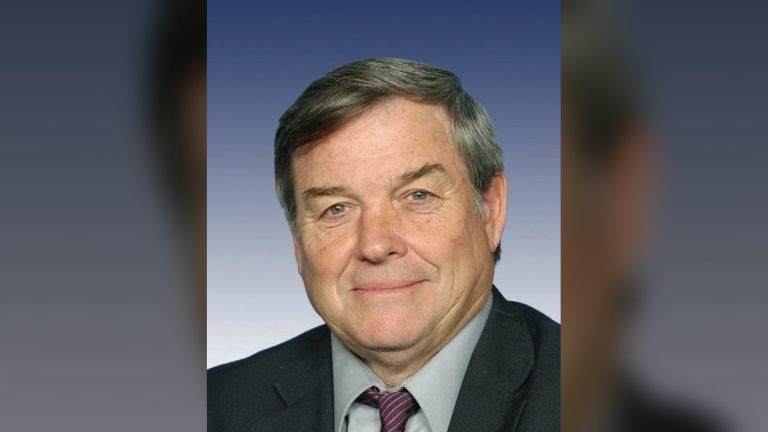
In early April 2006, House appropriators stopped a vote on the House budget resolution. Their leader was House Appropriations Chairman Jerry Lewis (R-CA), and they objected to a provision that would have budgeted money in advance for emergencies. PorkBusters, a campaign run by bloggers against congressional earmarks from 2006 to 2010, described the appropriators as a kind of “third party” in Congress. Its organizers argued that the committee was fighting the budget because it actually set money aside.
The budget resolution came from House Budget Committee Chairman Jim Nussle (R-IA). It was introduced on March 31, 2006. House Republican leaders had agreed to a demand from conservative members: plan ahead for emergency spending instead of treating all of it as unexpected. On April 6, 2006, leaders pulled the resolution from the floor because they did not have the votes to pass it. The Republican appropriators’ opposition was one of the main reasons.
Why emergency spending was the issue
Spending labeled an “emergency” did not count against the budget’s spending limits. Conservative critics, PorkBusters among them, said lawmakers used this “emergency funding” loophole to pay for projects such as “railroads to nowhere” off budget, even when a project had little to do with an emergency. Critics gave that nickname to a plan in the Senate’s 2006 war and hurricane supplemental to relocate a Gulf Coast rail line. The proposal was later dropped.
The campaign also pointed to the tens of billions of dollars in emergency spending approved after Hurricane Katrina in 2005. Its argument was that Congress should at least try to plan for disaster costs it knew would come in some form.
The appropriations committee’s email
The National Taxpayers Union got hold of an internal email from the House Appropriations Committee and published it. PorkBusters reproduced it from NTU’s blog. The email is signed “Frank,” and at the time Frank M. Cushing was the committee’s clerk and staff director under Lewis. The email is reproduced as published:
Folks: As you know, the Budget Resolution contains a so-called “Rainy Day Fund” that would REQUIRE the Budget Committee to approve non-defense related emergency spending in excess of the amount stated within the Budget Resolution. The threshold number plucked out of the sky by the Budget Committee for both mandatory and discretionary emergencies is $4.3 B, which, according to Dale’s calculations, is at least $3 B less than the ten year (median) average for just natural disaster spending. When we have discussed this with Leadership their only response is that “it can be adjusted in conference”. They missed the point: we want it out. What Leadership apparently wanted was to not cede control of this process to either us or the Budget Committee. So their response was to develop yet another procedural hurdle for us alone (even though the authorizers can dip into the emergency kitty, they are not subject to this particular procedural hurdle). This procedural loop for us (which is attached) was drafted no later than last Thursday but was not shared with us until just before Noon today. After much internal discussion and trips back and forth to the Parliamentarians, we have decided that what they are suggesting for us is at least as bad as what the Budget Committee did, and probably worse. ACCORDINGLY, Chairman Lewis has instructed us to inform you that, unless the Rainy Day Fund and this new Point of Order are dropped/not included through action of the Rules Committee tonight, he will NOT SUPPORT passage of the RULE and/or the BUDGET RESOLUTION tomorrow. He also requested that you inform your Subcommittee Chairman of his position in this regard and asks that they likewise support the Committee. We will be notifying other Members of the Committee (both sides of the aisle) as well as Leadership that we are taking this action. Please call if you have any questions. Frank
The email lays out the appropriators’ case. They said the $4.3 billion threshold was at least $3 billion below the 10-year median for natural disaster spending alone. They also objected that the new procedural hurdle applied to their committee but not to the authorizing committees. PorkBusters read the email the opposite way, as evidence that appropriators felt entitled to control emergency money. Both readings were part of the public debate at the time.
How the standoff ended
House leaders and the appropriators reached a deal, and the budget passed about six weeks after it was pulled. In mid-May 2006 the House adopted H.Con.Res. 376 by 218 to 210. Twelve conservative Republicans and every Democrat voted no.
A House Republican Conference summary of the version that passed describes how the rainy day fund was handled:
- The reserve stayed. The resolution set aside $4.3 billion to budget for nondefense emergencies.
- The trigger changed. If a supplemental spending bill went over that amount, the House Budget Committee would meet to decide whether to increase the fund.
- Emergencies were narrowed. The resolution defined “emergency” more tightly, which supporters said would keep unrelated items out of emergency bills.
The Senate had already passed its own budget resolution, S.Con.Res. 83, on March 16, 2006. The two chambers never agreed on a final version. Instead, the House “deemed” its budget to be in effect by adding language to the fiscal 2007 Interior-Environment appropriations bill, H.R. 5386. Lewis remained Appropriations chairman until Democrats took control of the House in January 2007.
| Date | Event |
|---|---|
| March 16, 2006 | Senate passes S.Con.Res. 83, its FY2007 budget resolution |
| March 31, 2006 | Rep. Jim Nussle (R-IA) introduces H.Con.Res. 376 |
| April 6, 2006 | House leaders pull the resolution for lack of votes |
| Mid-May 2006 | House adopts H.Con.Res. 376, 218-210, with the $4.3 billion reserve |
| May 2006 | House deems its budget in effect through H.R. 5386 |
Earmarks since 2006: the ban and the return
The fight over emergency spending was one part of a larger argument about earmarks. That argument ended in a ban for about a decade.
The 2011 moratorium
House Republicans adopted an earmark moratorium for the 112th Congress, which began in 2011, and the Senate Appropriations Committee followed. The ban was never written into House or Senate rules and could not be enforced with a point of order. It existed in party rules and committee practice, so a new majority could undo it without a floor vote.
The 2021 revival
In February 2021, House Appropriations Chair Rosa DeLauro (D-CT) announced that members could request “Community Project Funding” in the fiscal 2022 bills, as long as the requests met new conditions. The Senate brought back its own version under the name “Congressionally Directed Spending.” House Republicans kept the practice after they won the majority in 2023, though they narrowed the accounts that can carry earmarks.
How earmarks work in November 2026
The main rules that have applied since the revival:
- A cap. All earmarks combined are limited to 1 percent of discretionary spending.
- Eligible recipients. For-profit companies cannot receive funds. Money goes to state and local governments, public entities and eligible nonprofits.
- Disclosure. Members post their requests online. The appropriations committees publish tables showing each project, amount, sponsor and state.
- Eligible accounts only. Requests must fit accounts the committees have opened to earmarks. Each chamber sets its own list.
Fiscal 2026 earmarks became law through bills enacted between November 2025 and early 2026, including the Consolidated Appropriations Act, 2026 (H.R. 7148). That law finished 11 of the 12 regular bills.
Fiscal 2027 earmarks are not settled yet. Fiscal 2027 began on October 1, 2026, under the Continuing Appropriations and Extensions Act, 2027 (H.R. 6500, P.L. 119-103), signed on September 2, 2026. A stopgap like this generally does not fund new earmarks. Requests for fiscal 2027, such as the 592 projects totaling $604 million in the House-passed Agriculture bill, depend on Congress passing full-year bills after the current funding runs out on December 11, 2026.
The debate that has not changed
The 2006 dispute and today’s budget fights hinge on the same question: who controls money spent outside the normal budget limits? Budget writers and fiscal conservatives in 2006 argued that planning for emergencies in advance limits unrelated spending. Appropriators argued that disasters cannot be predicted and that a low cap would just force supplemental bills anyway.
Groups such as the National Taxpayers Union and Citizens Against Government Waste still publish earmark counts and criticize the practice. Supporters in both parties argue that disclosed, capped earmarks let members direct money to known local needs. The quickest way to see which side has the better case for a given bill is to check the earmark tables the appropriations committees publish with each bill.
FAQ
What was the “rainy day fund” in the 2006 House budget?
It was a $4.3 billion reserve in the House’s fiscal 2007 budget resolution, H.Con.Res. 376, set aside for nondefense emergencies. The first version would have required House Budget Committee approval for emergency spending above that amount. Appropriations Chairman Jerry Lewis (R-CA) opposed that version. In the version that passed in May 2006, the Budget Committee would instead meet to decide whether to raise the reserve.
Did Congress ban earmarks?
Yes, from 2011 until 2021. The moratorium came from party rules and committee practice, not from formal House or Senate rules. That is why it could be reversed without a floor vote when appropriators brought earmarks back for fiscal 2022.
What are Community Project Funding and Congressionally Directed Spending?
They are the official names for earmarks since 2021: Community Project Funding in the House and Congressionally Directed Spending in the Senate. Members request money for specific projects in their states or districts. Total earmarks are capped at 1 percent of discretionary spending, and for-profit recipients are not allowed.
Are there earmarks in fiscal 2027 spending?
Not yet in law. As of November 2026, the government runs on a stopgap, P.L. 119-103, at fiscal 2026 rates through December 11, 2026. Fiscal 2027 earmarks, including those in House-passed bills, will only be funded if Congress passes full-year appropriations bills.
What was PorkBusters?
PorkBusters was a campaign run by bloggers from 2006 to 2010. It opposed congressional earmarks and urged readers to contact their members of Congress about specific spending items. It focused on issues like emergency spending and the 2006 “railroad to nowhere” proposal.
Who was Jerry Lewis?
Jerry Lewis was a Republican representative from California. He chaired the House Appropriations Committee from 2005 to 2007, during the 109th Congress. In April 2006 he opposed his own party’s budget resolution over its emergency spending provisions.
Sources
- Overview of Continuing Appropriations for FY2027 (Division A of P.L. 119-103), Congressional Research Service
- Congressional Budget Actions in 2006, Congressional Research Service (RL33291)
- Agriculture and Related Agencies: FY2027 Appropriations, Congressional Research Service
- H.Con.Res. 376 summary, House Republican Conference (archived)
- FY 2026 Congressionally Directed Spending, Senate Appropriations Committee
- Cole floor remarks on H.R. 7148, Consolidated Appropriations Act, 2026 (119th Congress), House Appropriations Committee
- House Report 109-734, Activities of the House Committee on Appropriations (109th Congress)
About this article
- Fact-checked before publication.
- Published · Updated