PorkBusters Interview: House Majority Leader John Boehner on the 2006 War and Katrina Supplemental
The 2006 fight ended the way the White House wanted. House and Senate negotiators cut the Senate’s bill of roughly $109 billion down to $94.5 billion, which was President George W. Bush’s revised cap, and Bush signed H.R. 4939 into law (P.L. 109-234) on June 15, 2006. Earmarks were later banned in Congress starting in 2011. They came back in 2021, for fiscal 2022, as Community Project Funding in the House and Congressionally Directed Spending in the Senate. As of November 2026 these requests must be posted publicly, can go only to public or nonprofit recipients, and are capped at about 1% of discretionary spending. Fiscal 2027 is running on a stopgap law that lasts through December 11, 2026, so no fiscal 2027 earmarks have been enacted yet.
The interview
In spring 2006, Glenn Reynolds of Instapundit and the blogger known as N.Z. Bear of The Truth Laid Bear interviewed John Boehner (R-Ohio). They were the two bloggers who ran PorkBusters, a campaign against congressional earmarks. Boehner had become House Majority Leader that February. They talked about the budget, the campaign’s push against earmarks, and the outlook for the emergency supplemental spending bill. Audio of the interview was posted in two formats, a high quality mp3 and a lower quality mp3.
The organizers wrote that the high point for them was a question about one idea being floated in Congress. The Senate had added extra spending to the emergency supplemental for Iraq, Afghanistan and Hurricane Katrina. PorkBusters put the extra spending at $17 billion and called it “pork and other extras.” Instead of removing those add-ons, some lawmakers suggested cutting everything in the package by 13%. That would bring the total under President Bush’s target and get around his veto threat. The organizers called the idea foolish.
By their count, a cut that size would have left the actual emergency funds short, with $9.6B less for Iraq and Afghanistan and $2.6B less for Katrina relief. Their argument was that the plan protected the add-ons at the expense of the money the bill was written for.
Boehner on an across-the-board cut
Boehner rejected the across-the-board cut outright:
N.Z.: One of the trial balloons that’s been floated, and I believe we heard you shoot down last week, was doing an across-the-board cut to meet the dollar target that…
Majority Leader Boehner: We’re not doing that. That’s just nonsense. Our job, as members of Congress, we were elected to come here and make decisions on behalf of the American people. And when it comes to deciding, what should be funded and what doesn’t need to be funded are decisions we’re charged with making. And so some across the board cut so we can do probably well-meaning, well-intentioned projects somewhere else: that’s skirting our responsibility.
Boehner on a compromise with the Senate
The organizers found his answer to the follow-up less satisfying:
N.Z.: Is the only acceptable answer then in your mind simply the Iraq / Afghanistan / Katrina funding, or is there a possibility of a compromise with some of the additions the Senate has put in?
Majority Leader Boehner: I don’t want to predict what [House Appropriations Chairman] Lewis and [Senate Appropriations Chairman] Cochran will come up with, nor do I want to complicate their negotiations. But I’ve laid my marker down very clearly, that we’re not going to spend more than the President asked for.
The two chairmen were Rep. Jerry Lewis (R-Calif.) and Sen. Thad Cochran (R-Miss.). The organizers welcomed Boehner’s rejection of an across-the-board cut. They had hoped he would also commit to the contents of the President’s request, meaning Katrina relief and Iraq and Afghanistan funding with nothing added. Boehner committed only to the dollar total. PorkBusters said it would follow the House-Senate negotiations closely, and it urged readers who agreed to contact their senators and representative. The organizers also thanked Boehner and his office for arranging the interview.
What happened to the supplemental
Congress passed a bill at the President’s dollar figure, so Boehner’s “marker” held. PorkBusters wanted the bill limited to the items Bush asked for. Boehner had promised only to stay under the total.
| Date (2006) | Step | Amount |
|---|---|---|
| Early 2006 | Bush requests war and hurricane funding | About $92.2 billion |
| March 16 | House passes H.R. 4939 | $91.95 billion |
| Spring | Bush revises request to include pandemic flu funding, sets $94.5 billion veto line | $94.5 billion |
| May 4 | Senate passes its version | About $109 billion |
| June 13 | House approves the conference agreement | $94.5 billion |
| June 15 | Senate approves conference report 98-1; Bush signs P.L. 109-234 | $94.5 billion |
The Senate’s own version, at about $109 billion, came in about $14 billion over the $94.5 billion limit Bush set after adding $2.3 billion for pandemic flu. It was closer to $17 billion over the original request, which explains the figure PorkBusters used. The bill was signed as the Emergency Supplemental Appropriations Act for Defense, the Global War on Terror, and Hurricane Recovery, 2006. The Defense Department said about $70 billion of it went to military needs in the war on terror.
From earmark ban to Community Project Funding
Earmarks went away for a decade and then returned under new names and tighter rules. Congress never wrote the ban into chamber rules. It rested on party rules and committee protocols.
- 2006 to 2010: Earmark disclosure rules took effect. PorkBusters and similar groups kept pressing for cuts.
- 2011: A moratorium took effect in the 112th Congress. It began after House Republicans, led by Boehner as incoming Speaker, adopted it in late 2010. Boehner served as Speaker from 2011 until he resigned in 2015.
- February 26, 2021: The House Appropriations Committee said it would accept Community Project Funding requests for fiscal 2022. The Senate brought back Congressionally Directed Spending around the same time.
- Current rules: Members must post their requests online and certify that they have no financial interest in them. House rules bar money from going to for-profit companies. Total earmark spending is capped at about 1% of discretionary spending.
Earmarks remain a large part of some bills. According to the Congressional Research Service (CRS), the enacted fiscal 2026 Agriculture bill carried 746 earmarks worth about $931 million. CRS also reported that the fiscal 2026 Transportation-HUD law provided $2.4 billion for earmarks. All twelve fiscal 2026 bills were enacted by April 30, 2026. Homeland Security came last, after a partial shutdown of that department that began February 14.
For fiscal 2027, a continuing resolution (H.R. 6500, P.L. 119-103) was signed September 2, 2026. It keeps agencies open through December 11, 2026. The House has passed three regular bills: Agriculture, Military Construction-VA and National Security-State. As of early November, the Senate Appropriations Committee had not reported any. Fiscal 2027 earmarks will be settled only if Congress enacts full-year bills during the lame-duck session.
FAQ
Who did PorkBusters interview, and when?
Organizers Glenn Reynolds and N.Z. Bear interviewed House Majority Leader John Boehner (R-Ohio) in spring 2006. At the time, Congress was negotiating the emergency supplemental for Iraq, Afghanistan and Hurricane Katrina. Boehner had become Majority Leader in February 2006.
Did Congress use an across-the-board cut to meet Bush’s limit?
No. Negotiators wrote a $94.5 billion conference agreement. That was $2.3 billion above the President’s original request, the amount he added for pandemic flu, and it matched the veto threshold he had set. Bush signed it as P.L. 109-234 on June 15, 2006, without a veto.
Are earmarks still banned?
No. The moratorium ran from 2011 until earmarks returned for fiscal 2022. The House now calls them Community Project Funding and the Senate calls them Congressionally Directed Spending.
What rules apply to earmarks now?
Requests must be posted publicly, and members must certify they have no financial interest in them. House rules bar for-profit recipients. Total earmark spending is held to about 1% of discretionary spending.
Is the government funded for fiscal 2027?
Only through December 11, 2026, under the stopgap P.L. 119-103. If Congress does not pass full-year bills or another continuing resolution by then, funding lapses on December 12.
Sources
- Congressional Research Service, FY2006 Supplemental Appropriations: Iraq and Other International Activities; Additional Hurricane Katrina Relief (RL33298)
- Government Executive, Negotiators reach deal on supplemental spending bill (June 2006)
- Defense Department via DVIDS, $70 Billion Goes to Defense Needs in Signed Emergency Funding Bill
- Congressional Research Service, Community Project Funding: House Rules and Committee Protocols (R46722)
- Congressional Research Service, Agriculture and Related Agencies: FY2026 Appropriations (R48564)
- Congressional Research Service, Transportation, Housing and Urban Development Appropriations for FY2026 (R48728)
- Congressional Research Service, Department of Homeland Security Appropriations: FY2026 State of Play (R48874)
- Congressional Research Service, Overview of Continuing Appropriations for FY2027 (R49353)
- House Appropriations Committee, Fiscal Year 2026 Enacted Legislation
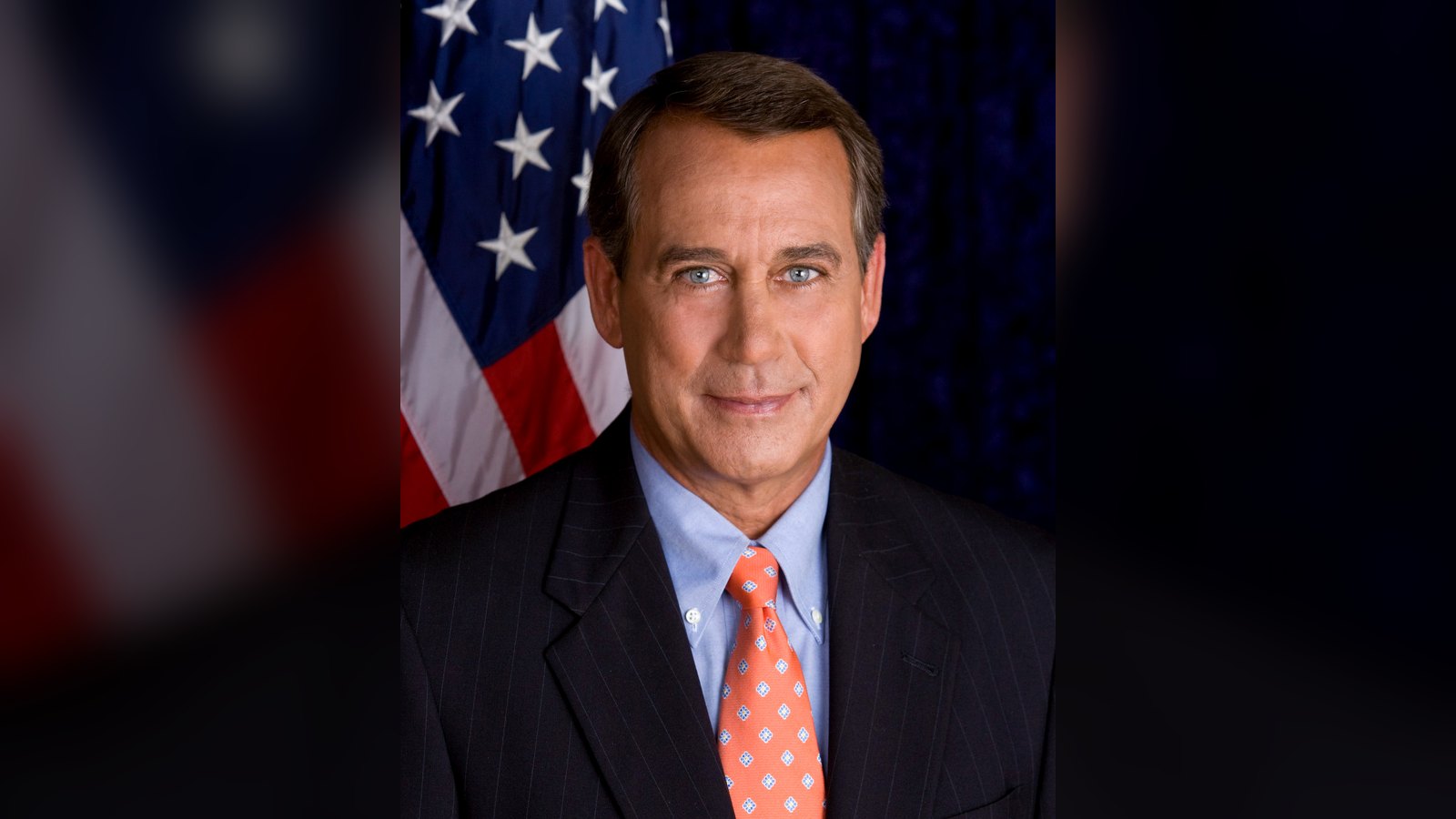
Featured image: John Boehner. Photo: United States Government / Wikimedia Commons, Public domain (file page)
About this article
- Fact-checked before publication.
- Published · Updated