
Porkbusters Take the White House
The 2006 law this post celebrated still runs today: USAspending.gov, the public database it created, now tracks trillions of dollars in federal awards. Earmarks took a different path. Congress banned them starting in 2011 and brought them back in 2021 as Community Project Funding in the House and Congressionally Directed Spending in the Senate. As of November 2026, members post their requests online, the projects are listed in the spending bills, and final fiscal 2027 decisions are waiting on a December 11, 2026 funding deadline.
The original post (September 2006)
This post first ran on September 26, 2006, the day President George W. Bush signed the Federal Funding Accountability and Transparency Act of 2006 (S. 2590) into law. The blogger called it “a long overdue step in getting earmarks under control.” The new law required a public database of federal spending.
The post argued that politicians in both parties had added unbudgeted projects for their districts or supporters to spending bills. The excerpt ends as the author begins to ask whether those projects were as vital as their sponsors said. The full post ran on the blog Morning Coffee. It was one of many blogs that had followed the bill through the Senate that summer.
What the 2006 law did
The Federal Funding Accountability and Transparency Act (FFATA) told the Office of Management and Budget (OMB) to build a free, searchable website showing who receives federal money. It became Public Law 109-282.
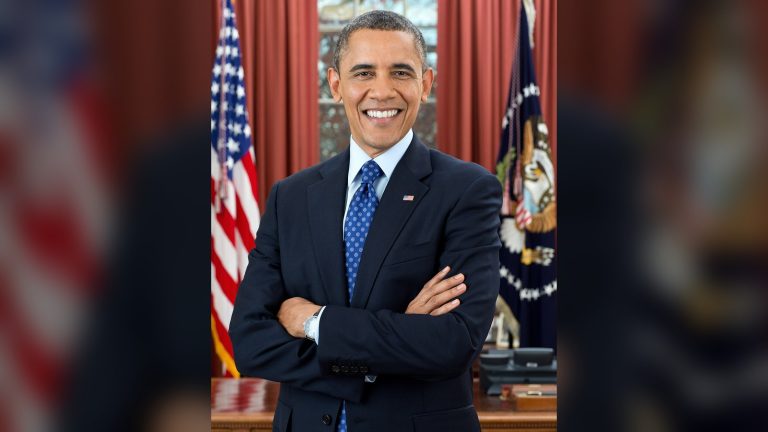
- Sponsors: Sen. Tom Coburn (R-OK) and Sen. Barack Obama (D-IL) introduced it. Sen. John McCain (R-AZ) and Sen. Tom Carper (D-DE) were among the cosponsors.
- Votes: The Senate passed it by unanimous consent on September 7, 2006. The House passed it on September 13, 2006.
- Scope: At the signing, President Bush said the website would list federal grants and contracts above $25,000.
- Launch: OMB launched USAspending.gov in December 2007.
How bloggers and the “secret hold” fight shaped the bill
In late summer 2006, an anonymous “secret hold” in the Senate stopped the bill from getting a floor vote. Bloggers on both the right and the left set out to find out who had placed it. PorkBusters was a campaign run by bloggers, including Glenn Reynolds of Instapundit and N.Z. Bear of The Truth Laid Bear. It kept a public tally of which senators had denied placing the hold and which had not answered. The campaign urged readers to call their senators and ask.
The pressure brought two senators into the open:
| Senator | Party and state | What was reported |
|---|---|---|
| Ted Stevens | Republican, Alaska | Spokesman Aaron Saunders confirmed the hold and said Stevens wanted to make sure the bill did not create another layer of bureaucracy. |
| Robert Byrd | Democrat, West Virginia | His office acknowledged a hold, said he felt the bill was moving too fast, and said he had released it. |
Both holds were lifted, and the bill passed within weeks. Coburn publicly credited bloggers and citizens for helping it pass. The Sunlight Foundation at the time described the issue as one that brought right and left blogs together.
What happened next
The database grew, and earmarks went away and then came back under new rules.
| Year | Event |
|---|---|
| 2006 | FFATA signed on September 26 (P.L. 109-282). |
| 2007 | USAspending.gov goes live in December. |
| 2011 | Earmark moratorium takes effect in both chambers of the 112th Congress. |
| 2014 | DATA Act (P.L. 113-101) signed on May 9. It amends FFATA and widens what agencies must report. |
| 2017 | On May 9, all executive branch agencies begin reporting under the standard data format set by Treasury and OMB. |
| 2021 | Appropriators restore earmarks for fiscal 2022 under new names and disclosure rules. |
| 2025 | The full-year fiscal 2025 funding law contains no earmarks. |
| 2026 | Fiscal 2026 laws include about $15.5 billion in earmarks for more than 8,000 projects, according to The Washington Post. |
The DATA Act widened the database
Before 2014, USAspending.gov mainly summarized grants, loans and contracts. The Digital Accountability and Transparency Act required government-wide data standards so agency spending could be compared and linked to awards. Today, Treasury’s Bureau of the Fiscal Service runs the site.
How earmarks work as of November 2026
Earmarks are back, but each one has to be disclosed. A member requests money for a specific project, posts the request publicly, and certifies having no financial interest in it. The House Appropriations Committee calls these Community Project Funding. The Senate calls them Congressionally Directed Spending.
- Members submit requests to the appropriations committees and post them on their official websites.
- The committees choose which projects to fund. They stay under a cap of 0.5% of discretionary spending in the House and 1% in the Senate.
- Funded projects are listed by name, amount, recipient and requesting member in tables that go with each bill.
- Only state and local governments and eligible nonprofits can receive the money. For-profit companies cannot.
- Agencies such as HUD hand out the money once the bill becomes law.
For example, HUD reports that the fiscal 2026 law (P.L. 119-75) included $3.6 billion for new Economic Development Initiative and Community Project Funding grants.
Where fiscal 2027 stands
No regular fiscal 2027 spending bill has become law yet. The government is running on the Continuing Appropriations and Extensions Act, 2027 (H.R. 6500, P.L. 119-103). The Senate passed it 90-6 on August 8, the House passed it 370-48 on September 1, and it was signed on September 2. It funds agencies through December 11, 2026.
Continuing resolutions usually do not carry new earmarks. So the fiscal 2027 requests only turn into real money if Congress passes full-year bills. The National Taxpayers Union Foundation counted 6,693 House requests totaling $8.68 billion. The Senate committee’s list shows 13,380 requests worth $51.97 billion.
FAQ
What is an earmark?
An earmark is money Congress sets aside for a specific project, place or recipient, at a member’s request. Agencies do not pick these projects through their usual competitive process. Since 2021 the House has called them Community Project Funding and the Senate has called them Congressionally Directed Spending.
Did the 2006 transparency law ban earmarks?
No. FFATA created a public database of federal awards. It did not limit how Congress writes spending bills. The 2011 ban was a policy adopted by party conferences and the appropriations committees, not a law.
Why did Congress bring earmarks back in 2021?
Supporters, led by House Appropriations Chair Rosa DeLauro (D-CT), argued that members know their districts’ needs and that earmarks help bills pass. Critics, including groups such as the National Taxpayers Union, argue that earmarks encourage spending and favor senior or majority members. The 2021 rules added public disclosure, spending caps and a ban on for-profit recipients.
How can you see which earmarks your members of Congress requested?
Each House member and senator posts their requests on their official website. Funded projects appear in the appropriations committee tables that go with each bill. Once the money goes out, you can follow the awards on USAspending.gov.
What happens if Congress misses the December 11, 2026 deadline?
If Congress passes neither another stopgap nor full-year bills by then, funding lapses on December 12 and a partial government shutdown begins. Another continuing resolution would avoid a shutdown but would usually leave out new fiscal 2027 earmarks.
What was PorkBusters?
PorkBusters was a campaign run by bloggers from 2005 to about 2010. It targeted congressional earmarks and pushed for spending transparency. It is best known for asking readers to report their members’ positions and for helping expose the 2006 secret holds on the Coburn-Obama bill.
Sources
- Federal Funding Accountability and Transparency Act: Background, Overview, and Implementation Issues (CRS RL33680)
- President Bush signs S. 2590, September 26, 2006 (White House archive)
- OMB launch of USAspending.gov, December 2007 (White House archive)
- Public Law 113-101, the DATA Act (GovInfo)
- H.R. 6500, Continuing Appropriations and Extensions Act, 2027 (Congress.gov)
- Overview of Continuing Appropriations for FY2027 (CRS R49353)
- Appropriations Status Table: FY2027 (Congress.gov)
- FY2026 Economic Development Initiative / Community Project Funding Grants (HUD)
About this article
- Fact-checked before publication.
- Published · Updated