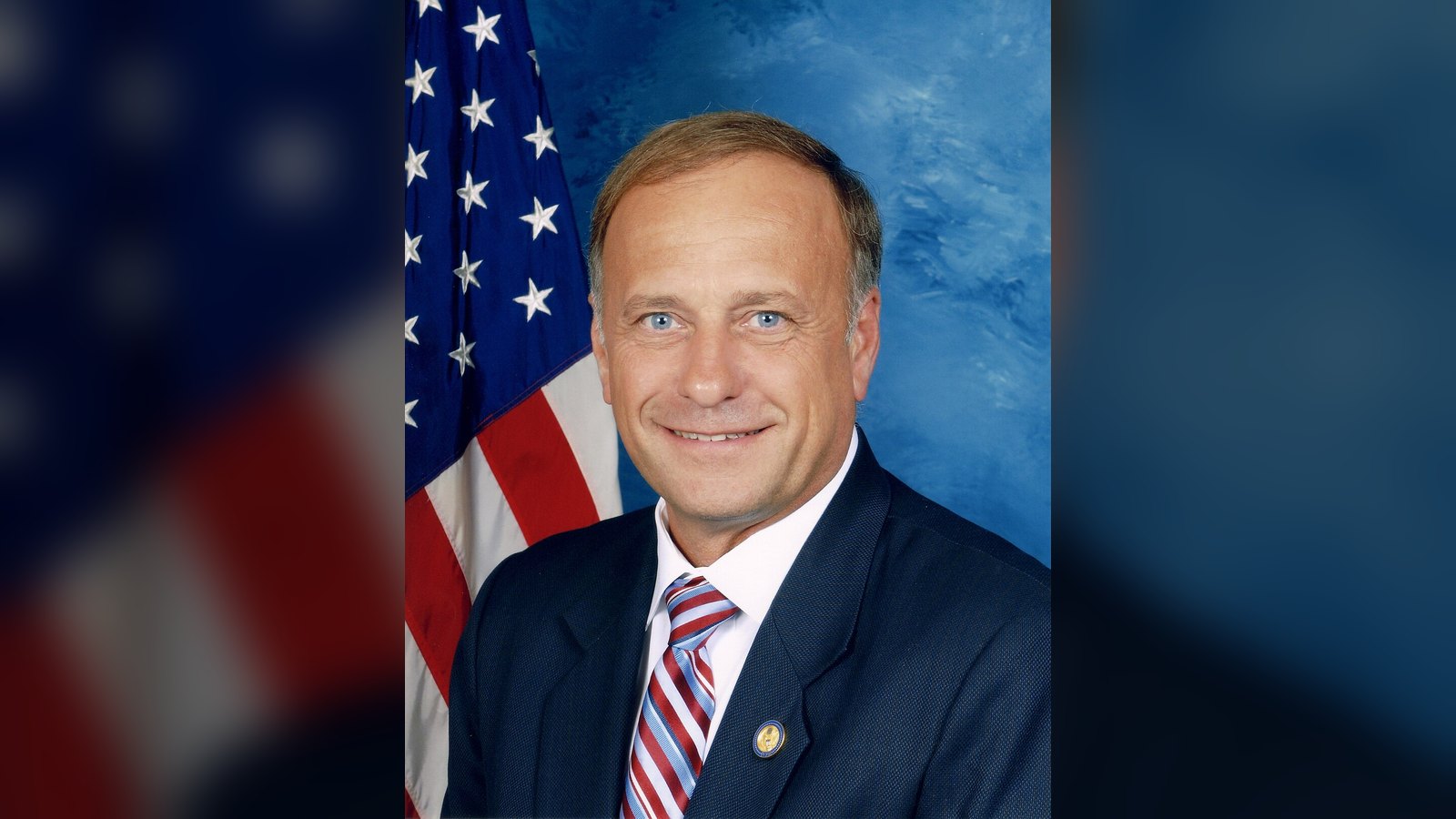
Can Congress Make the CUT? Steve King’s Plan for Quarterly Spending Cuts
Rep. Steve King’s CUT idea, which would have forced quarterly House votes to cancel unspent federal money, never became a House rule. The other measure covered on this page did pass. Sen. Tom Coburn’s spending database bill, S. 2590, was signed on September 26, 2006, and led to USAspending.gov. Earmarks went further than the 2006 reformers asked for: Congress banned them in 2011, then brought them back in 2021 as Community Project Funding in the House and Congressionally Directed Spending in the Senate. As of November 2026, members must post their requests online and certify they have no financial interest in them. The House caps the total for fiscal 2027 at 0.5% of discretionary spending. Fiscal 2027 itself is running on a stopgap through December 11, 2026.
What the CUT resolution proposed in 2006
The CUT plan would have let any House member force a recorded vote to rescind (cancel) unspent money once each fiscal quarter. Ed Morrissey made the case for it in a 2006 piece in The Heritage Policy Weblog: business managers often check their budgets every month to find and cut spending they don’t need. Taxpayers might expect the same of a federal budget that, in his words, “now tops two trillion dollars.” He said it didn’t exist. Once a spending bill became law, Congress had no regular process that let rank-and-file members force votes to trim it.
Rep. Steve King (R-IA) proposed changing that with his Cut the Unnecessary Tab (CUT) resolution. As Morrissey described it:
- At the start of each fiscal quarter, any federal money not yet spent would be open to a recorded vote on rescission.
- Any House member could offer an amendment to these quarterly rescission bills to cancel the funding for any program in the enacted budget.
- Every member would then have to go on record for or against each targeted program.
King announced the plan in a 2006 floor speech. A later version with the same name was introduced in the 112th Congress (2011-2012), with Reps. Steve Chabot, Ron Paul and Joe Walsh among its cosponsors. It would have required the majority leader to introduce rescission bills each quarter and barred rules that limited amendments to them. Neither version became part of House rules. King left Congress in January 2021 after losing his 2020 primary.
The spending figure has changed a great deal since then. Federal outlays were about $2.66 trillion in fiscal 2006. In fiscal 2026, which ended September 30, Treasury reported $7.396 trillion in spending and a deficit of $1.992 trillion. CBO put that deficit at 6.2% of GDP.
How one blogger said he would go further
Don Singleton, a blogger who reposted Morrissey’s piece, said he backed the plan but wanted two more things. The first was a constitutional amendment giving the president a line-item veto. Congress had passed a statutory line-item veto in 1996, but the Supreme Court struck it down in Clinton v. City of New York (1998). The second was a law punishing any legislator who slipped an earmark into a bill without a recorded vote. He said he would really prefer to ban earmarks outright, which both chambers’ Republican conferences effectively did from 2011.
How much difference would CUT have made?
Its supporters expected little at first and more over time, as odd line items came to light. Morrissey said budget hawks would get four chances a year to propose cutting programs they considered unnecessary or badly run. He thought it could change campaigns too: incumbents could list the money their rescissions saved, and challengers could name the programs they would target.
Heritage’s Alison Acosta Fraser called CUT one of “a series of small steps to control spending that Congress is considering.” She said such ideas would do good in the short term if they were adopted and fully used, and could build momentum to tackle larger costs such as the projected growth in entitlement spending. Morrissey’s own view was that CUT would not fix the overall size of the budget. What it would do, he argued, was give individual members a way to pressure the chamber into rescissions, so no member could claim that one lawmaker acting alone had no options.
How rescissions actually work today
Rescissions now come mainly from the president, under the Impoundment Control Act of 1974, and not from regular votes in the House. The president sends Congress a proposal, and Congress decides whether to pass it. The best-known recent case is the Rescissions Act of 2025 (H.R. 4, P.L. 119-28). It canceled about $9 billion, mostly foreign aid and Corporation for Public Broadcasting funding. The Senate passed it 51-48 on July 17, 2025, with Sens. Susan Collins (R-ME) and Lisa Murkowski (R-AK) joining Democrats in opposition. The House passed it 216-213, and it was signed on July 24, 2025. CBO estimated it would cut outlays by $8.9 billion over 2025-2035. Supporters described it as a step toward spending discipline. Opponents objected to cutting money Congress had already approved for those programs.
The Coburn database bill, S. 2590
The database bill moved quickly and became law within six months. On his own blog, Captain’s Quarters (often shortened to CQ), Morrissey asked whether CUT would make Congress more careful with money. His answer was that it would not fix everything but would give Congress another tool against pork-barrel spending. He pointed readers to his longer Heritage article and invited them to send their views.
In an update, he noted in another post at Heritage that Sen. Tom Coburn’s (R-OK) bill to put federal spending in an online database had passed a Senate committee without a single vote against. The Homeland Security and Governmental Affairs Committee approved it in late July 2006. Coburn had introduced it on April 6, 2006, with Sens. Barack Obama (D-IL), Tom Carper (D-DE) and John McCain (R-AZ). It went on to gain cosponsors from both parties, including Majority Leader Bill Frist (R-TN) and Minority Leader Harry Reid (D-NV), and ended with 47 in total. Morrissey noted at the time that Sen. Trent Lott (R-MS) was not among them.
Morrissey warned that the bill’s broad coalition could break apart when the Senate and House reconciled their versions. The House had passed a similar bill, H.R. 5060, in June 2006, but its database covered only grants. In the end the two chambers never needed to negotiate a combined version:
| Step | Date | Result |
|---|---|---|
| Introduced in the Senate | April 6, 2006 | Coburn, Obama, Carper, McCain |
| Senate committee approval | Late July 2006 | Unanimous |
| Senate passage | September 7, 2006 | Unanimous consent |
| House passage | September 13, 2006 | Voice vote |
| Signed by President George W. Bush | September 26, 2006 | P.L. 109-282 |
The law required the Office of Management and Budget to run a free, searchable public website by January 1, 2008. That site is USAspending.gov.
Where earmarks stand in November 2026
Earmarks are legal again, with disclosure rules and caps that did not exist in 2006. After the ban took effect in 2011, earmarks were left out of spending bills for a decade. They returned for fiscal 2022 under new names:
- House (Community Project Funding): For fiscal 2027, each member could submit up to 20 requests, the total is capped at 0.5% of discretionary spending, and for-profit recipients are barred. The Defense, Financial Services and General Government, Legislative Branch, and National Security/State subcommittees accepted no requests.
- Senate (Congressionally Directed Spending): Senators must disclose their requests and certify that they have no financial interest in them.
There were no earmarks in fiscal 2025, which ran on a full-year continuing resolution. They came back in the fiscal 2026 bills enacted in early 2026. Roll Call counted nearly $15.5 billion by mid-February 2026. Citizens Against Government Waste, which uses its own broader definition, counted $23.7 billion in its 2026 Pig Book. Supporters say earmarks let members who know their districts direct money to local needs. Critics say they invite favoritism and add to spending.
For fiscal 2027, no full-year bills have been enacted. P.L. 119-103, signed September 2, 2026, after a 370-48 House vote and a 90-6 Senate vote, funds the government through December 11, 2026. A stopgap generally carries no new earmarks, so fiscal 2027 projects depend on the final bills. Without new funding, a shutdown would begin December 12.
FAQ
Did Steve King’s CUT resolution ever pass?
No. King promoted it in 2006, and a version with the same name was introduced in the 112th Congress, but the House never adopted it. Today, rescissions mostly start with a presidential request under the Impoundment Control Act.
Are earmarks still banned?
No. The ban ran from 2011 until 2021. Earmarks returned for fiscal 2022 as Community Project Funding in the House and Congressionally Directed Spending in the Senate, with public disclosure, conflict-of-interest certifications and caps on the total.
What is a rescission?
A rescission is a law that cancels budget authority Congress has already provided. Under the 1974 Impoundment Control Act, the president can propose one, but it takes effect only if Congress passes it. The Rescissions Act of 2025 canceled about $9 billion.
What came of the Coburn-Obama transparency bill?
S. 2590 became the Federal Funding Accountability and Transparency Act (P.L. 109-282) on September 26, 2006. It created USAspending.gov, where anyone can search federal contracts and grants by agency, recipient and place.
Does the president have a line-item veto?
No. The Supreme Court struck down the Line Item Veto Act in 1998 in Clinton v. City of New York. Bringing it back would take a constitutional amendment or a different design that the courts uphold.
How do earmarks for fiscal 2027 work?
House members submitted up to 20 Community Project Funding requests in early 2026 and had to post them publicly. Whether any are funded depends on the final fiscal 2027 spending bills, which Congress still has to pass. The current stopgap runs out on December 11, 2026.
Sources
- Congress.gov: P.L. 109-282, Federal Funding Accountability and Transparency Act of 2006
- Congressional Research Service: The Federal Funding Accountability and Transparency Act (S. 2590): Overview and Comparison with H.R. 5060
- Congressional Research Service: Overview of Continuing Appropriations for FY2027 (Division A of P.L. 119-103)
- Congress.gov: Appropriations Status Table, FY2027
- Congressional Budget Office: Monthly Budget Review, Summary for Fiscal Year 2026
- U.S. Treasury: Final Monthly Treasury Statement, FY2026
- House Appropriations Committee: FY2027 Community Project Funding General Guidance
- Congressional Record, 2006 House proceedings (King CUT remarks)
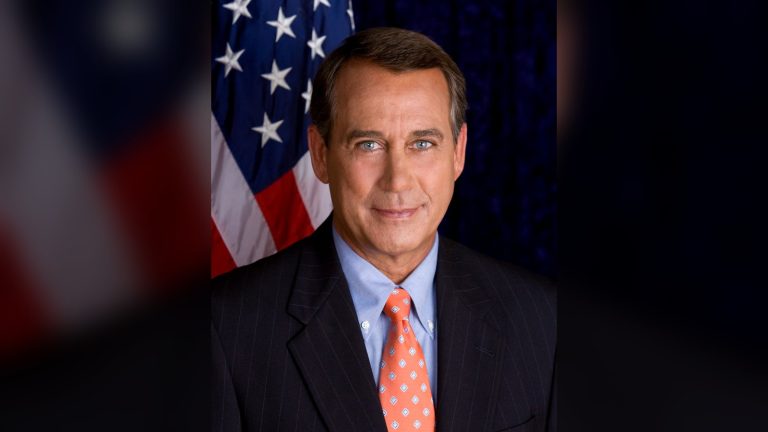
Featured image: Steve King. Photo: U.S. Congress / Wikimedia Commons, Public domain (file page)
About this article
- Fact-checked before publication.
- Published · Updated