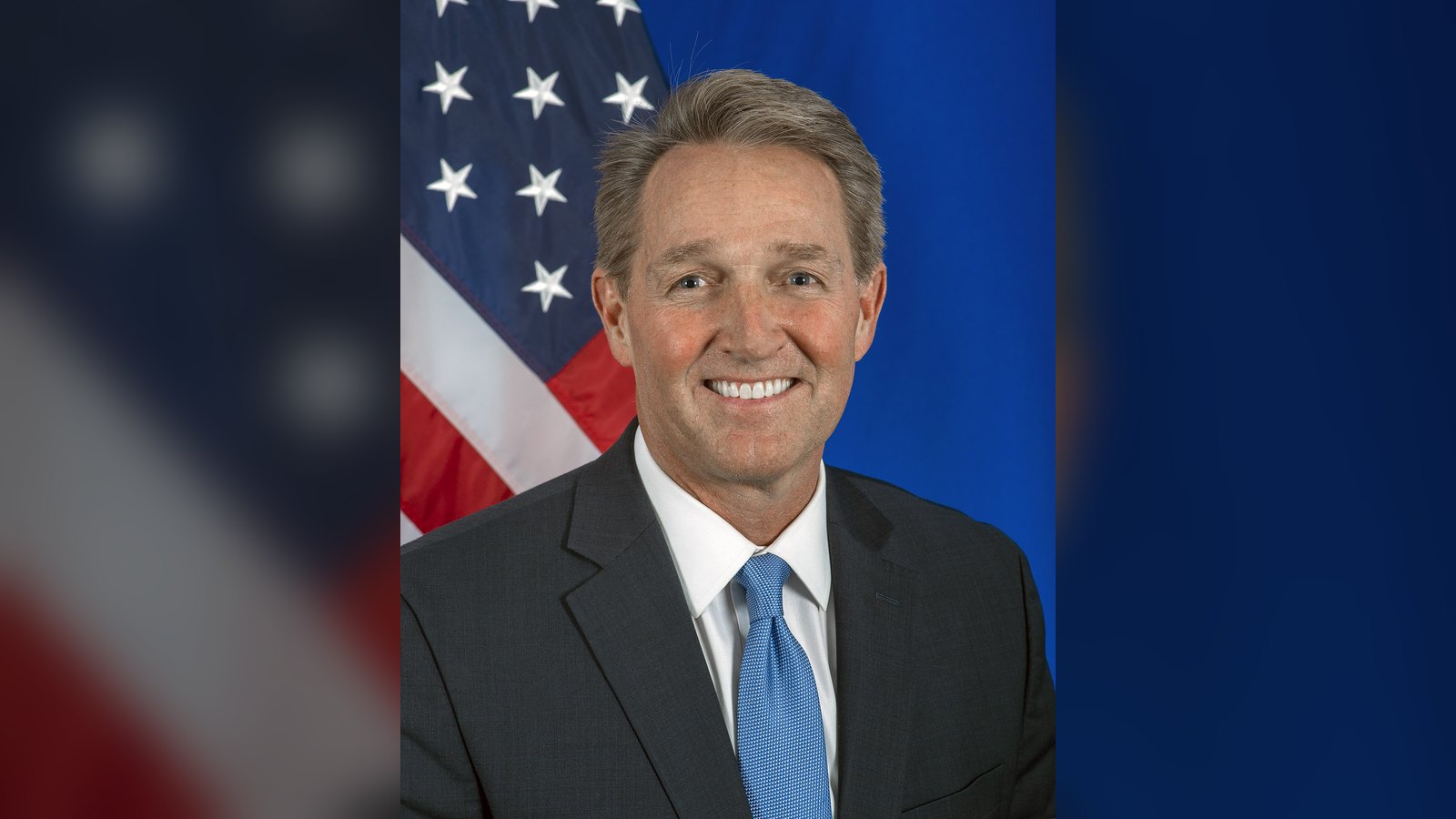
Nineteen Missed Opportunities to Cut Earmarks: Jeff Flake’s 2006 Anti-Pork Votes
The House voted down every Flake amendment covered on this page in 2006. Congress then banned earmarks in 2011 and brought them back in 2021 as Community Project Funding in the House and Congressionally Directed Spending in the Senate. The new rules require public request lists, a signed statement that the member has no financial interest, no money for for-profit recipients, and a cap of 1 percent of discretionary spending. Roll Call and Taxpayers for Common Sense put earmarks in the enacted fiscal 2026 bills at about $15.5 billion. As of November 2026, the fiscal 2027 projects are still waiting on final spending bills, and the government is running on a stopgap through December 11, 2026.
An earmark in a congressional appropriations bill tells an agency, such as the Department of Defense, to spend part of its money on a specific and often very local purpose, such as an aquarium in one member’s home district. In 2006, critics such as the PorkBusters bloggers and the Club for Growth argued that appropriations bills carried large amounts of wasteful “pork-barrel” spending. Their reason was that members could add an earmark with very little written justification. Supporters of earmarks answered then, and still answer, that members of Congress know their districts’ needs better than federal agencies do.
In mid-2006 the Club for Growth, a group that pushes for lower taxes and spending, put out a call for 435 blogs against pork, one for each House district. The group wrote: “Thanks to Congressman Jeff Flake’s 19 anti-pork amendments, we now have every House member on record regarding their positions on earmarks.” Its argument was that members had escaped scrutiny because their projects were mixed in with others inside large bills, and because criticism was aimed at the whole chamber instead of at individual members. Flake’s amendments forced up-or-down votes on specific projects.
One Utah blogger answered the call by writing up the votes of Utah’s three House members. Two were Republicans, Rep. Rob Bishop and Rep. Chris Cannon, and one was a Democrat, Rep. Jim Matheson. On these votes, the blogger wrote, Matheson looked more fiscally careful than either Republican. The post grew over three days as the blogger read the Congressional Record transcripts of the House floor debate before each vote and quoted what Flake said when he offered each amendment. Flake offered more than 19 amendments, but many failed on voice votes, so they produced no individual record.
The blogger wrote of a new admiration for Flake and said they had donated $19 to his re-election campaign. The blogger added up $34,669,000 in earmarks behind the recorded votes. The East Valley Tribune, citing a taxpayer group’s count, put the 19 Flake amendments at about $35.3 million.
What happened to these earmarks
The House voted down each amendment below. Even so, “will be spent as earmarked” describes the House vote, not the final law. All three bills here were fiscal 2007 House bills from the 109th Congress, and none became law on its own. Fiscal 2007 funding was finished in the next Congress through a full-year continuing resolution, the Revised Continuing Appropriations Resolution, 2007 (H.J.Res. 20, P.L. 110-5), signed February 15, 2007. It said that earmarks listed only in committee reports had no legal effect. Some long-running earmarks were also carried in earlier laws. Federal budget records list the Iowa dairy item as a continuing earmark from the fiscal 2005 omnibus (P.L. 108-447).
H.R. 5384: Making appropriations for Agriculture, Rural Development, Food and Drug Administration, and Related Agencies
This was the House’s fiscal 2007 agriculture spending bill. Flake challenged three of its earmarks on May 23, 2006.
$229,000 for Iowa dairy education
Federal budget records list the recipient as the Northeast Iowa Community Based Dairy Foundation in Calmar, Iowa.
The only reason we limit it to dairy education in Iowa is to ensure that our amendment was made in order. Believe me, if there were dairy education for Arizona, I would strike that as well. We simply shouldn’t have programs like this.
Let me just say, according to the Iowa State Dairy Association, the Iowa State dairy industry contributes more than $1.5 billion to the economy and provides more than 26,000 jobs. I would submit that spending $229,000 isn’t going to do much to change that trend one way or another. It is simply something we shouldn’t do.
Rep. Jeff Flake (R-AZ), May 23, 2006, Congressional Record, H3105
Results from the roll call vote on the ammendment to cut this earmark:
- Bishop (R-UT): No (keep the earmark)
- Matheson (D-UT): Yes (cut the earmark)
- Cannon (R-UT): No (keep the earmark)
The amendment failed, 92 to 325. That was the most votes any of Flake’s amendments received that week.
$180,000 for hydroponic tomato production in Ohio
This is a hydroponic tomato production earmark that we are challenging here. Again, let me make the broader point, what business is it of the Federal Government to pick winners and losers in the economy, to decide that we ought to be promoting hydroponic tomato production earmarks instead of promoting the cherry tomato or grape tomato or others out there that any Member could get an earmark for? Why is it this is important and the others are not?
We as legislators have to decide how we are going to husband the Nation’s resources. I would submit that when we have 10,000 earmarks a year or more and when we are growing it at a rate of 872 percent over the last 10 years, at some point, I do not know where that point is, maybe it is with hydroponic tomatoes, some point we have got to take a stand and say enough is enough. We simply cannot continue spending money like this.
Again, we are not potted plants here. We are legislators. We are here to make these decisions. I would submit that when we are spending $180,000 on hydroponic tomatoes that something has gone awry and we have lost our focus. That is what this debate is about.
Rep. Jeff Flake (R-AZ), May 23, 2006, Congressional Record, H3110-H3111
Utah delegation votes:
- Bishop (R-UT): Yes (cut the earmark)
- Matheson (D-UT): Yes (cut the earmark)
- Cannon (R-UT): No (keep the earmark)
The amendment failed, 90 to 328.
$100,000 for the National Grape and Wine Initiative
National Grape and Wine Initiative
The bill’s earmark was $100,000. In his remarks, Flake cited a $250,000 cost for the industry’s strategic research plan.
Again, this is another example of the Federal Government funding a program that can and is funded by the private sector. I should note here the vision of the initiative says: “By 2020, the American grape and wine industry will triple its economic impact and become the undisputed world leader in consumer value and sustainability. The target is an economic impact of $150 billion within 16 years. This is based on a conservative estimate of current annual impact of approximately $50 billion a year.”
I would submit that if an industry out there has a $50 billion-a-year impact on the economy, $50 billion, then the Congress need not spend $250,000 for strategic research and a plan to enhance the grape industry’s competitiveness and contribution to the U.S. economy.
Rep. Jeff Flake (R-AZ), May 23, 2006, Congressional Record, H3114
Utah delegation votes:
- Bishop (R-UT): Yes (cut the earmark)
- Matheson (D-UT): Yes (cut the earmark)
- Cannon (R-UT): No (keep the earmark)
The amendment failed, 87 to 328.
H.R. 5427: Making appropriations for energy and water development
This was the House’s fiscal 2007 energy and water bill, which funds the Department of Energy and the Army Corps of Engineers. Flake’s amendments to it came up on May 24, 2006.
$250,000 for the Virginia Science Museum
The committee report listed this earmark for the Science Museum of Virginia in Richmond, under the Department of Energy’s Biological and Environmental Research program.
I call attention to this earmark today because there is so little information available about its purpose. It appears inconsistent with the program that would fund it.
The committee report lists this earmark, for the Science Museum of Virginia, in the Biological and Environmental Research program.
My amendment would prevent funding for this purpose.
I know that some museums do scientific research, but the background research on this earmark turned up very little by the way of research being done by the Science Museum of Virginia.
As an aside, I would note that the museum will soon open a traveling exhibit on candy, sponsored by the Jelly Belly Candy Company. It does not sound like much research to me.
Rep. Jeff Flake (R-AZ), May 24, 2006, Congressional Record, H3199
Utah delegation votes:
- Bishop (R-UT): Yes (cut the earmark)
- Matheson (D-UT): Yes (cut the earmark)
- Cannon (R-UT): Yes (cut the earmark)
The amendment failed, 64 to 359. This was the only vote in the set where all three Utah members voted to cut.
$1,000,000 for the Juniata Locomotive Demonstration
Juniata
Mr. Chairman, this is $1 million for the Juniata locomotive shop. I believe that it goes to a locomotive shop owned by Norfolk Southern. I can’t know for sure, because there is no description of the earmark anywhere in the bill.
Let me read a quote from Norfolk Southern Chairman David Goode in 2005: “Thinking back to the beginning of my rail career in the late 1960s and early 1970s, rail systems were failing badly. There were strongly held beliefs that we were headed for a failed and nationalized system. In that context, you began to realize the strength of an industry that rebuilt itself, albeit with a lot of government policy help, although essentially no government money.”
But now it seems that we are giving them money as well.
Rep. Jeff Flake (R-AZ), May 24, 2006, Congressional Record, H3206
Utah delegation votes:
- Bishop (R-UT): No (keep the earmark)
- Matheson (D-UT): Yes (cut the earmark)
- Cannon (R-UT): No (keep the earmark)
The amendment failed, 46 to 372. This was the lowest vote total among the amendments covered here.
H.R. 5576: Making appropriations for the Departments of Transportation, Treasury, and Housing and Urban Development, the Judiciary, District of Columbia, and independent agencies
This was the House’s fiscal 2007 transportation, Treasury and housing bill. Flake took up a Department of Housing and Urban Development (HUD) earmark on June 14, 2006.
$500,000 for the city swimming pool in Banning, CA
This $500,000 is part of nearly $12 million provided to the State of California in HUD earmarks. Now, I live in the Southwest. I know the desert can get awful hot, and there is nothing better than taking a swim. But I do not know why we ought to give the Federal taxpayer a bath every time somebody wants a swimming pool.
That being said, again here, I wonder what criteria we use when these earmarks come forward. If we can say that swimming pools, city-owned swimming pools are eligible for Federal funding, then what is not eligible for Federal funding? Do the criteria mean anything in that regard? Is anything open?
Rep. Jeff Flake (R-AZ), June 14, 2006, Congressional Record, H3925
D Magazine’s 2006 list of the Flake votes records this one as House roll call 277. Flake kept talking about the project after the vote. In a June 2006 television interview he asked whether Congress “should be spending money building a swimming pool in Banning, California.”
The votes at a glance
| Earmark | Amount | Bill | House vote | Bishop | Matheson | Cannon |
|---|---|---|---|---|---|---|
| Iowa dairy education | $229,000 | H.R. 5384 | Failed 92-325 | Keep | Cut | Keep |
| Ohio hydroponic tomatoes | $180,000 | H.R. 5384 | Failed 90-328 | Cut | Cut | Keep |
| National Grape and Wine Initiative | $100,000 | H.R. 5384 | Failed 87-328 | Cut | Cut | Keep |
| Science Museum of Virginia | $250,000 | H.R. 5427 | Failed 64-359 | Cut | Cut | Cut |
| Juniata Locomotive Demonstration | $1,000,000 | H.R. 5427 | Failed 46-372 | Keep | Cut | Keep |
Where the people in this story went next
Most of the members in these votes left Congress within a few years. The earmark debate they were part of ended in a ban and then a return.
- Jeff Flake (R-AZ) served in the House from 2001 to 2013 and in the Senate from 2013 to 2019. President Joe Biden named him ambassador to Turkey in July 2021. He started in January 2022 and left the post on September 1, 2024.
- Chris Cannon (R-UT) lost the 2008 Republican primary to Jason Chaffetz.
- Jim Matheson (D-UT) did not run in 2014 and left the House in January 2015.
- Rob Bishop (R-UT) retired from the House in January 2021.
- PorkBusters ran from 2006 to 2010 as a campaign by bloggers against congressional earmarks. Its 2006 calls for readers to look up their members’ votes and contact their offices ended with the campaign.
How earmarks work in November 2026
Earmarks are legal and in use again, but under tighter rules than in 2006. The House calls them Community Project Funding and the Senate calls them Congressionally Directed Spending.
House Republicans adopted a moratorium after the 2010 elections, and from 2011 both chambers effectively stopped earmarking. In 2021, under House Appropriations Chair Rosa DeLauro (D-CT), the House brought the practice back for the fiscal 2022 bills, and the Senate followed. Republicans kept it in the House after they took the majority in 2023, but they closed some subcommittees to requests.
The process for a member today:
- Posts each request online at the same time it goes to the Appropriations Committee.
- Certifies that neither the member nor their family has a financial interest in the project.
- Sends requests only to subcommittees that accept them. For fiscal 2027, the House Defense, Financial Services, Legislative Branch, and National Security and State subcommittees took none.
- The committee picks projects for the bill and publishes the list. The total must stay under 1 percent of discretionary spending.
- The Government Accountability Office (GAO) audits a sample of funded projects. For-profit companies cannot receive the money.
| Feature | 2006 (Flake votes) | November 2026 |
|---|---|---|
| Sponsor named publicly | Often not | Required |
| Financial-interest certification | No | Required |
| For-profit recipients | Allowed | Barred |
| Overall cap | None | 1% of discretionary spending |
| Independent audit | No | GAO sample audits |
Recent years show how much the funding depends on Congress passing regular bills. Fiscal 2025 ended under a full-year continuing resolution with no earmarks. Earmarks came back in the fiscal 2026 laws, at about $15.5 billion according to Roll Call and Taxpayers for Common Sense. The Congressional Research Service counted 746 projects worth $931 million in the agriculture bill alone. That bill is the same one Flake targeted in 2006.
For fiscal 2027, the House-passed agriculture bill includes Community Project Funding, according to the Congressional Research Service. The Senate Appropriations Committee had not marked up its version as of September 2026. Federal agencies are running on the Continuing Appropriations and Extensions Act, 2027 (H.R. 6500, P.L. 119-103), which the President signed on September 2, 2026. It keeps most programs at fiscal 2026 levels through December 11, 2026, and passed the House 370 to 48. A continuing resolution carries no new earmarks. Fiscal 2027 projects get money only if Congress passes full-year bills that include them.
FAQ
Did any of Jeff Flake’s 2006 earmark amendments pass?
None of the amendments on this page passed. The closest was the Iowa dairy amendment, which lost 92 to 325. The East Valley Tribune counted 19 recorded Flake amendments worth about $35.3 million, and many more failed on voice votes.
Were the 2006 earmarks actually spent?
Not always. The three House bills never became law on their own. The full-year fiscal 2007 continuing resolution (P.L. 110-5), signed in February 2007, said earmarks listed only in committee reports had no legal effect. Some long-running items, like the Iowa dairy grant, also appeared in earlier enacted laws.
When were earmarks banned, and why did they come back?
House Republicans adopted a moratorium after winning the House in 2010, and both chambers stopped earmarking from 2011. Democrats brought them back in 2021 for fiscal 2022. Supporters argued that members know local needs and that earmarks make it easier to pass spending bills. Critics such as the National Taxpayers Union still argue that they encourage spending.
How big are earmarks today compared with the whole budget?
They are a small share. Fiscal 2026 earmarks came to about $15.5 billion, and the House rule caps earmarks at 1 percent of discretionary spending. The Peter G. Peterson Foundation reported that in fiscal 2024 they equaled about 0.8 percent of discretionary spending and about 0.2 percent of total federal outlays.
How can you see what your member of Congress requested?
Members must post their requests on their official websites, and the House and Senate Appropriations Committees publish tables of funded projects with each bill. USAspending.gov shows the grant awards once agencies pay out the money.
What is the difference between Community Project Funding and Congressionally Directed Spending?
They are the same idea with different names: Community Project Funding is the House term, and Congressionally Directed Spending is the Senate term. The two chambers set their own rules on how many requests a member can make and which accounts are eligible.
The GAO’s audits of funded projects, posted on the GAO site, are the place to watch for how this round of earmarks performs.
Sources
- Congress.gov: H.R. 6500, Continuing Appropriations and Extensions Act, 2027
- Congressional Research Service: Overview of Continuing Appropriations for FY2027
- Congressional Research Service: Agriculture and Related Agencies, FY2027 Appropriations
- Congressional Research Service: Agriculture and Related Agencies, FY2026 Appropriations
- Roll Call: Earmarks flood spending bills after a year’s hiatus
- Peter G. Peterson Foundation: What are earmarks?
- D Magazine: Republicans in Name Only (2006 vote list)
Featured image: Jeff Flake. Photo: Wikimedia Commons
About this article
- Fact-checked before publication.
- Published · Updated