
Jim Nussle, Earmarks and the “Fauxscal Conservative” Charge
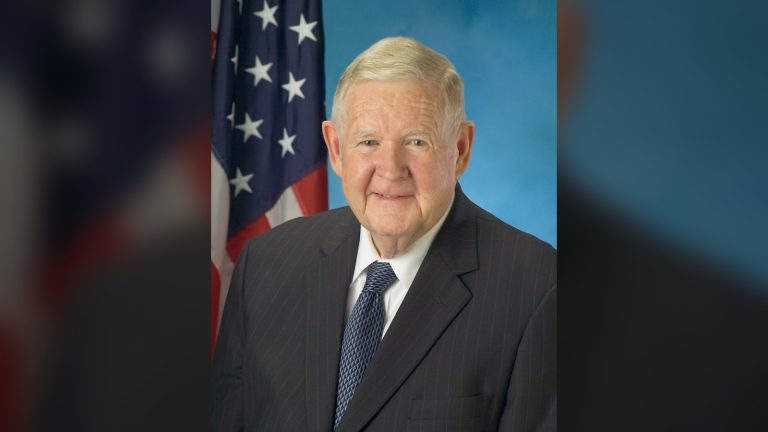
Jim Nussle (R-Iowa) lost the 2006 race for Iowa governor to Democrat Chet Culver by about 54% to 44%. He then served as President George W. Bush’s budget director from September 2007 until the administration ended in January 2009. Congress banned earmarks from 2011 and brought them back in 2021, renamed Community Project Funding in the House and Congressionally Directed Spending in the Senate. Under those rules, every request is posted publicly under the name of the member who made it. As of November 2026, House members could submit up to 20 requests each for fiscal 2027, but the government is running on a stopgap, H.R. 6500, through December 11, 2026, and the fiscal 2027 project lists only take effect once full-year spending bills are enacted.
The original 2006 post
The original entry opened by noting that “The Club For Growth has a big post” on 19 anti-earmark amendments offered by Rep. Jeff Flake (R-Ariz.). Because each one got a recorded vote, every House member had a public position on earmarks. The post defined earmarks as a process through which members of Congress steer federal funding to local projects without competitive grants or other objective methods, and it credited that definition to an outside source.
The post then turned to Jim Ross Nussle. At the time he represented Iowa’s 1st District, chaired the House Budget Committee and was the Republican candidate for governor. The author pointed out that Nussle was seen as a strong fiscal conservative, according to some groups. The post argued that his earmark votes did not fit that reputation and called him a “fauxscal conservative.”
The 19 Flake amendments and how Nussle voted
Each Flake amendment would have blocked funding for one earmark in a fiscal 2007 spending bill. The House considered them in May and June 2006. The post counted a “yes” vote as an anti-earmark vote and a “no” vote as a pro-earmark vote. According to the post, Nussle voted “no” on all 19.
All 19 amendments failed, most of them by wide bipartisan margins. So on these votes Nussle sided with most of the House. For example, the amendment against the Leonard Wood Research Institute failed 62 to 363.
- House Vote 190: Dairy education in Iowa ($229,000). This was Flake Amendment No. 1 to the fiscal 2007 Agriculture appropriations bill, voted on the evening of May 23, 2006. An archived Office of Management and Budget earmark database lists an earlier “Dairy Education, IA” earmark of the same amount, $229,000. It went to the Northeast Iowa Community Based Dairy Foundation in Calmar under the fiscal 2005 omnibus, P.L. 108-447.
- House Vote 191: Hydroponic tomato production in Ohio ($180,000)
- House Vote 192: National Grape and Wine Initiative ($100,000)
- House Vote 204: Virginia Science Museum ($250,000)
- House Vote 205: Juniata Locomotive Demonstration ($1,000,000)
- House Vote 277: Swimming pool in Banning, California ($500,000)
- House Vote 278: “Facilities” in Weirton, West Virginia ($100,000)
- House Vote 279: Multipurpose facility in Yucaipa, California ($500,000)
- House Vote 280: Strand Theater Arts Center in Plattsburgh, New York ($250,000)
- House Vote 298: Mystic Aquarium in New London, Connecticut ($1,000,000)
- House Vote 299: The Jason Foundation in Ashburn, Virginia ($1,000,000)
- House Vote 302: Northwest Manufacturing Initiative ($2,500,000)
- House Vote 303: Lewis Center for Education Research ($4,000,000). This was H.Amdt. 1077 to H.R. 5631, the Department of Defense Appropriations Act, 2007. It failed 50 to 373 on June 20, 2006.
- House Vote 304: Leonard Wood Research Institute ($20,000,000). This was H.Amdt. 1079 to the same defense bill. It failed 62 to 363 on June 20, 2006. H.R. 5631 became Public Law 109-289 on September 29, 2006.
- House Vote 334: Arthur Avenue Retail Market ($150,000)
- House Vote 335: Bronx Council for the Arts in the Bronx, New York ($300,000)
- House Vote 336: Johnstown Area Regional Industries ($800,000)
- House Vote 337: Fairmont State University ($900,000)
- House Vote 338: Tourism Development Association in Kentucky ($1,000,000)
Together the 19 earmarks came to $34.6 million. The Leonard Wood Research Institute item made up more than half of that total.
How the post ended
The post closed by calling Nussle “an earmark kingpin” and “a pork-barrel logroller.” Those were the author’s labels. Nussle’s own case rested on his record as Budget Committee chairman, where he wrote the House budget resolutions from 2001 to 2007. The author also predicted that Nussle’s Democratic opponent would be no different on earmarks.
Chet Butterburger
That opponent was Iowa Secretary of State Chet Culver. He won the race for Terrace Hill, the governor’s residence, in November 2006 with about 54% of the vote to Nussle’s 44%. The seat was open because Gov. Tom Vilsack (D) did not run for a third term.
…read complete post at State 29
What happened next
The careers of both men in this story went on long after 2006, and the earmark fight they were part of changed how Congress works.
Nussle after Congress
Nussle left the House in January 2007. Bush picked him to succeed Rob Portman as director of the Office of Management and Budget, and he was sworn in on September 10, 2007. At OMB he oversaw the agency’s public earmark database, which listed projects such as the Iowa dairy line above.
In September 2014 he became president and CEO of the Credit Union National Association (CUNA). After CUNA merged with the National Association of Federally-Insured Credit Unions in 2024, he became the first CEO of the combined group, America’s Credit Unions. He announced in April 2025 that he would retire and stepped down at the end of October 2025. Scott Simpson took over on November 3, 2025.
Flake and the earmark ban
Flake kept offering earmark amendments for the rest of his House career and served in the Senate from 2013 to 2019. After Republicans won the House in the 2010 elections, both parties’ leaders in Congress adopted earmark moratoriums starting in 2011. The ban lasted ten years.
Earmarks since 2021
In 2021, House Appropriations Chair Rosa DeLauro (D-Conn.) and Senate appropriators brought earmarks back with new disclosure rules. They first appeared in fiscal 2022 spending bills. Here is how the process works in the fiscal 2027 cycle:
- Members submit requests to the Appropriations Committee and post each one online with the recipient, amount and purpose. In the House, each member could submit up to 20 requests for fiscal 2027, up from 15 the year before. The House request window closed in spring 2026.
- Members certify that they and their families have no financial interest in the project. House rules also bar Community Project Funding for for-profit recipients.
- The House caps total Community Project Funding at a small share of discretionary spending. Since fiscal 2024, under Republican control, that cap has been 0.5%.
- Approved projects appear in tables attached to each spending bill. In the House-passed fiscal 2027 Agriculture bill, for example, the Congressional Research Service counted Community Project Funding in five USDA accounts.
- Projects are funded only when a full-year spending bill becomes law. A continuing resolution does not fund new earmarks.
For fiscal 2027, that last step has not happened yet. The Senate passed the stopgap 90 to 6 and the House passed it 370 to 48 on September 1, 2026. President Trump signed H.R. 6500, the Continuing Appropriations and Extensions Act, 2027, on September 2. Congress now has until December 11, 2026 to pass full-year bills or another extension.
FAQ
Who was Jim Nussle?
Jim Nussle is a Republican from Iowa who served in the House from 1991 to 2007 and chaired the House Budget Committee from 2001 to 2007. He lost the 2006 governor’s race to Chet Culver and then served as OMB director from 2007 to 2009. He later led CUNA and America’s Credit Unions until he retired in October 2025.
What were the Flake amendments of 2006?
They were 19 floor amendments by Rep. Jeff Flake (R-Ariz.), each meant to strip one earmark from a fiscal 2007 spending bill. Each got a recorded vote, and all of them failed. The Club for Growth used the votes to rate every House member on earmarks.
Did Nussle’s earmark votes differ from most of the House?
No. The amendments failed by large margins, such as 50 to 373 on the Lewis Center and 62 to 363 on the Leonard Wood Research Institute. Nussle’s “no” votes matched the majority of both parties. His critics argued that a Budget Committee chairman should have voted the other way.
Are earmarks still banned?
No. The ban ran from 2011 until 2021, when earmarks returned as Community Project Funding in the House and Congressionally Directed Spending in the Senate. Members must now post their requests publicly and certify that they have no financial interest in them.
Where can you see earmark requests today?
House members post their Community Project Funding requests on their official websites. Senators post Congressionally Directed Spending requests the same way. The Appropriations Committees publish the approved projects in tables with each bill, and groups such as the National Taxpayers Union keep searchable trackers of House requests.
When will fiscal 2027 earmarks be funded?
Only after Congress passes full-year fiscal 2027 spending bills. The current stopgap runs through December 11, 2026 and does not fund new projects.
Sources
- Congress.gov: H.R. 5631, Department of Defense Appropriations Act, 2007
- Congress.gov: H.Amdt. 1079 and H.Amdt. 1077 to H.R. 5631 (109th Congress)
- Congress.gov: Congressional Record, Extensions of Remarks, May 24, 2006 (Roll No. 190)
- Congress.gov: H.R. 6500, Continuing Appropriations and Extensions Act, 2027
- Congressional Research Service: Agriculture and Related Agencies: FY2027 Appropriations (R49343), September 10, 2026
- The White House: Congressional Bill H.R. 6500 Signed into Law, September 2026
- Office of Management and Budget (Bush White House archive): Earmark 47809, Dairy Education, Iowa
- Committee for a Responsible Federal Budget: Appropriations Watch: FY 2027
- National Taxpayers Union Foundation: Tracking FY 2027 House Earmark Requests
- America’s Credit Unions: Nussle Announces Intention to Retire as CEO
- Ballotpedia: Chet Culver
Featured image: Carol M. Highsmith / Wikimedia Commons, Public domain (file page)
About this article
- Fact-checked before publication.
- Published · Updated