
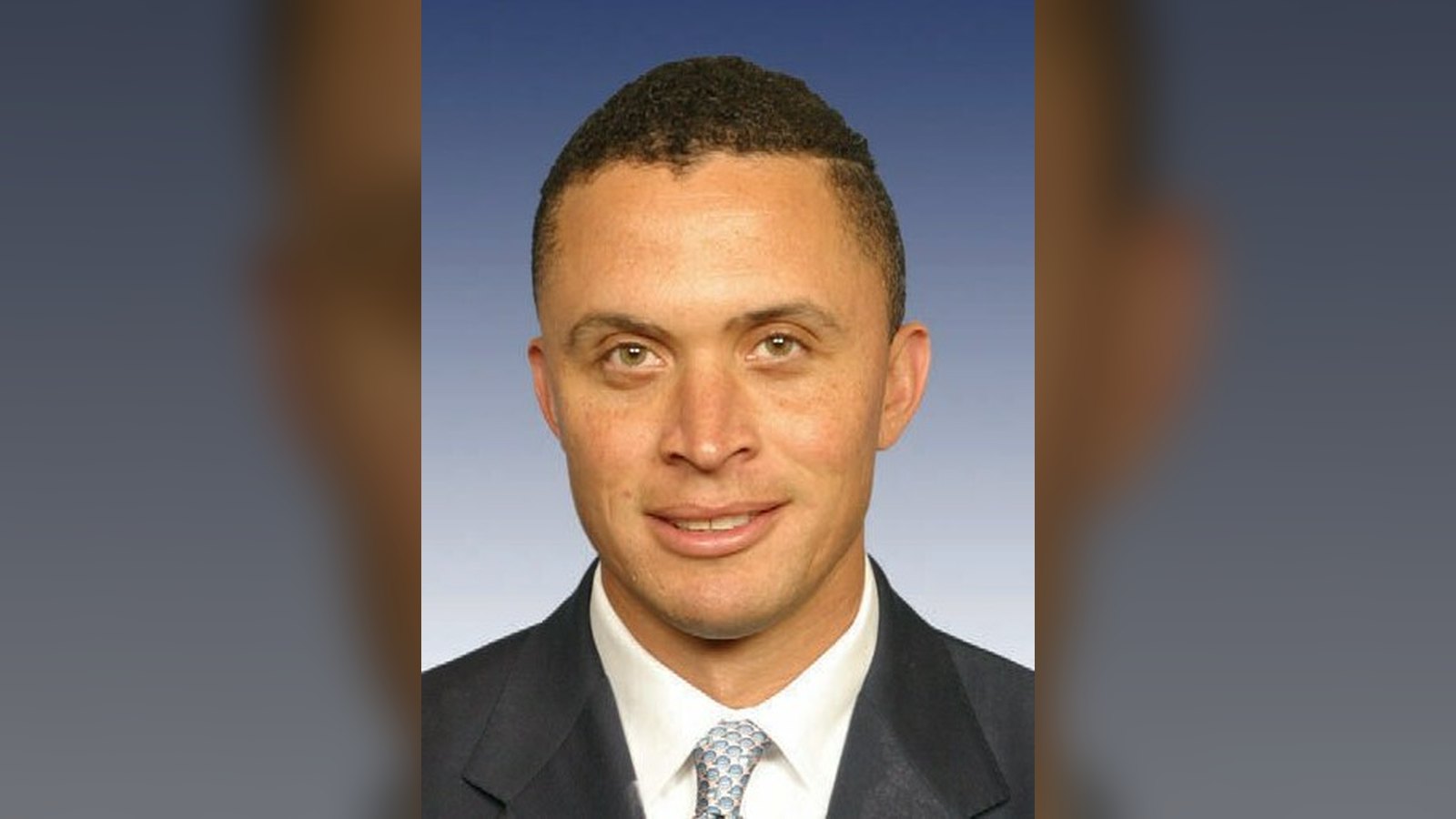
Rep. Harold Ford Jr. on Pork: His 2006 Earmark Reform Plan
Harold Ford Jr.’s 2006 Senate bid ended in defeat: Republican Bob Corker beat him in Tennessee with 50.71% of the vote to Ford’s 47.99%. Several of his pork-barrel proposals did become rules later. Congress put earmark disclosure and tighter lobbying reports into law in 2007, banned earmarks altogether from 2011, and brought them back in 2021 as Community Project Funding in the House and Congressionally Directed Spending in the Senate. As of November 2026, members must post their requests online, sign a certification that they have no financial interest, and stay under a cap. In the House that cap is 0.5% of discretionary spending for fiscal 2027.
What Ford proposed in 2006
In March 2006, the office of Rep. Harold Ford Jr. (D-TN) sent this by Ford on pork: to the author of the original post. That author was law professor Glenn Reynolds, one of the bloggers behind the PorkBusters campaign. At the time Ford represented Tennessee’s 9th District, centered on Memphis, and was running for the Senate. The text came from a Ford op-ed:
A bipartisan problem demands a bipartisan solution. In that spirit, I offer several ideas to give Americans the best value for their tax dollars. First, institute a “stand by your earmark” rule. If a member of Congress wants to insert an earmark into a bill at the final stage of the legislative process, he should be forced to sign his name to the provision and explain why it is in the interests of the nation as a whole. This rule would prevent special-interest favors from being slipped into bills at the last minute with no one claiming responsibility. At the same time, members of Congress would have a chance to defend projects that have genuine value. For example, I would be proud to stand up and persuade my colleagues that it was worthwhile to invest the $1 million in federal money that was approved last year for LeMoyne-Owen College’s juvenile asthma research program, which is benefiting the entire nation. Second, the secretive nature of lobbying is one of the main reasons Congress spends money on projects that serve special interests at the expense of the national interest. Lobbyists should be required to disclose who all of their clients are and what specific provisions they are lobbying for. Third, we should institute a rule that any new spending has to be offset somewhere else in the budget. Requiring Congress to balance its books every year, like any business or family, would force us to separate national needs from political luxuries. Fourth, this very simple idea might be the most effective: Let the American people read bills before Congress votes on them. Post the entire text of the bills, including every pork project and special-interest provision, on the Internet for all to see, for at least 72 hours before the vote. Forcing members of Congress to defend the indefensible would make them think twice before wasting taxpayer dollars.
The full op-ed was later reposted on a Ford campaign blog. It also named two spending items as examples of the problem: a $223 million earmark for unidentified projects in Alaska and a $400,000 grant for grapefruit research.
How PorkBusters responded
Reynolds wrote that the plan sounded good and called it “basically the PorkBusters legislative program.” He also said he planned to talk with Ford about it. The post was crossposted from InstaPundit, Reynolds’ blog.
The campaign usually urged readers to press members of Congress on earmarks. Here it cited a Democratic Senate candidate’s plan as matching its own agenda. Ford’s proposal was one of several from members of both parties that the campaign’s organizers pointed to that year.
What became of Ford’s four ideas
Three of the four ideas were put into effect in some form. The fourth, a firm 72-hour waiting period, never became law. Ford had already left the House by the time most of the changes arrived.
| Ford’s 2006 proposal | What happened next |
|---|---|
| “Stand by your earmark”: sponsors sign their names | Both chambers adopted earmark disclosure rules in 2007. The Honest Leadership and Open Government Act of 2007 (Subtitle B, “Earmark Reform”) requires sponsors’ names to be posted online. Since 2021, members also post each request and certify they have no financial interest in it. |
| Full lobbying disclosure | The same 2007 law moved lobbyist reports from twice a year to every quarter and added disclosure of lobbyists’ contributions to candidates and leadership PACs. |
| Offset all new spending | The Statutory Pay-As-You-Go Act of 2010 requires offsets for new mandatory spending and tax cuts. It does not cover annual appropriations, which is where earmarks sit. |
| Post bills online 72 hours before a vote | No binding 72-hour law was ever passed. Bill text is published on Congress.gov. |
The 2007 law passed the House 411-8 and the Senate 83-14. President George W. Bush signed it in September 2007. He also warned of “potential loopholes” in the earmark provisions, and the White House described the disclosure changes as minimal improvements.
Ford after 2006
Ford lost the open Tennessee Senate seat to Corker by about 2.7 points: 929,911 votes to 879,972. He never returned to Congress. He joined Fox News Media as a contributor in 2021, and Fox’s network biography lists him as a rotating co-host of The Five.
Earmarks in November 2026
Earmarks are still part of the annual spending bills, but the request rules are much stricter than in 2006.
Republican majorities in the House and Senate adopted an earmark moratorium in the 112th Congress (2011-2012). The ban rested on party rules and committee protocols, not on law. In February 2021, House Appropriations Chair Rosa DeLauro (D-CT) announced that earmarks would return under the name Community Project Funding, and the Senate brought back its version as Congressionally Directed Spending. Not everyone agreed: a group of House Republicans pledged in a letter not to request them.
Fiscal 2027 works like this:
- House limits: each member may submit up to 20 Community Project Funding requests, and total earmarks are capped at 0.5% of discretionary spending.
- Closed subcommittees: four House subcommittees take no requests at all: Defense, Financial Services and General Government, Legislative Branch, and National Security/Department of State.
- Request window: the House portal opened February 25, 2026, and the deadlines ran through March 2026.
- Size so far: Punchbowl News reported $8.2 billion for member projects in the House Republican FY2027 bills.
- Current funding: no full-year FY2027 bill has been enacted. The government runs on a continuing resolution, H.R. 6500 (the Continuing Appropriations and Extensions Act, 2027). It passed the House 370-48, was signed on September 2, 2026, and lasts through December 11, 2026.
The last full cycle was fiscal 2026. Citizens Against Government Waste counted 8,392 earmarks worth $23.7 billion in its 2026 Congressional Pig Book. That group’s definition of an earmark is broader than Congress’s own, so its totals run higher than the committees’ disclosure tables.
FAQ
What did Harold Ford Jr. mean by a “stand by your earmark” rule?
Any member who added an earmark at the final stage of a bill would have to sign their name to it and explain why it served the whole nation. The aim was to stop anonymous last-minute additions. Disclosure rules adopted in 2007 and expanded in 2021 now require earmark sponsors to be named publicly.
Did Ford win his 2006 Senate race?
No. Republican Bob Corker won the open Tennessee seat with 50.71% to Ford’s 47.99%, one of the closest Senate races of 2006. Ford left the House in January 2007 and did not return to elected office.
Are earmarks banned in Congress today?
No. A party-rules moratorium covered both chambers from 2011, and earmarks returned in 2021. The House calls them Community Project Funding and the Senate calls them Congressionally Directed Spending. Requests are posted online and capped.
How much is spent on earmarks now?
For fiscal 2026, Citizens Against Government Waste counted $23.7 billion across 8,392 earmarks, using its own broad definition. For fiscal 2027, the House caps earmarks at 0.5% of discretionary spending. Punchbowl News reported $8.2 billion in member projects in the House Republican bills.
Where can you see who requested an earmark?
Each House member posts their Community Project Funding requests on their official website. The appropriations committees publish tables listing every funded project with its sponsor. Senators post their Congressionally Directed Spending requests in the same way.
What was PorkBusters?
PorkBusters was a campaign run by bloggers, including Glenn Reynolds of InstaPundit, against congressional earmarks. Its home page was at this address from 2006 to 2010. It called its preferred reforms a “legislative program,” and Reynolds said Ford’s 2006 plan largely matched it.
Sources
- Overview of Continuing Appropriations for FY2027 (Division A of P.L. 119-103), CRS via Congress.gov
- Congressional Bill H.R. 6500 Signed into Law, The White House
- House and Senate Procedural Rules Concerning Earmark Disclosure, CRS RL34462
- Honest Leadership and Open Government Act of 2007, Statutes at Large (GovInfo)
- Appropriations for Rural Development Programs: Proposals for FY2027, CRS
- Appropriations Watch: FY 2027, Committee for a Responsible Federal Budget
- 2026 Congressional Pig Book, Citizens Against Government Waste
- The earmarks money at risk in the midterms, Punchbowl News
- 2006 United States Senate election in Tennessee
Featured image: Harold Ford Jr. Photo: United States Congress / Wikimedia Commons, Public domain (file page)
About this article
- Fact-checked before publication.
- Published · Updated