McCain Announces Earmark Reform Bill: The 2006 Pork-Barrel Reduction Act
Senator John McCain’s Pork-Barrel Reduction Act (S. 2265) never made it out of the Senate Rules Committee. Some of its ideas still became rules: the Honest Leadership and Open Government Act of 2007 required each earmark to be disclosed along with the member who asked for it. Congress then stopped earmarking in 2011 and brought the practice back in 2021, for fiscal 2022, as Community Project Funding in the House and Congressionally Directed Spending in the Senate. As of November 2026, members must post their requests online, name the recipient and certify they have no financial interest in the project. The government is running on a stopgap law (H.R. 6500) that expires December 11, 2026, so no fiscal 2027 earmarks have been enacted yet.
What McCain proposed in February 2006
On February 8, 2006, Senator John McCain (R-AZ) testified before the Senate Rules and Administration Committee. He said he would introduce a bill the next day that would let any senator challenge individual earmarks in spending bills. He filed it on February 9, 2006 as S. 2265, the Pork-Barrel Reduction Act. In his testimony he named eight cosponsors: Russ Feingold (D-WI), Tom Coburn (R-OK), Evan Bayh (D-IN), John Sununu (R-NH), Lindsey Graham (R-SC), John Ensign (R-NV), Jim DeMint (R-SC) and Jon Kyl (R-AZ). John Cornyn (R-TX) was also listed as a cosponsor in later announcements, which brought the group to eight Republicans and two Democrats.
According to McCain’s statement, the bill would have:
- Created a new procedure under Senate Rule XVI, modeled in part on the Byrd Rule. Any senator could raise a point of order against specific provisions in appropriations bills and conference reports that carried unauthorized appropriations (including earmarks) or unauthorized policy changes. Sixty votes would be needed to waive it.
- Removed only the targeted provisions when a point of order succeeded, not the whole conference report. The measure would then go back to the House for concurrence.
- Required conference reports to be available at least 48 hours before floor consideration.
- Barred consideration of a conference report that included matter outside the scope of the conference.
- Included the provisions of S. 1495, the Obligation of Funds Transparency Act. McCain and Coburn had introduced it on July 26, 2005 to stop federal agencies from spending money on earmarks that appeared only in committee or conference reports, which senators cannot amend.
- Required every earmark in a bill to be fully disclosed in the accompanying report, together with the name of the requesting member and the earmark’s “essential governmental purpose.”
- Required recipients of federal funds to disclose how much they spent on registered lobbyists.
PorkBusters, the blogger-run campaign against congressional earmarks that operated at this address from 2006 to 2010, posted McCain’s statement. It said it would publish the bill text for readers to review and comment on once the text was released.
Senator McCain’s statement to the Senate Rules Committee
The statement was given on February 8, 2006, at the committee’s hearing “to Examine Procedures to Make the Legislative Process More Transparent.” The text below is McCain’s own wording, with only spelling and typing errors corrected.
Opening and earmark growth figures
Let me begin by commending the Chairman of the Rules Committee, Senator Lott, for holding today’s hearing on one of the key components that must be addressed if our efforts to address comprehensive lobbying reform are to be effective, and that is, earmark reform. This is the second hearing on this subject held by this Committee in the last two Congresses, and I commend the committee members for their attention to this issue of growing concern.
You may recall the earmark growth charts I showed the Committee during a July 2003 hearing which illustrated the findings of the Congressional Research Service, showing the enormous growth in earmarks since 1994. Well, I am sad to report those numbers are even more alarming today.
In 1994, there were 4,126 earmarks. In 2005, there were 15,877, the largest number yet. That’s an increase of nearly 300 percent! The level of funding associated with those earmarks has more than doubled from $23.2 billion in FY 1994 to $47.4 billion in FY 2005. I ask that a copy of the report prepared by CRS be made a part of the hearing record.
McCain showed updated charts at this point in the hearing. The figures came from the Congressional Research Service (CRS). CRS counted earmarks differently in different years and across spending bills, so these totals are best read as the 2006 snapshot McCain presented, not as a current measure.
The Pork-Barrel Reduction Act
The focus of the July 2003 hearing was a rules change proposal I had introduced to allow points of order to be raised against unauthorized appropriations and policy riders in appropriations bills and conference reports in an effort to rein in wasteful pork barrel spending. Tomorrow I will introduce a modified version of that proposal. I will be joined in this bipartisan effort by Senators Feingold, Coburn, Bayh, Sununu, Graham, Ensign, DeMint, and Kyl.
Our bill, entitled the Pork-Barrel Reduction Act, would establish a new procedure under Rule XVI, modeled in part after the Byrd Rule, which would allow a 60-vote point of order to be raised against specific provisions that contain unauthorized appropriations, including earmarks, as well as unauthorized policy changes in appropriations bills and conference reports. Of importance is that successful points of order would not kill a conference report, but the targeted provisions would be deemed removed from the conference report, and the measure would be sent back for concurrence by the House.
To ensure that Members are given enough time to review appropriations bills, our proposal would also require that conference reports be available at least 48 hours prior to floor consideration. It also prohibits the consideration of a conference report if it includes matter outside the scope of conference.
Additionally, our bill includes the provisions of S. 1495, the Obligation of Funds Transparency Act, which Senator Coburn and I introduced last July, to prohibit Federal agencies from obligating funds for appropriations earmarks included only in congressional reports, which are unamendable.
To promote transparency, our bill requires that any earmarks included in a bill be disclosed fully in the bill’s accompanying report, along with the name of the Member who requested the earmark and its essential governmental purpose. Additionally, our bill would require recipients of federal dollars to disclose any amounts that the recipient expends on registered lobbyists.
In summary, this proposed rules change, if adopted, would allow any member to raise a point of order in an effort to extract objectionable unauthorized provisions from the appropriations process. Our goal is to reform the current system by empowering all members with a tool to rid appropriations bills of unauthorized funds, pork barrel projects, and legislative policy riders and to provide greater public disclosure of the legislative process.
The Lott-Feinstein alternative
I understand Chairman Lott and Senator Feinstein introduced a resolution that doesn’t go quite as far as our proposal. It would only allow points of order against earmarks and provisions outside the scope of conference. Their bill is a good step in the right direction, although I am concerned that it would not allow us to go after a host of egregious earmarks. Nonetheless, I am pleased they have embraced the general concept that we are suggesting, which is to enable objectionable earmarks to be removed from bills and more importantly, conference reports, in a manner that would remove any suspicions that we are attempting to kill the whole conference report.
Rules Committee Chairman Trent Lott (R-MS) and Senator Dianne Feinstein (D-CA) took a narrower approach than McCain. Their approach became part of S. 2349, the Legislative Transparency and Accountability Act of 2006, which is covered below.
McCain’s examples of recent earmarks
McCain followed with a list of earmarks from recent spending bills. In his words, “many of which clearly do not belong in the measures that they were included.” The amounts below are the ones he cited.
From the Defense conference report for FY2006
- $500,000 to teach science to grade-school students in Pennsylvania
- $900,000 for “Memorial Day” out of the Army Operations and Maintenance account
- $4.4 million for a technology center in Missouri
- $1 million for a Civil War center in Richmond, Virginia
- $850,000 for an education center and public park in Des Moines, Iowa
- $2 million for a public park in San Francisco
- $500,000 for the Arctic Winter Games, an international athletic competition held that year in Alaska
- $1.5 million for an aviation museum in Seattle, $1.35 million for an aviation museum in Hawaii, $1 million for a museum in Pennsylvania and $3 million for the museum at Fort Belvoir
- $1.5 million for restoring the Battleship Texas
- Funding for farm conservation
- A provision protecting jobs in Hawaii and Alaska
- A provision transferring to the University of Alaska, as a direct lump-sum payment, the unobligated and unexpended balances appropriated to the United States-Canada Railroad Commission
- The provisions on drilling in the Arctic National Wildlife Refuge (ANWR). The ANWR language was dropped from the final defense bill in December 2005 after the Senate failed to end debate on it.
From the FY2006 Energy and Water conference report (statement of managers)
- $500,000 for the Burpee Museum of Natural History in Illinois
- $500,000 for Chesapeake Bay submerged aquatic vegetation research
- $600,000 to study fish passage at Mud Mountain, Washington
- $3 million to study beneficial uses of dredged material for Morehead City, North Carolina
- $1.25 million for the Sacred Falls demonstration project in Hawaii
- $2 million for the Desert Research Institute, Nevada
- $3.5 million for the Iroquois Bio-Energy Consortium ethanol project, Indiana
- $500,000 for the Washington State Ferries biodiesel demonstration project
- $1 million for canola-based automotive oil research and development, Pennsylvania
- $1 million for the Mount Wachusett Community College wind project, Massachusetts
- $7 million for the Arctic Energy Office, Alaska
McCain pointed out that these Energy and Water items were all report-language earmarks. Because they appeared in the report and not in the bill text, senators could not offer an amendment to strike them. S. 1495 was written to close that gap.
From the FY2006 Interior appropriations bill as passed by the Senate
- $400,000 to complete a bear DNA sampling study in Montana. McCain said this was the fourth year in a row the earmark had been added to a spending bill.
- $450,000 for a well-monitoring project in Hawaii
- $1.8 million for sea otter recovery work at the Alaska SeaLife Center
- $1 million for statewide cesspool replacement in the County of Maui, Hawaii
- $500,000 to continue research on pallid sturgeon spawning in the Missouri River
From the FY2006 Agriculture conference report
- $1 million for statewide cesspool replacement in the County of Maui, Hawaii
- $1 million for the Ohio Livestock Expo Center in Springfield, Ohio
- $2.25 million for the Wisconsin Federation of Cooperatives for pilot Wisconsin-Minnesota health care cooperative purchasing alliances
- $350,000 for a report on the economic development of the US sheep industry
- $1.8 million for river obstruction removal projects in Ohio
- $50,000 to control feral hogs in Missouri
- $380,000 to continue measures to reduce blackbird damage to sunflowers in North Dakota and South Dakota
- $196,000 for geese control in New York State
- $75,000 for peanut production research, Dawson, Georgia
- $75,000 for seafood waste research, Fairbanks, Alaska
- $250,000 for turf grass research, Beaver, West Virginia
From the Agriculture division of the FY2005 omnibus conference report
- $3 million for the Center for Grape Genetics in Geneva, New York
- $326,000 for fruit and vegetable market analysis in Arizona and Missouri
- $347,000 to study grapefruit juice and drug interaction in Florida
- $180,000 for hydroponic tomato production research in Ohio
- $528,000 for the Midwest Advanced Food Manufacturing Alliance in Nebraska
- $1 million for seafood harvesting, processing and marketing research in Alaska
- $470,000 for pig waste management in North Carolina
- $1.75 million for chronic wasting disease research in Wisconsin
- $1 million for grasshopper and Mormon cricket control in Utah
- $1.4 million for the Delta Conservation Demonstration Center in Mississippi
- $1.2 million for a Clemson University study of land use change in South Carolina
From the FY2005 Defense appropriations bill
McCain’s statement continued with more examples from the fiscal 2005 defense spending bill.
What happened to the bill
S. 2265 was referred to the Senate Committee on Rules and Administration and saw no further action. The Obligation of Funds Transparency Act (S. 1495) was the subject of a Homeland Security and Governmental Affairs subcommittee hearing on March 16, 2006, where McCain testified. It was not enacted.
The Lott measure went further. S. 2349 cleared the Rules Committee 18-0 on February 28, 2006, after the committee adopted a Feinstein amendment. That amendment raised the threshold for keeping a challenged earmark from a simple majority to 60 votes. A cloture vote failed 51-47 on March 9. The Senate then passed the bill 90-8 on March 29, 2006. The House passed its own version, H.R. 4975, on May 3, 2006. The two chambers never reconciled them, and neither became law.
The issue came back in the next Congress. The Honest Leadership and Open Government Act of 2007 became law on September 14, 2007 as Public Law 110-81. It created Senate Rule XLIV, which requires each “congressionally directed spending item” and its sponsor to be listed publicly before the Senate votes on a bill or conference report. Senators who request an item must also certify that neither they nor their immediate family have a financial interest in it. The House adopted its own earmark disclosure rules the same year. These rules covered McCain’s disclosure goals, though not his broad point of order against all unauthorized appropriations.
| Measure | Sponsor | Key earmark provision | Outcome |
|---|---|---|---|
| S. 1495 (2005) | John McCain (R-AZ), Tom Coburn (R-OK) | Bar spending on earmarks that appear only in reports | Subcommittee hearing March 16, 2006; not enacted |
| S. 2265 (2006) | John McCain (R-AZ) | 60-vote point of order against unauthorized items; sponsor disclosure | Referred to Rules Committee; no further action |
| S. 2349 (2006) | Trent Lott (R-MS) | Points of order against earmarks; 60 votes to keep one | Passed Senate 90-8; not enacted |
| P.L. 110-81 (2007) | Congress | Senate Rule XLIV disclosure and certification | Signed September 14, 2007 |
How earmarks work in November 2026
Earmarks exist again under new names and stricter disclosure rules. The House Republican Conference adopted a moratorium starting in 2011, and the Senate effectively followed. The House Appropriations Committee revived the practice for fiscal 2022, in 2021, as Community Project Funding, and the Senate uses the term Congressionally Directed Spending. CRS reports that the practice continued in the 118th and 119th Congresses.
Here is how the process works for the fiscal 2027 cycle:
- Requests. House members submitted requests through a committee portal that opened February 25, 2026. Subcommittee deadlines ran from March 13 to March 27, 2026. Each member could submit up to 20 requests, up from 15 for fiscal 2026. Some subcommittees, including Defense and Financial Services and General Government, accepted none.
- Public posting. Members must post their requests online with the recipient, the amount and a justification. They must also certify that they have no financial interest in the project. The House bars earmarks to for-profit recipients.
- Caps. When earmarks returned in 2021, the House capped them at 1% of discretionary spending. The committee’s fiscal 2027 guidance sets the cap at 0.5% of discretionary spending.
- Committee tables. Approved projects are listed with sponsor names in the committee reports and the final explanatory statements, as Senate Rule XLIV requires.
- Enactment. Earmarks take effect only when a full-year appropriations bill becomes law.
For fiscal 2027, the National Taxpayers Union counted 6,693 House requests totaling $8.68 billion. Punchbowl News put the Community Project Funding in House committee bills at about $8.2 billion. None of that money has been enacted yet. H.R. 6500, the Continuing Appropriations and Extensions Act, 2027, was signed on September 2, 2026 and funds the government at existing levels through December 11, 2026. A stopgap law like this generally does not fund new earmarks.
For scale, CRS reports that the enacted fiscal 2026 Agriculture law included 746 earmarked projects totaling $931 million, and the fiscal 2026 Transportation-HUD law provided $2.4 billion for earmarks. That is far less than the $47.4 billion McCain cited for fiscal 2005, although the two eras define and count earmarks differently.
Views on earmarks still divide along lines that cross both parties. Supporters, including Senate Appropriations Chair Susan Collins (R-ME), argue that members know their communities’ needs better than federal agencies do. Groups such as Taxpayers for Common Sense and the National Taxpayers Union track the requests and question the spending. Taxpayers for Common Sense also tracks what it calls “backdoor earmarks”: additions to Pentagon accounts that fall outside the formal disclosure rules.
FAQ
Did McCain’s Pork-Barrel Reduction Act become law?
No. S. 2265 was introduced on February 9, 2006 and referred to the Senate Rules and Administration Committee, where it stalled. Its disclosure ideas were partly adopted through the Honest Leadership and Open Government Act of 2007. Its broad 60-vote point of order against all unauthorized appropriations was never adopted.
What was PorkBusters?
PorkBusters was a campaign run by bloggers from 2006 to 2010 that pushed Congress to cut and disclose earmarks. Its organizers posted documents like McCain’s testimony and asked readers to look up and report earmarks in their own states. The campaign ended in 2010, and the address now hosts an unrelated, nonpartisan explainer of federal spending.
Are earmarks banned in Congress today?
No. Congress stopped earmarking in 2011 and brought it back in 2021 for fiscal 2022. As of November 2026, House members request Community Project Funding and senators request Congressionally Directed Spending. The requests are subject to public posting, financial-interest certifications and a spending cap.
What is the difference between Community Project Funding and Congressionally Directed Spending?
They are the House and Senate names for the same thing: money that a member of Congress directs to a specific project or recipient in an appropriations bill. Each chamber sets its own rules. For example, the House sets its own per-member request limit (20 for fiscal 2027) and bars for-profit recipients. Senate disclosure is governed by Senate Rule XLIV.
How can you find out who requested an earmark?
Check the sponsor’s House or Senate website, where each request must be posted. You can also look at the earmark tables in the appropriations committee reports and the final explanatory statement, which list the amount, recipient and requesting members. After a bill becomes law, the resulting grants can be traced on USAspending.gov.
Why haven’t fiscal 2027 earmarks been funded yet?
Fiscal 2027 began on October 1, 2026 without any full-year appropriations law. The government is running on H.R. 6500, a continuing resolution that lasts through December 11, 2026. Earmarks are funded only when Congress passes and the president signs the regular appropriations bills.
Sources
- Congress.gov: CRS Appropriations Status Table, FY2027
- Congress.gov: Overview of Continuing Appropriations for FY2027 (Division A of P.L. 119-103), CRS R49353
- Congress.gov: Agriculture and Related Agencies: FY2026 Appropriations, CRS R48564
- Congress.gov: THUD Appropriations for FY2026, CRS R48728
- Congress.gov: Text of S. 1495, Obligation of Funds Transparency Act (109th Congress)
- Congress.gov: Text of S. 2349 (109th Congress)
- Senate.gov: Roll Call Vote 82, 109th Congress, 2nd Session
- Senate Homeland Security and Governmental Affairs Committee: Earmark Reform, Understanding the Obligation of Funds Transparency Act
- GovInfo: Public Law 110-81, Honest Leadership and Open Government Act of 2007
- CRS RS22867: Earmark Disclosure Rules in the Senate
- CRS RL33397: Earmark Reform Proposals, Analysis of S. 2349 and H.R. 4975
- CRS R46722: Community Project Funding, House Rules and Committee Protocols
- CRS R45429: Lifting the Earmark Moratorium, Frequently Asked Questions
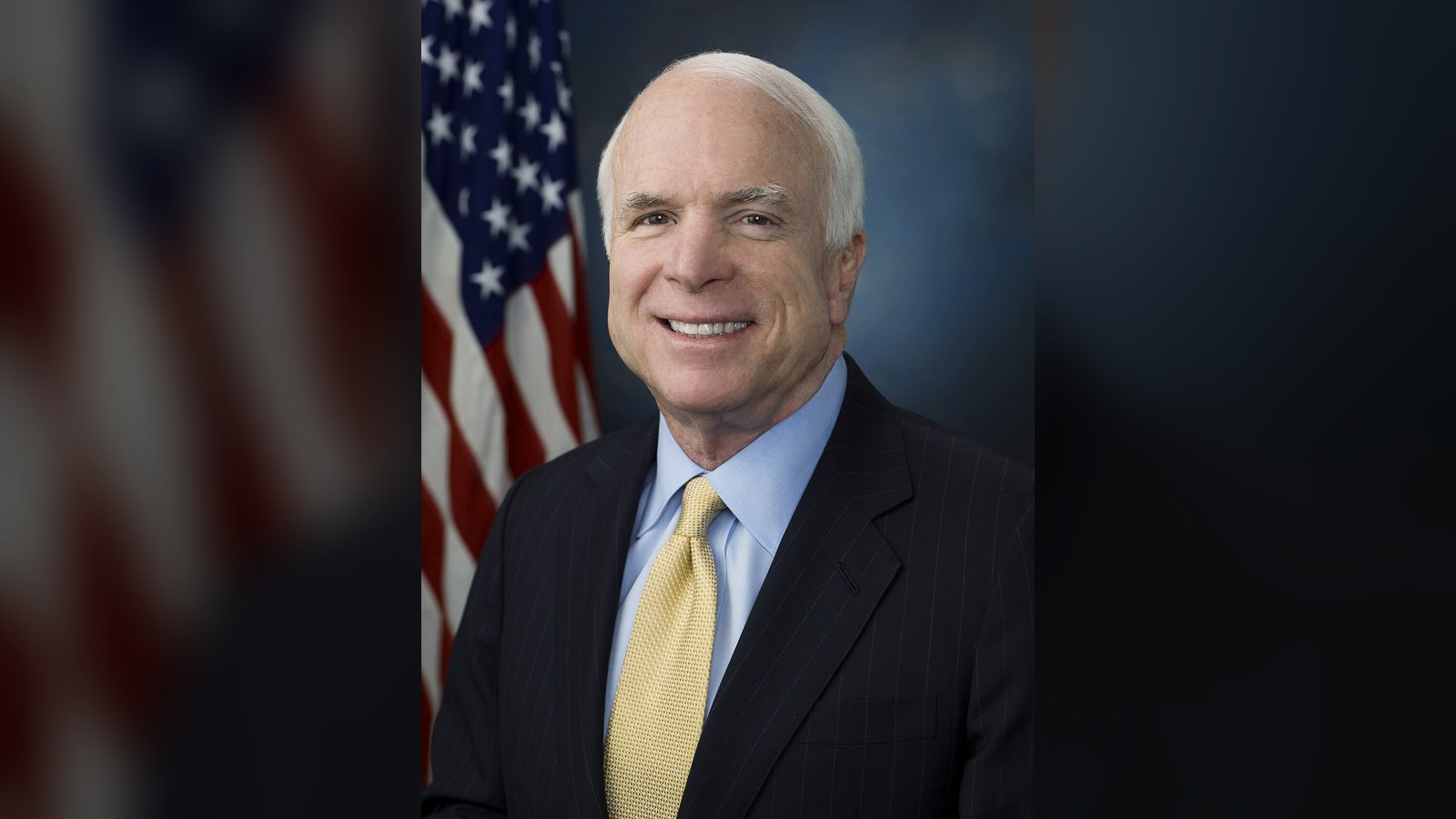
Featured image: John McCain. Photo: United States Congress / Wikimedia Commons, Public domain (file page)
About this article
- Fact-checked before publication.
- Published · Updated