
Arianna Huffington: Pork Crosses Left-Right Boundaries
Earmarks drew opposition from both parties in 2006, and that pressure led to disclosure rules in 2007. In 2011 both chambers went further and stopped earmarking altogether. The ban ended in 2021, when earmarks came back as Community Project Funding in the House and Congressionally Directed Spending in the Senate. Under the current rules, each request is posted online, for-profit recipients are not allowed, the total is capped at a small share of discretionary spending, and the requesting member must certify in writing that they have no financial interest in the project. Lawmakers enacted about $15.5 billion in earmarks for fiscal 2026. FY2027 earmarks are still pending in November 2026 because the government is running on a stopgap law that expires December 11, 2026.
In early 2006, PorkBusters pointed readers to what its organizers called a great piece on how Porkbusting is an issue which crosses the left-right divide. Arianna Huffington had published it on the Huffington Post. She wrote:
This remains for me the most interesting thing about the moves to slice the pork: the way they cut across party lines. Among the competing anti-pork legislation currently jockeying for position in Congress is a Senate bill proposed by John McCain and Tom Coburn and cosponsored by Russ Feingold and Evan Bayh, another introduced by Trent Lott and Dianne Feinstein, and a House bill cosponsored by Republican Jeff Flake and Democrat Harold Ford.
The bills vary in scope, strictness and the degree of transparency they require, but they all recognize that something needs to be done to derail the corporate welfare gravy train.
Here are the three proposals she listed, with each sponsor’s party and state at the time:
| Proposal (2006) | Chamber | Sponsors | What it aimed to do |
|---|---|---|---|
| McCain-Coburn earmark bill | Senate | John McCain (R-Ariz.), Tom Coburn (R-Okla.); cosponsors included Russ Feingold (D-Wis.) and Evan Bayh (D-Ind.) | Allow a point of order against unauthorized earmarks in spending bills, and require conference reports to be public at least 48 hours before a floor vote |
| Lott-Feinstein proposal | Senate | Trent Lott (R-Miss.), Dianne Feinstein (D-Calif.) | Require 60 votes to keep any conference report provision that was in neither the House-passed nor the Senate-passed bill |
| Flake-Ford effort | House | Jeff Flake (R-Ariz.), Harold Ford Jr. (D-Tenn.) | Put earmarks in the text of the bill instead of committee reports, so lawmakers could see them and vote on them |
Huffington went on:
You know something interesting is afoot when Tom Coburn and Barack Obama, and in the blogosphere, TruthLaidBear and Instapundit, are all pushing the same issue.
Two bloggers on the right ran PorkBusters. N.Z. Bear ran TTLB (The Truth Laid Bear), and Glenn Reynolds, a law professor, ran the other blog Huffington named. In reply, the organizers said their two blogs were not far apart politically, and that both men were on a different political wavelength from Huffington’s site.
They still agreed with her central point. Huffington argued that the Republican-controlled Congress had failed to rein in earmarks and what she called “corporate welfare”, and that this gave Democrats an opening. The PorkBusters organizers called that assessment correct. They also repeated a point Reynolds often made: Republicans caught steering money to pet projects should expect little sympathy from right-leaning readers. They said they would prefer to see those members voted out of office.
Huffington ended her piece with this line: “It’s well past time that right vs left gave way to right vs wrong.”
What happened after the 2006 push
None of the three bills became law in the form Huffington described. Some of their ideas did, over the next few years.
- September 2006. President George W. Bush signed the Federal Funding Accountability and Transparency Act, sponsored by Coburn and Obama. It required a public, searchable database of federal awards, which became USAspending.gov in December 2007. The law did not require Congress to name the lawmakers behind each earmark.
- 2007. After Democrats won control of Congress, both chambers adopted earmark disclosure rules. The Honest Leadership and Open Government Act passed the Senate 83-14 on August 2, 2007, and was signed into law on September 14, 2007. McCain voted against it. He said the final bill had “completely gutted” the earmark reforms the Senate had passed that January.
- 2011. House Republicans adopted an earmark moratorium after the 2010 elections. In his January 25, 2011 State of the Union address, President Obama said he would veto any bill containing earmarks, and Senate appropriators followed with their own moratorium. The ban held for a decade through party rules and committee practice rather than law. The PorkBusters campaign ended in 2010, before the ban took effect.
- 2021. House Appropriations Chair Rosa DeLauro (D-Conn.) announced on February 26, 2021, that the committee would accept member requests again, now called Community Project Funding. The Senate’s name for the same thing is Congressionally Directed Spending.
How earmarks work in November 2026
Earmarks are a regular part of the annual appropriations process again, with disclosure rules that did not exist in 2006.
- Members submit requests. For FY2027, each House member could submit up to 20 Community Project Funding requests, up from 15 for FY2026. Requests were due in March 2026.
- Requests go online. Each member posts their requests, and the appropriations committees publish tables of the funded projects with the sponsor’s name attached.
- Limits apply. Recipients must be governments or nonprofits, not for-profit companies. The member must certify that neither they nor their family has a financial interest in the project. The total is capped at a small share of discretionary spending (the 2021 rules set the cap at 1 percent).
- Congress decides in the spending bills. Earmarks become law only when the appropriations bill that carries them is enacted.
Fiscal 2026: CQ Roll Call and the Associated Press counted about $15.5 billion in enacted earmarks. The AP described that as about 1 percent of the $1.65 trillion in discretionary spending Congress approved. Citizens Against Government Waste uses a broader method that also counts projects with no named sponsor. Its 2026 Pig Book found about $24 billion.
Fiscal 2027: The House has passed bills that include earmarks, such as its Agriculture bill. According to the Congressional Research Service, the Senate Appropriations Committee had not marked up its Agriculture bill as of September 2026. The government is currently funded by the Continuing Appropriations Act, 2027 (Division A of P.L. 119-103), signed September 2, 2026. It keeps most programs at FY2026 levels through December 11, 2026. Continuing resolutions like this one generally do not fund new earmarks. Whether FY2027 projects get money depends on whether Congress passes full-year bills before then or after another extension.
FAQ
What was PorkBusters?
PorkBusters was a campaign run by bloggers N.Z. Bear and Glenn Reynolds against congressional earmarks. They started it in 2005, after Hurricane Katrina, to push for spending cuts to offset the cost of relief. This address was its home from 2006 to 2010, when the campaign ended. Readers were asked to find out whether their own members of Congress would give up earmarks.
Are earmarks banned in Congress today?
No. Both chambers stopped earmarking in 2011, and the ban lasted until 2021. Today earmarks are allowed under the names Community Project Funding (House) and Congressionally Directed Spending (Senate), with rules on disclosure and on who can receive the money.
How much do earmarks cost?
For fiscal 2026, CQ Roll Call and the AP counted about $15.5 billion in enacted earmarks, about 1 percent of discretionary spending. Citizens Against Government Waste puts the total near $24 billion because its method counts more items. Final FY2027 totals are not set yet, because the full-year spending bills have not been enacted.
Did the bills Huffington mentioned become law?
Not in their 2006 form. Parts of their approach showed up in the 2007 disclosure rules and the Honest Leadership and Open Government Act. Separately, the Coburn-Obama transparency law led to the creation of USAspending.gov.
Is opposition to earmarks still bipartisan?
Both supporters and opponents come from both parties. Groups such as Citizens Against Government Waste, the National Taxpayers Union and Taxpayers for Common Sense track and criticize earmarks. Supporters in both parties argue that members know their districts’ needs and that Congress, not federal agencies, should decide where the money goes.
Where can you see who requested an earmark?
Each member’s request list is posted on their official website. The House and Senate appropriations committees publish tables of funded projects that name the sponsoring members. Once projects are funded, the awards also appear on USAspending.gov.
Sources
- Congressional Research Service, “Overview of Continuing Appropriations for FY2027 (Division A of P.L. 119-103),” Congress.gov
- Congressional Research Service, “Agriculture and Related Agencies: FY2027 Appropriations,” Congress.gov, September 10, 2026
- Congressional Research Service, Appropriations Status Table: FY2027, Congress.gov
- Senate Homeland Security and Governmental Affairs Committee hearing record on earmark reform, 2006 (Senate Hearing 109-684), GovInfo
- Government Executive, “McCain, others say time is right for new earmark rules,” February 2006
- CQ Roll Call, “Earmarks flood spending bills after a year’s hiatus,” February 2026
- Citizens Against Government Waste, 2026 Congressional Pig Book
- National Taxpayers Union Foundation, tracking of FY2027 House earmark requests
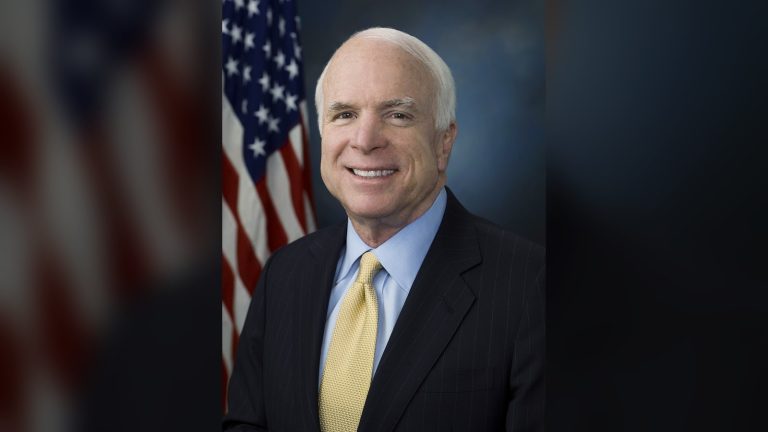
Featured image: Arianna Huffington. Photo: David Shankbone / Wikimedia Commons, CC BY 3.0 (file page)
About this article
- Fact-checked before publication.
- Published · Updated